


















By Ambrose Musasizi
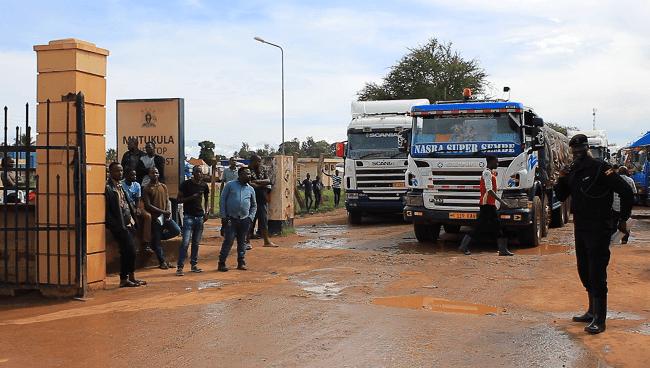
The ongoing transformation of Kyotera District is widely seen as a sign of economic progress. Multibillion shilling road works along the Masaka, Kyotera and Mutukula highway, coupled with increased cross border trade through the Mutukula One Stop Border Post, have boosted commerce and attracted investment to one of Uganda’s busiest transport corridors.
New businesses are opening along the highway, cargo trucks line up daily at the Uganda Tanzania border, and trading centres continue to draw traders, transporters and job seekers from across East Africa.
However, beneath the economic optimism lies a growing public health concern.
Health experts warn that increased disposable incomes, high population mobility, expanding nightlife and a growing commercial sex industry are creating conditions that continue to fuel HIV transmission in the district, threatening to undermine the benefits of development.
Kyotera remains among Uganda’s districts with the highest HIV burden. While Uganda’s national adult HIV prevalence stands at about 5.1 percent, the greater Rakai region, which includes Rakai and Kyotera districts, continues to record prevalence rates of between 10 and 11 percent, nearly twice the national average.
According to Fred Bongole, Key Population Field Officer at the Alliance of Women Advocating for Change (AWAC), an estimated 1,051 female sex workers operate in bars, lodges and entertainment venues across Kyotera.
Most are concentrated in busy commercial centres such as Kalisizo, Kyotera Town, Mutukula, Kasensero, Kabira and settlements along the international highway.
Economic Growth and HIV Risk
Public health experts say the district’s growing economy has unintentionally created an environment where HIV transmission remains a significant challenge.
Unlike predominantly agricultural communities, Kyotera’s major trading centres attract a highly mobile population. Long distance truck drivers transporting goods between the Port of Dar es Salaam and Kampala, cross border traders, construction workers, customs agents, money changers, boda boda riders and businesspeople move through the district daily.
Their constant movement strengthens the local economy but also creates a steady demand for commercial sex.
Health workers say commercial sex often follows economic opportunity. As businesses expand and more people earn disposable income, demand for entertainment, bars, lodges and commercial sex also increases.
Residents say many clients of commercial sex workers include people employed in relatively stable and well paying occupations, including civil servants, customs officials, bankers, security personnel, company employees and successful traders. Farmers earning seasonal income from coffee, bananas and livestock are also said to contribute to the nightlife economy, particularly after harvests.
Ironically, experts note that increased financial stability can sometimes increase HIV exposure when it is accompanied by multiple sexual partnerships and inconsistent condom use.
A Longstanding HIV Epicentre
Kyotera and neighbouring Rakai hold a unique place in Uganda’s HIV history. Some of the country’s earliest documented AIDS cases were reported in the area during the early 1980s.
Although access to HIV testing, treatment and prevention has improved dramatically over the past four decades, health workers say the epidemic has evolved rather than disappeared.
Today, they argue, HIV transmission is driven less by lack of awareness and more by changing lifestyles, mobility and economic activity.
Studies conducted over the years in the Rakai region have consistently shown that border towns, fishing communities and busy trading centres record significantly higher HIV prevalence than predominantly rural farming communities.
Researchers attribute this to lifestyles characterised by high mobility, temporary relationships and frequent interactions among people who spend limited time in one location.
Fishing communities often operate around the clock, with fishermen returning from the lake carrying cash from fish sales. Border towns remain active throughout the night because of international transport, while trading centres attract visitors who stay briefly before continuing their journeys.
Health experts say such patterns reduce opportunities for HIV testing, disclosure of HIV status and the development of stable sexual relationships.
Infrastructure Brings New Challenges
The reconstruction of the 89.5 kilometre Masaka, Kyotera and Mutukula highway is expected to further stimulate economic activity by improving transport and reducing travel time between Uganda and Tanzania.
While the project promises long term economic benefits, health experts caution that major infrastructure developments often alter local social dynamics by increasing population movement and disposable income.
Construction has already attracted hundreds of workers to communities along the road corridor, while businesses such as bars, restaurants and lodges have expanded in anticipation of increased customer traffic.
The Mutukula One Stop Border Post presents another public health challenge.
Every day, hundreds of trucks transporting goods between Uganda, Tanzania, Rwanda, Burundi and the Democratic Republic of Congo pass through the border.
Many drivers spend nights waiting for customs clearance or mandatory inspections before continuing their journeys.
Health officials say prolonged waiting periods, combined with readily available cash and an active nightlife, create conditions that increase the likelihood of casual sexual encounters.
Prevention Still Depends on Behaviour
Health workers acknowledge that HIV prevention programmes have expanded considerably in recent years through condom distribution, routine HIV testing, antiretroviral treatment and access to pre exposure prophylaxis (PrEP).
However, they say changing behaviour remains the greatest challenge.
Many people understand how HIV is transmitted but continue to engage in risky sexual practices. At the same time, the availability of effective treatment has led some young people to perceive HIV as no longer being a serious health threat.
Experts caution that although antiretroviral therapy has transformed HIV into a manageable chronic condition for many people, preventing new infections remains more effective and less costly than lifelong treatment.
The district has strengthened targeted interventions among key populations, including sex workers, long distance truck drivers, fisherfolk, adolescent girls and young women.
Community organisations continue to distribute condoms, encourage routine HIV testing, promote treatment adherence and expand access to newer prevention methods such as PrEP.
Health experts have also welcomed the introduction of long acting HIV prevention medicines such as lenacapavir, saying they could provide additional protection for people who struggle with taking daily medication.
Balancing Development and Public Health
Despite advances in HIV prevention and treatment, experts insist that medical interventions alone will not reverse Kyotera’s HIV burden without addressing the social and economic factors that continue to drive transmission.
As investment in transport infrastructure and cross border trade accelerates, they argue that HIV prevention efforts must expand alongside economic development.
Improved roads, thriving businesses and growing trade undoubtedly strengthen livelihoods, but they also increase human interaction and mobility, creating new public health challenges.
Without sustained investment in prevention programmes, public awareness campaigns and targeted services for populations at higher risk, the benefits of prosperity could continue to come with an unintended cost.
For Kyotera, the challenge is no longer choosing between economic growth and public health. It is ensuring that the district’s development is accompanied by equally strong investments in HIV prevention so that economic progress does not fuel the next generation of infections.








 English