









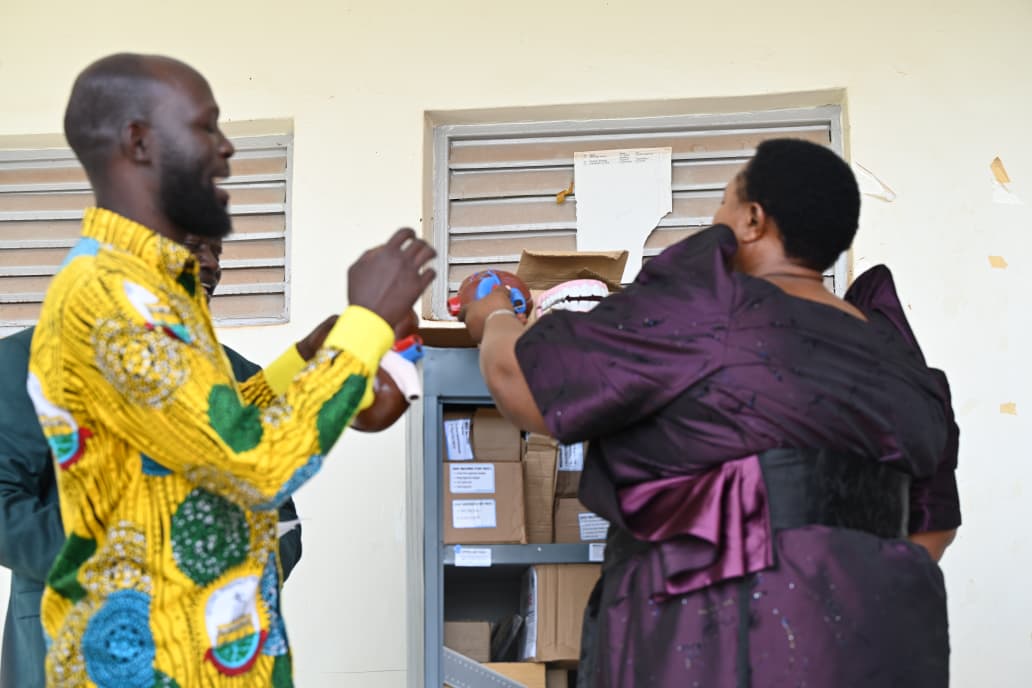
Government schools in Buyende District have received a major boost in science education following the commissioning of science kits donated by the Ministry of Education and Sports, a move expected to improve practical learning and inspire more students to pursue careers in science, technology and healthcare.
The kits were officially handed over on Wednesday by the Minister for the Presidency and Budiope West Member of Parliament, Milly Babirye Babalanda, alongside district leaders.

Education experts have long argued that inadequate laboratory equipment has limited learners’ ability to translate classroom theory into practical skills, particularly in rural schools.
The newly supplied science kits are expected to bridge that gap by giving students hands on experience in laboratory experiments, improving their understanding of science subjects and strengthening their problem-solving abilities.
Speaking during the handover ceremony, Babalanda described the donation as a timely investment in Uganda’s future workforce, saying practical science education is essential for nurturing innovation and preparing learners for careers in medicine, engineering, technology and other science related professions.
“This timely intervention will go a long way in strengthening the teaching and learning of science subjects in our schools. By equipping learners with practical tools, we are building the foundation for innovation, critical thinking and skills that are critical for Uganda’s development,” she said.
She noted that practical learning enables students to better understand scientific concepts, improves academic performance and increases interest in science subjects.
“The science kits will help learners move from theory to practical laboratory work. This will improve performance, increase interest in sciences and prepare our young people for the jobs of the future,” she added.
The Minister also applauded First Lady Janet Kataha Museveni for laying a strong foundation for improving the quality of education through investments in practical learning resources.
According to Babalanda, the nationwide distribution of science kits reflects the government’s commitment to ensuring that learners in public schools receive quality education regardless of their location.
She urged district education officials, school administrators and science teachers to safeguard the equipment and integrate it fully into classroom instruction to maximise its impact.
“We must ensure these kits are properly utilised and maintained so that they produce the next generation of scientists, engineers, doctors and innovators who will drive Uganda’s socio-economic transformation,” she said.
District leaders welcomed the donation, saying the equipment will address long standing shortages that have hindered effective science teaching in many government schools. They pledged to monitor the use of the kits to ensure they directly benefit learners.
The donation forms part of the Ministry of Education and Sports’ national programme to equip government schools with practical science learning materials.
The initiative supports Uganda’s broader human capital development agenda by strengthening STEM education and improving learners’ readiness for higher education and careers in the health, engineering and technology sectors.
Education stakeholders believe increased access to laboratory equipment will not only improve examination performance but also encourage more students, particularly those in rural communities, to pursue science-based careers that are vital to improving healthcare, industrialisation and national development.






 English