













Saturday, August 15, 2026
  • About
  • Advertise
  • Careers
  • Contact
Insight Post Uganda
  • Home
  • NewsHot
    • Health
    • Politics
    • Religion
    • Lifestyle
    • World News
    • Tourism
    • Environment
    • Agriculture
  • Business
    Katikolo Land Acquisition: Shs4.489 Billion Deal Leaves Compensation Gaps, Valuation Questions

    Katikolo Land Acquisition: Shs4.489 Billion Deal Leaves Compensation Gaps, Valuation Questions

    Security personnel inspect pigs brought by livestock traders at the Onduparaka Regional Livestock Market

    Six Livestock Dealers Intercepted Trying To Enter DR Congo With Pigs

    12 Charged Over UGX35.4M Bank Of Uganda Laptop Theft

    12 Charged Over UGX35.4M Bank Of Uganda Laptop Theft

  • Sports
    Eurofoam Marketing Manager Claire Kemigisha buys the first jersey from Mukono Diocese Bishop Enos Kagodo to launch the Mukono Cathedral Run

    Mukono Diocese Turns To Community Run To Raise UGX5 Billion For Cathedral

    Rogers Sebyondwa

    Bulemeezi Player Dies After Suffering Injuries In Kyaggwe Masaza Cup Match

    Cissy Nantongo

    Sports Fraternity Mourns Former She Corporate Captain Cissy Nantongo

  • Education
    Sanitary facilities at Goma Health Centre III in Mukono Municipality, one of the institutions that has benefited from Water For People’s sanitation interventions.

    Water For People Tackles Sanitation Gap At Lweza Primary School

    Two Teachers Arrested Over Missing UGX910,000 PUJAB Fees

    Two Teachers Arrested Over Missing UGX910,000 PUJAB Fees

  • In Luganda
    Betty Nambooze, Mukono Municipality MP

    Kibuule Akubye Mu Nambooze Ebituli, Talina Kyakoledde BannaMukono Okujjako Okujoboja

    Omubaka Gwetwalonda Teyadda-Abekyampisi Betondedde Kibuule

    Omubaka Gwetwalonda Teyadda-Abekyampisi Betondedde Kibuule

    Counsel George Musisi ng'alaga emu ku kaadi mu lukungana lw'amawulire

    Munnamateeka Wa NUP Atambula Nju Ku Nju Ng’ Asaggula Obuwagizi  

  • In Photos
    Ronald Kibuule at Mukono recently.

    Kibuule Poised for Return as Museveni Signals Endorsement in Mukono North

    Katikiro presiding over the opening of the renovated official residence of the Buddu County Chief at Ssaza grounds in Masaka City on Tuesday. Pictures by Robert Nsubuga.

    Pictorial:  Katikiro Mayiga Slams Masaka People Over Poor Hygiene

    Ismael-Kifudde-the-Mukono-Police-Division-Officer-in-Charge-directing-Nambooze-not-to-use-the-route-heading-to-town-center

    Moments of Excessive Force Against Betty Nambooze in Recent General Elections

  • Profiles
    Rwakakooko before PAC

    Parliament Questions UEDCL Preparedness After Umeme Takeover

    Brig. Gen. Kiyengo (center) posing for the photo with the members of Nakifuma Rotary Club who promised to attend his book launch.

    CUTTING THROUGH HELL: UPDF Medic Chronicles Uganda’s Silent War in Somalia Through Powerful Memoir

    L-R MP Mawogola South (Sembabule)-Goreth Namugga, Councillor Amiri Kiggundu, COTFONE Coordinator-Kayinga Yisito Muddu and Mr Xavier Ejoyi, Country Director ActionAid International Uganda at the award event

    National Citizens’ Integrity Awards 2024: Unsung Heroes Celebrated

  • Op-Ed
    • Editorial
    • Opinion
  • Login
No Result
View All Result
Insight Post Uganda
Home Health

National Cleaning Day Must Inspire a Culture of Cleanliness, Not Just Three Hours of Compliance

Ivan Kimbowa by Ivan Kimbowa
July 26, 2026
in Health, Opinion
Reading Time: 4 mins read
A A
0
National Cleaning Day Must Inspire a Culture of Cleanliness, Not Just Three Hours of Compliance

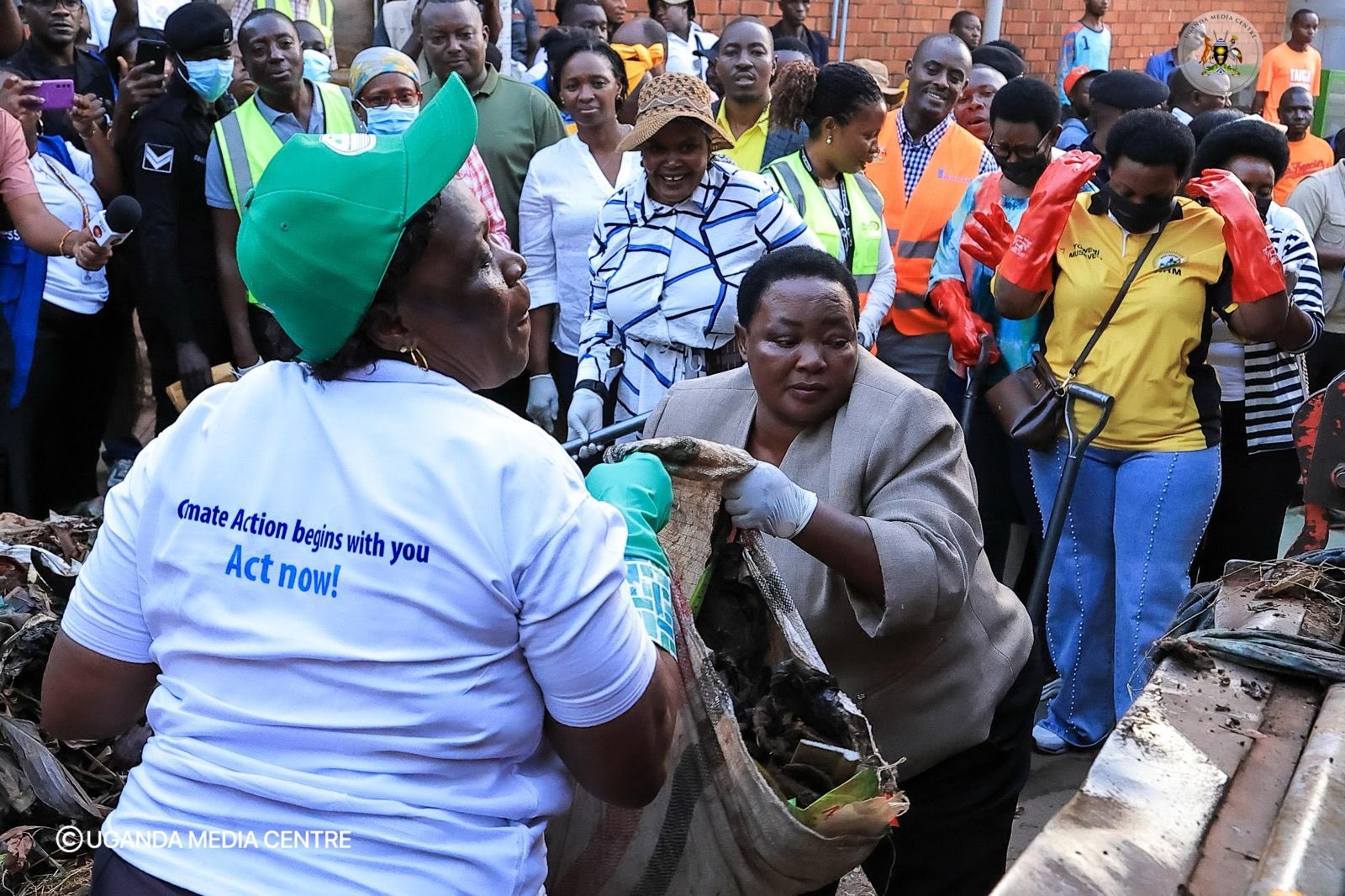
The Government’s decision to dedicate the last Saturday of every month to a nationwide cleaning exercise is a commendable step towards addressing one of Uganda’s most persistent public health challenges.

Poor sanitation continues to fuel preventable diseases, clog drainage systems, pollute the environment and undermine the country’s development aspirations. The initiative therefore deserves the support of every Ugandan.


Related posts

Why Uganda’s School Buses Should Be Painted Yellow, and Why the Policy Matters

Why Uganda’s School Buses Should Be Painted Yellow, and Why the Policy Matters

July 18, 2026
An overturned passenger bus lies on its side after colliding with a train at a railway crossing as residents gather at the scene following the crash.

The Mukono School Bus Tragedy Demands Safer Railway Crossings, Not Another Round of Regret

July 10, 2026

However, its long-term success will depend not on police roadblocks or mandatory participation, but on whether it succeeds in changing attitudes and building a lasting culture of cleanliness.

Government has justified the programme by citing alarming public health statistics. According to the Office of the Prime Minister, diseases such as malaria, typhoid and diarrhoea continue to claim lives because of poor sanitation and hygiene.

Kampala alone generates thousands of tonnes of solid waste every day, yet only a portion is collected, leaving the rest to block drainage channels and create breeding grounds for disease. Those figures are a reminder that cleanliness is not merely an environmental issue. It is a matter of life and death.

That reality explains why National Cleaning Day has been welcomed by many Ugandans. Few would disagree that cleaner communities mean healthier families, reduced healthcare costs, improved tourism and more attractive cities and trading centres.

The initiative also reinforces Article 39 of the Constitution, which gives every citizen the right to a clean and healthy environment while placing a duty on all Ugandans to protect it.

Yet good intentions alone do not guarantee successful public policy.

The first implementation exposed several weaknesses that should be addressed before the next exercise. Many Ugandans were uncertain about the operational guidelines, while some essential service providers found themselves caught between government policy and inconsistent enforcement.

Private security guards transporting personnel to banks, schools, shopping malls and other protected facilities reported being stopped, detained and ordered to participate in cleaning despite earlier police communication suggesting security services were exempt. Journalists also questioned why they had not been clearly recognised among essential workers.

These incidents should not be dismissed as isolated complaints. They demonstrate the importance of clear communication before implementing any nationwide programme. A directive that affects millions of people cannot rely on assumptions or verbal explanations after enforcement has already begun.

Government should therefore publish comprehensive operational guidelines well before every National Cleaning Day. The public deserves clarity on who is exempt, what activities are expected, how emergency services will operate and what role local leaders should play. Every district should receive identical instructions to avoid different interpretations by enforcement officers.

More importantly, National Cleaning Day must not become synonymous with police deployment. Enforcement has its place, but no country has ever achieved lasting environmental change through fear alone. Sustainable cleanliness grows from public ownership.

Communities should be encouraged to identify their own sanitation priorities rather than simply responding to government directives. Local councils, Resident District Commissioners, religious leaders, schools, youth organisations, women’s groups and cultural institutions should be empowered to mobilise residents throughout the month, not only on the final Saturday.

Government could further strengthen participation by introducing annual awards for the cleanest districts, municipalities, markets, schools and villages. Healthy competition among communities would encourage continuous improvement while recognising local innovation.

Equally important is addressing the root causes of poor sanitation.

Cleaning roads every month will have limited impact if garbage collection remains inadequate, drainage systems are poorly maintained and illegal dumping continues unchecked.

Local governments should ensure sufficient waste collection vehicles, designated disposal sites and public waste bins are available before every exercise. Otherwise, communities may simply relocate waste from one place to another.

National Cleaning Day should also become an environmental restoration campaign. Communities can combine clean-up activities with tree planting, wetland protection, riverbank restoration and plastic waste reduction. Such activities would help Uganda tackle not only sanitation challenges but also the growing effects of climate change.

Schools should be central to this effort. Environmental education must become part of everyday learning so that children grow into adults who value cleanliness naturally rather than because they fear punishment.

The same approach should extend to markets, health facilities, taxi parks and places of worship, where sanitation standards directly affect thousands of people every day.

The private sector also has an important role. Businesses should treat National Cleaning Day as an opportunity to invest in cleaner communities through corporate social responsibility. Donations of waste bins, protective equipment, cleaning tools and community awareness campaigns would significantly strengthen the initiative.

One issue requiring thoughtful leadership is the concern raised by the Seventh-day Adventist Church. The Church has made it clear that it fully supports environmental cleanliness but has requested accommodation because Saturday is observed as the biblical Sabbath. It has proposed participating on Fridays or Sundays while discussions with Government continue.

This should not become an unnecessary confrontation. Uganda’s Constitution protects both public health and freedom of religion. These principles can coexist. Providing reasonable accommodation for religious communities that remain committed to the objectives of National Cleaning Day would strengthen national unity while demonstrating respect for constitutional rights.

The Government should also begin measuring the programme’s impact beyond participation figures. Success should be evaluated through improvements in waste collection, reductions in blocked drainage channels, lower cases of sanitation-related diseases and cleaner public spaces. Without measurable outcomes, National Cleaning Day risks becoming a symbolic monthly event rather than a transformative public health intervention.

Ultimately, the greatest challenge is ensuring that Ugandans do not reserve cleanliness for one Saturday every month. A nation cannot be clean for three hours and dirty for the remaining thirty days. Clean compounds, proper waste disposal, regular drainage maintenance and responsible environmental practices should become everyday habits in homes, schools, businesses and institutions.

National Cleaning Day has the potential to become one of Uganda’s most impactful public health programmes. But that will only happen if Government shifts its focus from enforcing compliance to inspiring civic responsibility.

When every Ugandan understands that keeping the environment clean is both a personal duty and a patriotic act, the country will have achieved something far greater than a successful monthly exercise. It will have built a national culture of cleanliness that future generations will proudly inherit.

The writer, Ivan Kimbowa, is a senior journalist and analyst. He can be reached on +256 701 584 195 or via email at ivankimbowa7@gmail.com.
 

Tags: InsightPost-Editorial
ShareTweetPin
Previous Post

Babalanda Calls For Moral Leadership, Backs NRM Candidates At Priest’s Silver Jubilee

Next Post

Tororo Cement Under Scrutiny After Viral Video Alleges Underweight Cement Bags

Related Posts

Sanitary facilities at Goma Health Centre III in Mukono Municipality, one of the institutions that has benefited from Water For People’s sanitation interventions.
Education

Water For People Tackles Sanitation Gap At Lweza Primary School

August 13, 2026
Babirye Milly Babalanda
Opinion

Time for LCs to Turn Election Victory into Wealth-Creation Victory

August 12, 2026
Health officials quarantined the Yingfeng 2 after intercepting the passenger vessel on the Congo River before it reached Kinshasa, as authorities screened all 255 passengers for Ebola and cholera following five reported deaths.
Health

DR Congo Quarantines River Boat Over Ebola Fears After Five Deaths

August 6, 2026
Health Ministry Warns Non-Communicable Diseases Now Account for 35 Percent of Deaths in Uganda
Health

Health Ministry Warns Non-Communicable Diseases Now Account for 35 Percent of Deaths in Uganda

August 6, 2026
National Cleaning Day Must Inspire a Culture of Cleanliness, Not Just Three Hours of Compliance
Opinion

Why Uganda’s New General Cleaning Policy Misses the Mark

August 6, 2026
Rescue efforts continue at the scene of a devastating road crash after a passenger bus was left extensively damaged following a collision.
Opinion

From Traffic Accidents To Manslaughter: Time To Prosecute The Dealers Of Counterfeit Automative Spare Parts 

August 5, 2026
Next Post
Tororo Cement Under Scrutiny After Viral Video Alleges Underweight Cement Bags

Tororo Cement Under Scrutiny After Viral Video Alleges Underweight Cement Bags

RECOMMENDED NEWS

Hajji Farouk Kirunda, Deputy Presidential Secretary and Presidential Assistant in charge of press and mobilisation

Busoga Leaders Urged to Embrace Integrity, Focus on Service Delivery

3 months ago
Government Orders Tougher Safety Checks On School Buses

Government Orders Tougher Safety Checks On School Buses

1 week ago
Demonstration centre of the various railway guages.

National Economy At Stake: Parliament Probes The Dual Gauge Railway Dilemma

3 years ago
Mpuuga’s Ugx500m Service Award Legal, Proper- Parliament Clerk

Mpuuga’s Ugx500m Service Award Legal, Proper- Parliament Clerk

2 years ago

FOLLOW US

Insight Post Uganda

We bring you the most balanced news professionally investigated by our news team. The Insight Post is Uganda’s News company regulated by the Uganda Communications Commission.

Follow us on social media:

Recent News

  • NAGRC Tightens Service Delivery, Accountability Under New Five-Year Plan
  • Balaam Questions Bridge Collapse As Mukono District, Sub-County Dispute Responsibility
  • Government Urges Religious Leaders To Strengthen Security At Places Of Worship

Category

  • Agriculture
  • Business
  • Editorial
  • Education
  • Environment
  • Health
  • Lifestyle
  • Luganda
  • News
  • Opinion
  • Photos
  • Politics
  • Profiles
  • Religion
  • Runyankole
  • Security
  • Sports
  • Tourism
  • Uncategorized
  • World News

Recent News

NAGRC Tightens Service Delivery, Accountability Under New Five-Year Plan

NAGRC Tightens Service Delivery, Accountability Under New Five-Year Plan

August 15, 2026
The dilapidated Nakyetinda bridge in Takajunge, Nama Sub-County, Mukono District

Balaam Questions Bridge Collapse As Mukono District, Sub-County Dispute Responsibility

August 15, 2026
  • About
  • Advertise
  • Careers
  • Contact

© 2024 The Insight post Uganda - The Insight post uganda. Site Powered by Bookablehood Ltd.

Welcome Back!

Login to your account below

Forgotten Password?

Retrieve your password

Please enter your username or email address to reset your password.

Log In
error: Content is protected !!
en_USEnglish
en_USEnglish
No Result
View All Result
  • Home
  • Politics
  • Business
  • Sports
  • Lifestyle
  • Tourism
  • Opinion

© 2024 The Insight post Uganda - The Insight post uganda. Site Powered by Bookablehood Ltd.