
















Parliament’s Public Accounts Committee (PAC) has demanded answers from the Ministry of Energy and Mineral Development and the Uganda Electricity Distribution Company Limited (UEDCL) over persistent electricity outages that have continued across the country despite the government’s takeover of power distribution from Umeme.
The concerns were raised on Monday as the committee scrutinised the Auditor General’s reports and the performance of state agencies. Lawmakers questioned why electricity supply has become less reliable more than a year after UEDCL assumed responsibility for the national distribution network.


PAC Chairperson Patrick Nsamba Oshabe said Ugandans had expected improved electricity services after the expiry of Umeme’s 20-year concession in March 2025, but many consumers are instead experiencing more frequent and prolonged blackouts.
Nsamba challenged officials to provide straightforward explanations for the deteriorating service instead of relying on technical language.
“When you inherited Umeme’s business, things became worse. Ugandans are experiencing a worse situation than in the days of Umeme,” he said.
He noted that the government inherited Umeme’s infrastructure, operational systems, vehicles and nearly all its workforce, making it difficult to understand why service delivery had declined.
“The infrastructure Umeme had was transferred to you. Nearly all the human resources were taken over. The toolboxes, the vehicles, everything was transferred. So where is the problem? Ugandans are concerned because their power is not coming,” Nsamba added.
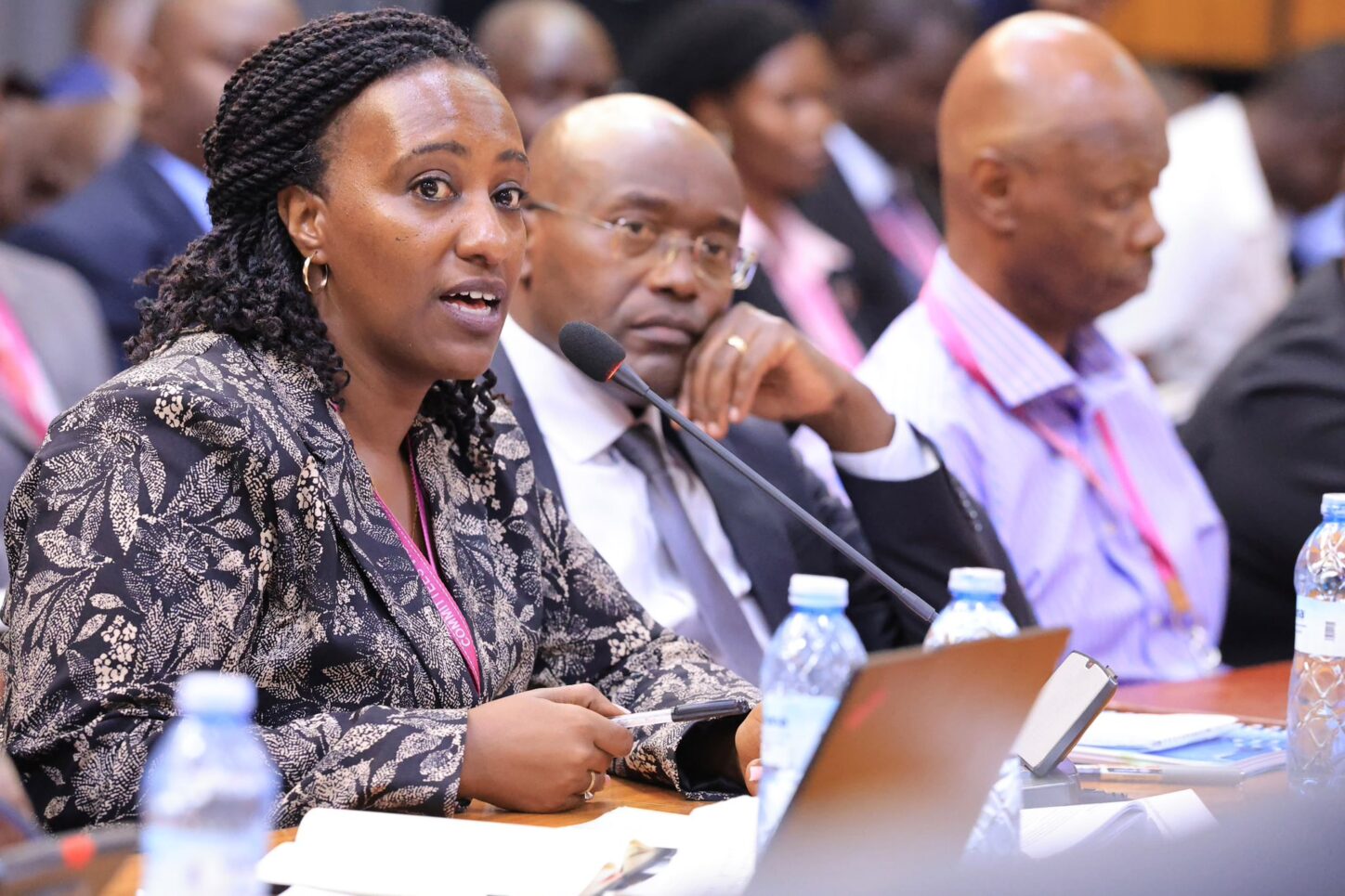
The committee also questioned the ministry over the delay in appointing a substantive Managing Director for UEDCL. The utility has been under the leadership of Acting Managing Director Engineer Joselyn Rwakakooko since May 2026.
Appearing before the committee, Rwakakooko acknowledged that the company has registered a decline in network reliability since taking over electricity distribution.
“We can see the change in performance. When we talk about how many times power goes off, we have noticed that it almost doubled. We also monitor the time it takes our teams to respond. We noted an increase from about 12 hours to almost 20 hours,” she said.
Rwakakooko attributed the worsening outages to years of underinvestment in the electricity distribution network. She explained that electricity demand has expanded much faster than investments in substations, transformers and distribution lines, leaving much of the infrastructure overstretched.
She said overloaded transformers and substations have resulted in more equipment failures, contributing to frequent power interruptions.
According to Rwakakooko, UEDCL has so far replaced or upgraded more than 800 transformers this year and is carrying out emergency replacement of another 300 transformers while intensifying vegetation management to minimise outages caused by trees falling onto power lines.
Permanent Secretary in the Ministry of Energy, Engineer Irene Bateebe, told MPs that the outages stem from several factors, including vandalism of electricity infrastructure, overloaded equipment, ageing assets and procurement delays that slowed network expansion.
She said the government is working with security agencies to curb vandalism while UEDCL has been directed to improve emergency response times.
Bateebe also assured the committee that the recruitment of a substantive UEDCL Managing Director would be concluded within the next two months through a competitive process.
Responding to concerns over why electricity services have worsened despite increased government funding, Bateebe explained that investment in the distribution network slowed after Cabinet resolved in 2022 not to renew Umeme’s concession.
She said the decision led to reduced capital investment during the final years of Umeme’s contract as preparations for the government takeover gathered pace.
According to Bateebe, the government has injected approximately 129 million US dollars, equivalent to about Shs477 billion, into UEDCL during the 2025 and 2026 financial years to finance network improvements.
However, she explained that much of the funding has been committed to the procurement of transformers, substations and other equipment, although the Public Procurement and Disposal of Public Assets Authority granted special approval to speed up the procurement process.
Bateebe dismissed claims that Umeme left with critical infrastructure, insisting that the entire electricity distribution network, operational software and other assets were handed over to UEDCL at the end of the concession. She added that about 96 percent of Umeme’s employees were absorbed into the government-owned utility, preserving much of the technical expertise required to operate the system.
Several legislators shared frustrations from their constituencies, saying customer service has deteriorated significantly since the transition.
Bunyaruguru County MP Benjamin Cadet said businesses and large electricity consumers are now enduring outages lasting up to two days without timely technical support, while still facing penalties for consuming less electricity than contracted.
He contrasted the current situation with Umeme’s operations, where faults were often resolved within hours and local managers were held directly accountable for prolonged interruptions.
Kumi Municipality MP Silas Aogon also questioned whether challenges in integrating former UEDCL and Umeme employees had affected operational efficiency following the merger.
Rakakoko acknowledged that integrating staff from the two organisations had presented management challenges but said efforts are ongoing to build a unified workforce capable of improving service delivery.
The government officially assumed responsibility for electricity distribution on April 1, 2025, ending Umeme’s two-decade concession with promises of improved service, lower operating costs and accelerated investment in the electricity network.
However, consumers across the country continue to report frequent blackouts, delayed fault restoration and poor customer care, raising questions about whether the transition has delivered the improvements that were promised.
The committee’s scrutiny comes as the government continues investing heavily in expanding and rehabilitating Uganda’s electricity distribution network while seeking to restore public confidence in UEDCL’s ability to provide reliable power.







 English