









By Ambrose Musasizi
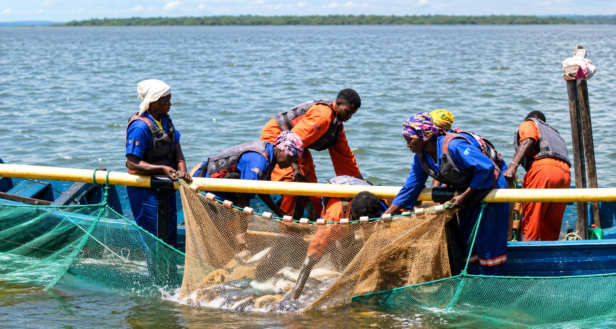
As the first rays of sunlight spread over the shores of Lake Victoria, fishing communities in Kasensero in Kyotera District, Lambu in Masaka, and the scattered islands of Kalangala begin another day of survival.

Young women move through the busy landing sites carrying baskets of fresh fish, cleaning catches for traders, serving tea in small roadside eateries, or working in bars that come alive after sunset.
For many, the shoreline represents opportunity. But beneath the daily struggle for income lies a hidden health crisis.
Despite decades of HIV prevention campaigns and major progress in controlling the epidemic, adolescent girls and young women living in fishing communities remain among the most vulnerable groups in Uganda.
Their vulnerability is driven not only by the virus itself, but by the circumstances surrounding their lives: poverty, economic dependence, gender inequality, mobility and limited opportunities.
Health experts say that while Uganda has significantly reduced new HIV infections nationally, fishing communities continue to experience a different reality where young women often face a higher risk of acquiring HIV compared to their male counterparts.
Recent surveillance data from the greater Rakai region shows that HIV prevalence among adolescent girls and young women remains considerably higher than among young men of the same age group, reflecting a trend seen in many communities around Lake Victoria.
For many girls, infection is not the result of ignorance or careless choices. It is often a consequence of survival.
When Survival Comes Before Safety
At Kasensero landing site, one of the places where Uganda’s first HIV cases were identified more than 40 years ago, the rhythm of life is controlled by the lake.
A good catch can determine whether a family eats. A poor season can push households deeper into hardship.
For young women searching for income, the struggle can lead them into risky situations.
Many migrate from rural areas hoping to find jobs in fish processing, restaurants or domestic work. Some instead enter relationships where financial support is exchanged for companionship or sex.
Kyotera District Health Officer Dr Edward Muwanga says poverty remains one of the biggest drivers of HIV vulnerability among adolescent girls.
“Most of these girls are not making careless choices. They are responding to economic realities. When survival depends on accepting money, food or accommodation from older partners, negotiating condom use becomes extremely difficult,” he says.
Dr Muwanga argues that HIV prevention cannot succeed if it focuses only on medical solutions.
“We cannot treat HIV as only a medical problem. It is equally an economic and social issue,” he says.
The Power Imbalance Of Age-Disparate Relationships
Across fishing communities, health workers frequently encounter a similar pattern: young girls entering relationships with older men who have greater financial power.
Older fishermen, fish traders, transporters and businessmen often provide things many young women need, including school fees, rent, food, phones or money to start small businesses.
But these relationships often come with unequal power.
Kyotera District HIV Focal Person E-max Kintu says age-disparate relationships remain a major factor behind new infections among adolescent girls.
“An older man is statistically more likely to already be living with HIV than a teenage boy. When a 16-year-old starts a relationship with someone twenty years older because he can provide financially, her risk increases substantially,” he says.
He explains that HIV awareness alone is not enough when young women lack the ability to negotiate safer choices.
“People may know about HIV prevention, but knowledge cannot always overcome economic dependence,” Kintu says.
A Lake That Connects Communities And Risks
Lake Victoria does not stop at national borders.
Fishing boats, traders and workers move daily between Uganda, Tanzania and Kenya, creating a highly mobile population.
For health authorities, this movement creates challenges in HIV prevention, testing and treatment continuity.
Kalangala District Health Officer Dr Hillary Bitakalamire says mobility remains one of the biggest barriers to controlling transmission.
“Our islands receive people every day from different districts and neighbouring countries. Many relationships begin here and continue across borders, making follow-up, testing and treatment continuity extremely challenging,” he says.
Some people start HIV treatment in one district but relocate without transferring their medical records or linking to another health facility.
Others disappear from care completely.
“Mobility remains one of our biggest public health challenges,” Dr Bitakalamire says.
The Hidden Reality Of Transactional Sex
Health experts say not every exchange involving sex happens through formal commercial sex work.
Sometimes it involves a fisherman providing food, a man paying rent, supporting a child’s education, buying a phone or offering transport money.
Many young women involved do not identify themselves as sex workers, making it difficult for traditional HIV programmes to reach them.
Rakai District Probation Officer Nicholas Ssembatya says some relationships develop gradually.
“A girl may begin by helping at a restaurant, then develops a relationship with a customer who starts supporting her financially. She doesn’t consider herself a sex worker, yet the risks are similar,” he says.
Women At Risk Of Exploitation
Sex worker leaders in Kyotera and Masaka say poverty remains one of the strongest forces pushing young women into risky situations.
Sarah Namayanja (not her real name), who coordinates a support network for sex workers in Kyotera, says many women enter the trade after dropping out of school, experiencing family breakdown or becoming single mothers.
“Most girls don’t wake up dreaming of becoming sex workers. Poverty pushes them there. If there were jobs that paid enough, many would leave immediately,” she says.
She adds that violence and difficulty negotiating condom use remain major concerns.
“Some clients refuse condoms after agreeing to use them. Others become violent. Young girls are the easiest to exploit because they fear reporting to police,” she says.
In Masaka City, another sex worker leader, Prossy Nakato (not her real name), says increased movement of people around fishing communities has made competition for customers more intense.
“Clients know another girl is waiting. Some offer more money for unprotected sex. When someone has not eaten all day, saying no becomes difficult,” she says.
Children And Families Left Behind
Beyond HIV infection, health and social workers say vulnerable girls often face long-term consequences, including school dropout, teenage pregnancy and abandonment.
Kyotera District Community Development Officer Pauline Namugenyi says her office continues to receive cases involving girls who moved to landing sites searching for opportunities but ended up in exploitative relationships.
“Some leave their villages hoping to find employment but end up living with older men who later abandon them. By the time they seek help, some are already HIV positive, pregnant or both,” she says.
Namugenyi says preventing HIV among young women requires stronger child protection systems.
“Protection begins before infection occurs. Families, schools, local leaders and social workers all have a role,” she says.
New Prevention Tools Bring Hope
Despite the challenges, health officials say progress is possible.
Uganda has expanded HIV testing, treatment and prevention services, including condoms, HIV self-testing, pre-exposure prophylaxis (PrEP), and newer long-acting prevention options.
Health teams are also increasing outreach programmes targeting adolescent girls, fishermen, truck drivers and other mobile populations.
Dr Muwanga believes the next stage of HIV prevention must combine medicine with economic empowerment.
“If a girl has income, education and hope for tomorrow, she is better positioned to protect herself today,” he says.
Ending HIV Requires More Than Medicine
Public health experts increasingly argue that reducing HIV infections among adolescent girls requires interventions beyond hospitals.
These include keeping girls in school, expanding vocational training, creating employment opportunities, preventing gender-based violence, strengthening child protection systems and improving access to youth-friendly reproductive health services.
For communities along Lake Victoria that have lived with HIV since the beginning of the epidemic, one lesson is becoming clearer: the virus is no longer spreading simply because people lack information.
It continues to thrive where inequality, poverty and limited opportunities remain.
As fishing boats disappear into the evening mist, thousands of young women along the shoreline continue searching for work, safety and a better future.
Whether the next generation escapes the cycle of HIV will depend not only on medicines and awareness campaigns, but on whether communities address the social and economic conditions that continue to place young women at the centre of Uganda’s HIV response.
ENDS.





 English