


















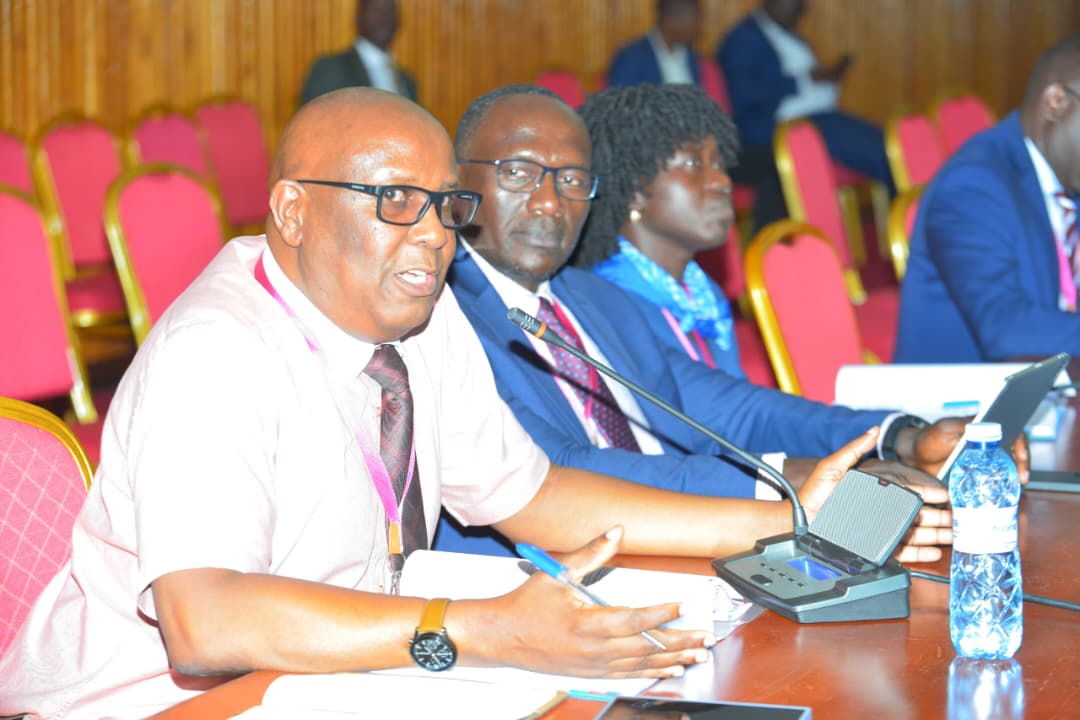
The National Medical Stores (NMS) has defended its role in Uganda’s medicine supply chain, insisting that responsibility for medicines shifts to health facilities immediately after delivery.
While appearing before Parliament’s Committee on Commissions, Statutory Authorities and State Enterprises (COSASE), NMS General Manager Moses Kamabare told legislators that the agency’s mandate is limited to procuring and delivering medicines and medical supplies based on requisitions submitted by health facilities.


Kamabare said once medicines are handed over, the responsibility for their storage, security and distribution rests with the management of the receiving health facilities.
“If medicines are stolen or diverted after delivery, that is not the responsibility of NMS,” Kamabare told the committee.
The explanation came as COSASE investigated persistent complaints from the public about frequent shortages of medicines in government health facilities despite reports that some medical supplies expire in storage.
Committee Chairperson Muwada Nkunyingi said Parliament wants to establish where failures occur in the supply chain to ensure that Ugandans have consistent access to essential medicines.
“We need to know where the breakdown is occurring because patients continue to complain about medicine shortages, yet reports indicate that some supplies are expiring in stores,” Nkunyingi said.
Responding to concerns raised in the Auditor General’s report about expired medical supplies, Kamabare said a significant proportion of the expired stock consisted of COVID-19 commodities such as personal protective equipment, face masks and laboratory supplies whose demand dropped sharply after the pandemic.
He added that Uganda remains among the better-performing countries in Africa in managing medicine expiry and said NMS has strengthened planning and redistribution mechanisms to reduce wastage.
The committee also questioned the agency over delayed deliveries and recurring stock-outs reported in some health facilities across the country.
Lugazi Municipality MP Ssalongo Richard Senteza urged NMS to promptly notify oversight agencies whenever medicines are reported missing after delivery, arguing that swift reporting would help curb theft and safeguard patients’ access to treatment.
Butaleja District Woman MP Sarah Annet Logose challenged the agency to ensure that its digital inventory management systems translate into improved medicine availability. She said government should not continue losing resources through expired medicines while patients struggle to obtain essential drugs.
The committee also sought clarification on the number of labour-related court cases involving NMS. MP George Musisi asked why the agency continued to face employment disputes.
Kamabare explained that most of the long-standing cases stemmed from staff dismissals made following recommendations by the Auditor General several years ago. He added that recent employment-related cases have largely been decided in favour of the agency.
On funding, Kamabare said NMS had engaged both the Ministry of Finance and Parliament over budget shortfalls affecting the procurement of essential medicines. He noted that these engagements resulted in supplementary funding during the previous financial year, enabling the agency to increase medicine procurement and distribution.
COSASE also reviewed NMS’s procurement compliance, delayed budget reporting and implementation of recommendations by the Auditor General. In response, the agency assured legislators that corrective measures have been implemented to strengthen accountability, improve financial management and enhance service delivery.









 English