
















When the Greater Kampala Metropolitan Area Urban Development Program (GKMA-UDP) road project was first introduced in Mukono Municipality, it was met with excitement, uncertainty and, in some quarters, resistance.
Like many infrastructure projects in Uganda, one of the biggest obstacles was not engineering or financing but acquiring sufficient land to create the required road reserve without triggering lengthy legal disputes or expensive compulsory acquisition processes.
Today, that challenge has become one of the project’s greatest success stories.
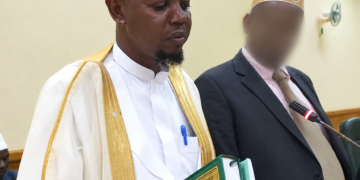
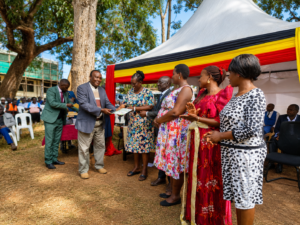
Mukono Municipal Council on Friday honoured dozens of landlords who voluntarily surrendered portions of their land to pave the way for the municipality’s ambitious road upgrade programme, highlighting a development model increasingly built on negotiation, community participation and shared ownership rather than confrontation.
The appreciation and feedback ceremony, organised through the municipality’s Community Development Department, celebrated residents whose willingness to sacrifice private property enabled the construction of modern urban roads that are already transforming transport, trade and public services.
Across Uganda, infrastructure development has frequently been delayed by disputes over compensation and right-of-way acquisition. Road projects often stall for months or even years because affected property owners refuse access or challenge compensation arrangements.
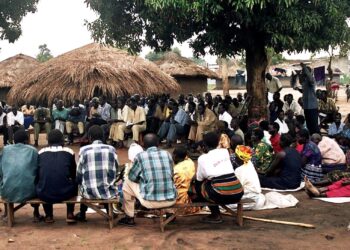
Mukono Municipality chose a different path. Instead of relying solely on compulsory acquisition, municipal authorities invested heavily in community engagement, explaining the long-term benefits of improved roads while encouraging voluntary consent wherever possible.
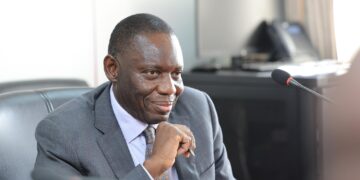
According to officials, the approach paid off. Speaking during the ceremony, Under Secretary for Greater Kampala Metropolitan Affairs Monica Ademacu praised landlords, the Municipal Development Forum, contractors and local leaders for working together throughout implementation.
She urged contractors to complete the remaining sections, particularly access roads leading to affected properties, while calling upon residents to protect newly installed infrastructure, including drainage systems, road signs and other public facilities from vandalism.
Her message also carried an important policy shift for future projects.
She revealed that upcoming Government and World Bank-funded infrastructure programmes will only proceed after obtaining at least 70 percent consent from affected property owners regarding the required right of way.
The requirement is intended to reduce implementation delays and minimise conflicts that have historically slowed major public works.
Roads Near Completion
Mukono’s upgraded roads represent one of the municipality’s largest recent infrastructure investments.
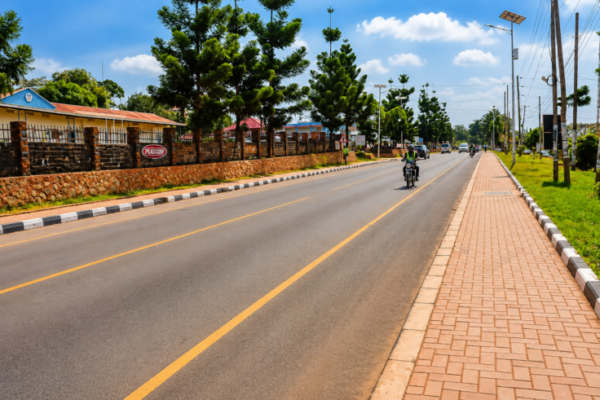
Town Clerk Francis Byabagambi reported that works under Lot 2, covering 8.68 kilometres, have reached 100 percent substantial completion, while Lot 3 stands at 82 percent.
Beyond simply resurfacing roads, the project has introduced modern urban infrastructure designed to improve safety and resilience.
The completed works include: solar-powered street lighting, drainage channels, road signs and lane markings, culverts and enhanced pedestrian safety features.
Municipal officials say the improvements are already reducing travel times while creating a more attractive environment for businesses and investors.
While the ceremony celebrated completed roads, it also acknowledged the sacrifices made by Project Affected Persons (PAPs).
Among them was engineer Dan Male, who also serves as Lugazi Diocese Engineer. He recalled that initial discussions generated mixed reactions, with some residents hesitant about surrendering parts of their land.
However, continuous engagement eventually built consensus.
“The project team explained the benefits of consenting to provide the required road reserve. At first people had different opinions, but eventually we reached an understanding,” he said.
He noted that residents whose properties suffered major impacts, including complete relocation, were assisted to resettle in areas such as Bajjo and Serado.
While land values along the upgraded roads have increased significantly, some residents observed that pedestrian walkways were overlooked in some sections, forcing pedestrians to compete for road space with motorists.
There observation reflects a broader challenge facing rapidly urbanising municipalities where expanding vehicle traffic increasingly conflicts with pedestrian safety.
Leadership Calls for Responsibility
Mukono Municipality Mayor Robert Peter Kabanda described the road project as evidence that development succeeds when communities, government and development partners pursue a common goal.
He thanked all stakeholders who contributed to the project’s implementation and pledged to prioritise service delivery throughout his tenure, urging fellow elected leaders to place public service above political interests.
Deputy Resident District Commissioner Rhondah Tiiti Kagaaga similarly credited the Government of Uganda and the World Bank for investing in infrastructure that has improved mobility, expanded business opportunities and strengthened service delivery.
She challenged residents, especially newly elected LC I Chairpersons, to protect the investment by keeping drainage channels free from garbage, discouraging illegal dumping and mobilising communities to participate in National Cleaning Days.
The message emphasized an often-overlooked reality of urban infrastructure: maintenance begins with community behaviour.
Blocked drainage channels remain one of the leading causes of flooding in rapidly growing municipalities.
For many observers, the certificates presented to participating landlords represented more than symbolic recognition.
They reflected a changing relationship between government and citizens in infrastructure development.
Simon Mwebe, Speaker of Goma Division, noted that land in Mukono Municipality commands high market value, making residents’ willingness to surrender portions of their property particularly significant.
He argued that their decision demonstrated an understanding that long-term community development can sometimes require individual sacrifice.
Rather than viewing road expansion as a loss, many landowners now see it as an investment that has increased property values, improved accessibility and opened new economic opportunities.
Lessons for Future Projects
Mukono’s experience offers valuable lessons for other municipalities preparing for large infrastructure projects.
Early community engagement, transparent communication and responsive local leadership appear to have reduced conflicts that commonly delay public works.
However, the project also highlights areas requiring greater attention, including pedestrian infrastructure, consistent maintenance and ensuring that all affected households receive timely and fair compensation.
As Uganda accelerates urbanisation and expands infrastructure under programmes supported by development partners, Mukono’s experience suggests that engineering alone does not determine success.
Building roads may require machinery and funding.
Building public trust requires dialogue, transparency and a shared belief that development benefits everyone.
For Mukono, that trust may prove to be the project’s most enduring achievement.
ENDS.







 English