















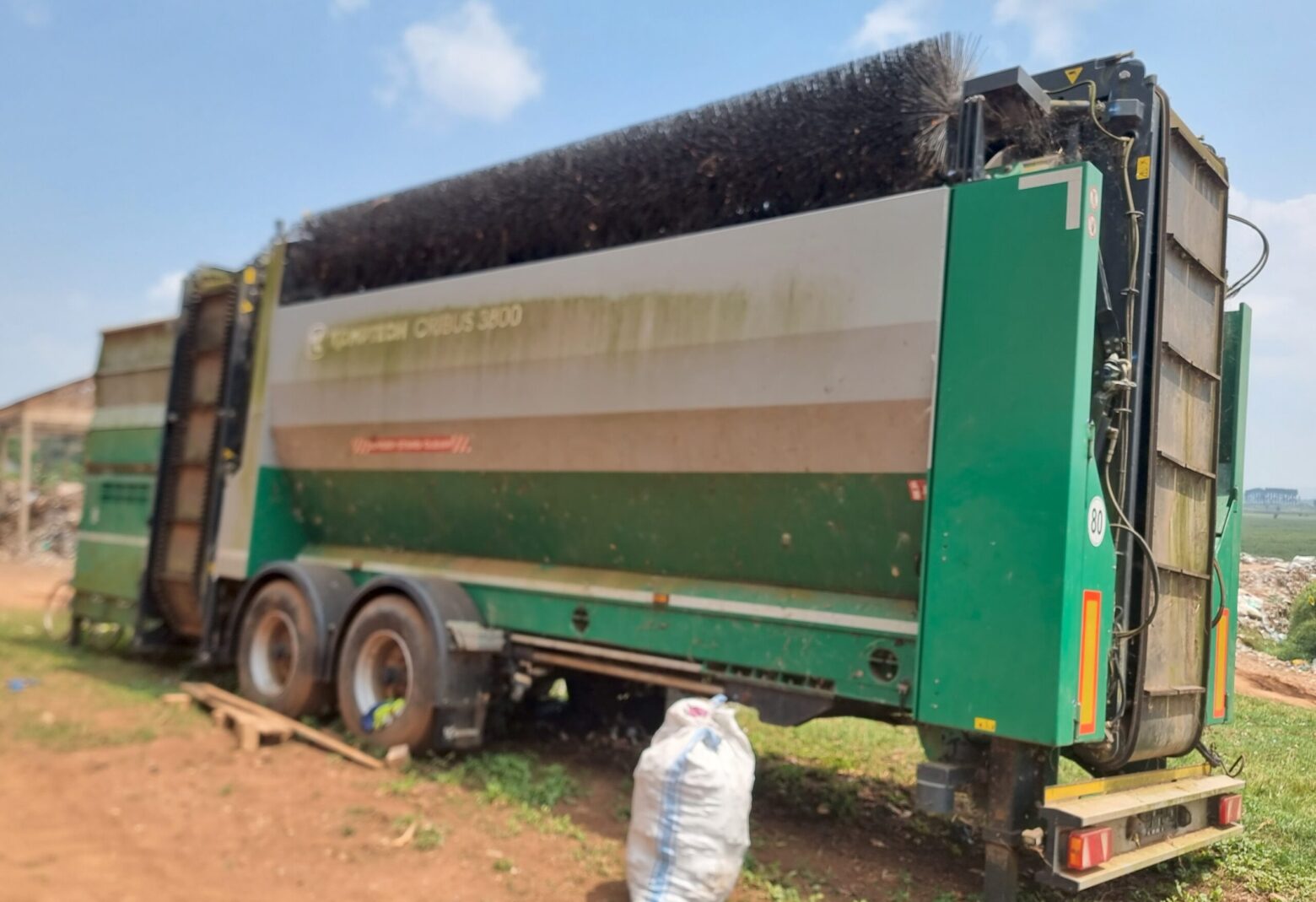
A heavy-duty waste processing machine valued at about Shs600 million has remained idle at Mukono Municipality’s Katikolo composite waste management site, nearly two years after it was donated to help the municipality tackle its growing garbage burden.
The Komptech equipment was provided as part of efforts to strengthen waste processing and recycling in Mukono, but its prolonged inactivity has raised questions about the municipality’s preparedness to put donor-funded infrastructure to use.
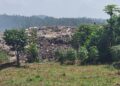

The machine arrived at a time when Mukono was already facing a widening gap between the amount of waste generated and the municipality’s capacity to collect and process it.
Municipal records indicate that Mukono generates nearly 270 tonnes of waste every day, yet only about 79 tonnes is collected, leaving close to 200 tonnes uncollected.
That gap gives the idle equipment particular significance.
What The Machine Could Do
Komptech, an international manufacturer of waste processing and recycling technology, describes its equipment as designed for processes including shredding, turning, screening and separation of waste materials.
The company says its technology is used to process organic waste, woody biomass, waste wood, compost and other waste streams, with the objective of turning waste into useful resources.
Among its screening technologies is the Multistar XL3, which Komptech says is suited to processing compost, waste wood and woody biomass. Its star-screen technology can separate materials into defined fractions while maintaining high throughput even when moisture levels and composting conditions vary.
Komptech’s published case studies demonstrate the potential of such equipment when integrated into a functioning waste-processing plant. In one composting facility, a Multistar XL3 forms part of a system capable of screening up to 150 cubic metres of compost per hour.
The company also says its equipment can be combined into complete processing systems involving shredding, screening, separation and conveyor technology.
This means that, if properly installed and operated, the equipment at Katikolo could do more than simply reduce the amount of waste sent for disposal. It could help the municipality separate waste streams, recover useful materials and improve the efficiency of composting and recycling.
From Municipal Headquarters To Katikolo
But the machine’s journey since arriving in Mukono has been marked by delays.
For more than a year, the equipment remained at the municipal headquarters before authorities moved it to Katikolo.
At the composite site, however, it has again remained unused, exposed to heavy sunshine and rain while the infrastructure needed to operate it is completed.
During an inspection of the site, this publication observed ongoing works to re-roof the shelters for the windrow and Komptech machines.
George Masengere, the municipality’s Principal Environment Officer, said the shelter works are being undertaken as authorities prepare the facility for expanded operation.
But he identified another major obstacle: electricity.
Masengere said the existing power connection does not meet the Phase III requirement needed to operate the machine, meaning an appropriate electrical connection must be established before the equipment can be commissioned.
The issue is significant because Komptech’s own documentation shows that its electrically driven processing equipment can require substantial power infrastructure. For example, a Komptech compost-screening installation documented by the company uses approximately 100kW of electrical power.
Money Released, But Machine Still Idle
The explanation has not convinced all local leaders.
Political leaders at the municipality contend that money intended for establishing the shelters and installing the required power infrastructure was released some time ago and that the machine should already be operational.
Their concerns point to a bigger question: if the equipment was delivered and funds were provided for the supporting infrastructure, what has prevented the project from becoming functional?
The issue is particularly pressing because Mukono’s waste problem has continued to grow while the machine remains unused.
A recent expenditure report prepared by the municipality’s Natural Resources Department indicates that activities at the Katikolo CDM and composite site are being implemented under a Shs108 million local revenue budget.
Yet activities at the site are currently largely at a standstill.
The apparent disconnect between expenditure, infrastructure development and actual service delivery raises questions about project planning and accountability.
The Cost Of Waiting
The idle machine also comes at a time when Mukono is considering a broader expansion of its waste management system.
The municipality wants to expand the Katikolo facility and establish infrastructure including a material recovery facility and a faecal sludge treatment facility. A feasibility study conducted by KOICA in 2024 also informed plans for additional investment at the site.
The municipality’s challenge is therefore no longer simply collecting garbage. It is developing a system capable of handling, sorting, recycling and safely disposing of waste as urbanisation accelerates.
Komptech’s own philosophy is centred on converting waste into useful and valuable resources rather than treating it simply as material destined for disposal.
That approach could potentially help Mukono address two problems at once: the mounting volume of waste and the cost of continually collecting and disposing of it.
But that potential remains unrealised.
A Shs600 Million Machine Question
For residents, the central issue is not the technical specifications of a Komptech machine or the amount of money spent on the Katikolo site.
It is whether the investment is actually improving waste management.
Every day the machine remains idle, Mukono continues to generate hundreds of tonnes of waste, while a large proportion remains outside the municipality’s formal collection system.
The longer the delay continues, the greater the concern over whether the equipment can be maintained in good working condition after prolonged exposure to the elements and inactivity.
Komptech itself emphasises the importance of proper commissioning, installation, inspection and lifecycle support for its machines, with the company saying its handover process is intended to ensure equipment is properly installed, inspected and ready for use.
For Mukono, therefore, the immediate task is not merely to complete a roof or secure electricity. It is to establish a clear timetable for commissioning the machine, and demonstrate how the equipment will contribute to closing the municipality’s enormous waste collection gap.
Until that happens, the Shs600 million machine at Katikolo will remain a striking example of the difference between investing in waste-management technology and actually putting that technology to work.
ENDS.









 English