














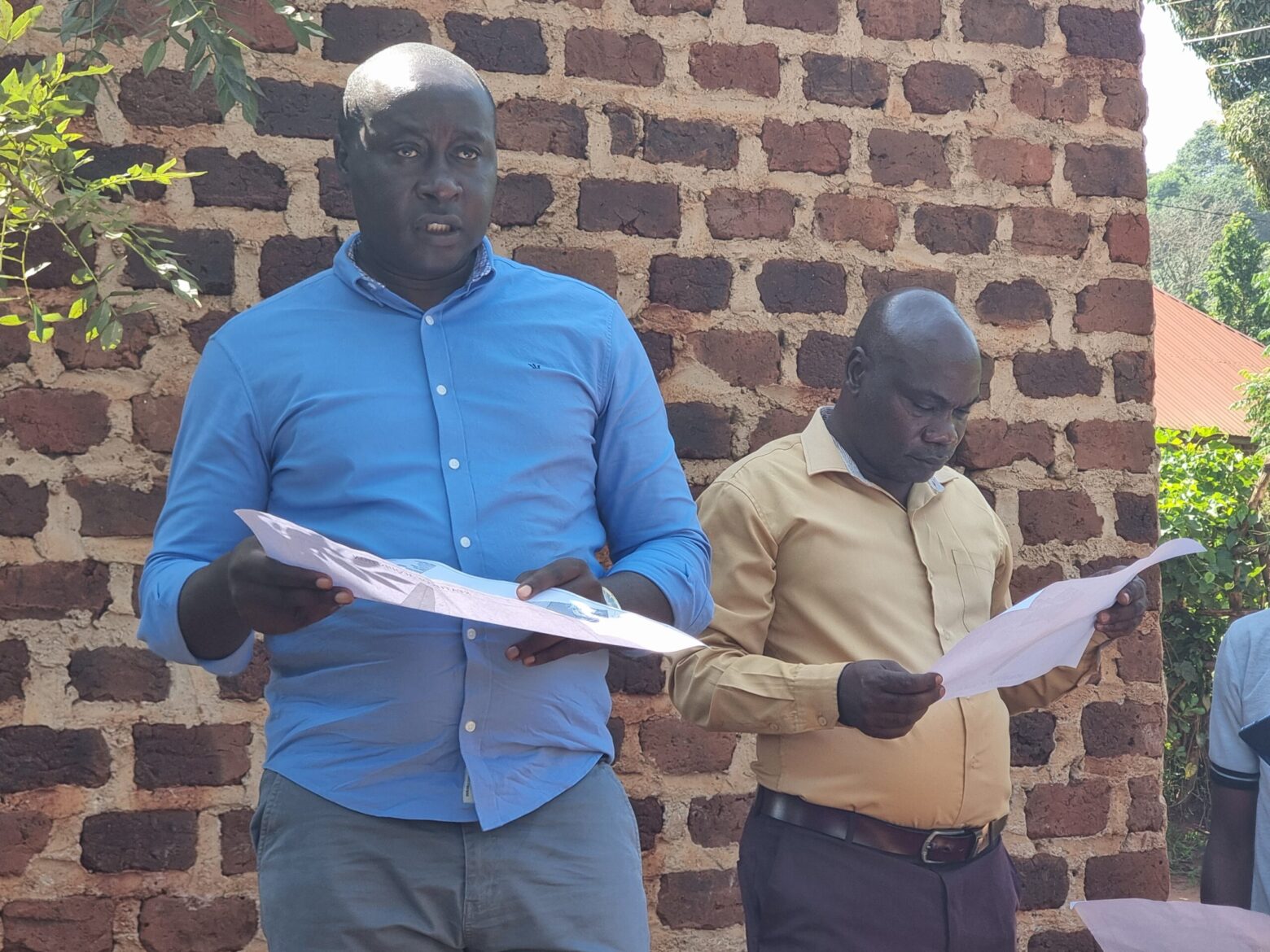
The recent tour of land acquired by Mukono Municipality for the expansion of Katikolo landfill was expected to provide a clearer picture of how the Shs4.5 billion allocated for land acquisition had been spent.
Instead, the visit raised fresh questions about what exactly the municipality bought, where the land is located, how much was paid for each portion and whether some of the land existed as part of the municipality’s earlier holdings.
The questions are emerging against the backdrop of a municipal land acquisition report showing that the municipality entered into compensation agreements worth about Shs4.489 billion and had secured 30.8794 acres out of a targeted 32 acres.
The municipality says the acquisition has progressed substantially. But a closer look at the figures, the land on the ground and historical records held by former municipal leaders exposes an unresolved mismatch that requires the council to provide a more detailed account of the transaction.
During the recent tour, Municipal Senior Planner Hillary Murungi was unable to clearly identify on the ground the two acres that officials say had been secured using Shs600 million earlier provided by KCCA to support the development of the Katikolo landfill.
The money had reportedly been provided by KCCA as a form of appreciation to Mukono Municipality for allowing Kampala to dispose of garbage at Katikolo.
On the municipality’s land acquisition status map, the existing landfill is shown as measuring approximately 7.6 acres, while an additional two-acre section is highlighted on the map.
But during the physical tour, the additional two acres could not be clearly located.
Murungi acknowledged that there had been an arrangement to acquire the land in the area, but could not point out the exact two-acre portion corresponding to the money.
This is significant because in earlier engagements, Municipal Environment Officer George Masengere had confirmed that the two acres had been secured in the area, despite government being expected to provide funding for the acquisition.
If the two acres were indeed secured, the existing 7.6 acres plus the additional two acres would bring the land under consideration to almost 10 acres.
That figure is important because municipal officials have previously indicated that the landfill project requires about 30 acres to operate effectively.
The question, therefore, is not simply whether the two acres exist on paper. It is whether they were actually purchased, where they are located, who owns them, how much was paid and whether they form part of the land currently being counted among the 30.8794 acres acquired.
UGX4.5 Billion Released
Town Clerk Francis Byabagambi said the municipality had the required land valued by the Chief Government Valuer, who established a rate of approximately Shs150 million per acre.
Based on that valuation, the government released approximately Shs4.5 billion to facilitate the acquisition.
Byabagambi says the money was largely spent on the land purchase, with only about Shs10 million remaining, which was returned to the Treasury.
On the face of it, the figures appear straightforward: 30 acres multiplied by Shs150 million gives Shs4.5 billion.
But the acquisition report introduces a more complicated picture.
The report indicates that the municipality had acquired 30.8794 acres under compensation agreements worth Shs4.489 billion, while other parcels remained unresolved as indicated in our first article Katikolo Land Acquisition: Shs4.489 Billion Deal Leaves Compensation Gaps, Valuation Questions – Insight Post Uganda
At the same time, officials say some strategically important land is still not secured and will have to be acquired using local revenue.
This creates the central question surrounding the transaction: if the municipality has secured more land than initially planned, how exactly was the Shs4.5 billion spent, and which specific parcels were purchased with the money?
The question becomes more pressing because some of the land considered critical to the functioning of the proposed facility remains unsecured.
Murungi identified land belonging to the Mutegekis as particularly important because it is required to accommodate one of the project’s lagoons.
The planner said the municipality intends to give the property priority and purchase it using local revenue.
That means a project for which government already released approximately Shs4.5 billion for land acquisition still requires additional municipal money to secure land that officials consider vital to the project.
This raises questions about whether the original acquisition plan adequately identified and prioritised the land required for the landfill expansion and associated facilities.
Another figure contained in the municipal report adds to the uncertainty.
The report indicates that Moses Kafeero was compensated Shs378,907,800 for land reported as measuring more than eight acres.
The exact acreage and the circumstances surrounding that compensation require reconciliation with the other figures in the acquisition documents.
The issue becomes particularly important because the same general area is associated with the earlier claim that Shs600 million was spent to acquire two acres.
If Shs600 million bought two acres, the implied rate would be Shs300 million per acre, which is twice the Shs150 million per-acre rate Byabagambi said had been established by the Chief Government Valuer.
That does not necessarily prove that the transaction was irregular because different properties can attract different values depending on location, developments, tenure and other valuation considerations.
However, it creates a clear question for the municipality: what valuation justified the Shs600 million payment for two acres, and how does that valuation relate to the Shs150 million per-acre rate cited by the Town Clerk?
Municipal leaders are now demanding that the council produce the relevant valuation reports to explain the difference.
Why Buy Land In The Same Area?
The Shs600 million expenditure has also attracted questions from political leaders, particularly because KCCA had reportedly provided the money specifically to facilitate land acquisition for the Katikolo project.
Some leaders question why the municipality moved quickly to spend the money on two acres in an area where government was also expected to provide funding for land acquisition.
They argue that the municipality should demonstrate precisely what was purchased with the Shs600 million and provide the valuation documentation supporting the price.
The issue is especially important because the municipality now says some of the most strategically important land remains to be acquired using local revenue.
If the original government funding was intended to secure land necessary for the project, councillors and residents are likely to want to know whether the expenditure was aligned with that objective.
Did Mukono Already Own More Land?
The questions surrounding the purchase do not end with the recent transactions.
Former Mukono mayor George Fred Kagimu is on record questioning the size of municipal land at Katikolo.
Kagimu said records he found during his tenure indicated that municipal land at Katikolo covered more than 9 acres.
He recommended that the boundaries be opened and that land allegedly lost to encroachers be reclaimed.
That exercise, according to the information provided, has not been completed.
If the former mayor’s account is supported by official land records, it raises a fundamental question over the need to purchase some of the land now being treated as part of the landfill expansion.
Before additional public money is committed to buying land around Katikolo, the municipality would need to establish precisely what land it already owns, where its boundaries lie and whether any municipal land has been encroached upon.
Titles And Transfers Under Scrutiny
The issue also brings into focus several land titles and transfers associated with the acquisition, including properties linked to Claire Akonye, Lutalo and Kamoga, as well as some kibanja holders around the landfill.
The circumstances surrounding the titles and transfer procedures require further examination to establish whether the properties acquired by the municipality were privately owned and legitimately available for purchase.
During the recent site visit, part of the land associated with Claire Akonye also became contentious, with some leaders interpreting the area as part of an encroached wetland.
Murungi, however, said the municipality’s role was to submit the land titles to the government valuers, who were expected to conduct the necessary verification before determining the value attached to each property.
That explanation places considerable importance on the work of the valuation and verification authorities.
If the land was valued and compensation paid on the basis of valid ownership documents, the municipality should be able to produce those documents and the corresponding valuation reports.
If questions subsequently emerge over whether some of the land was municipal property, wetland or otherwise subject to restrictions, those issues would need to be resolved before further payments are made.
The Shs600 million question is only one part of a broader financial puzzle.
The municipal acquisition report lists 30.8794 acres as secured against the 32-acre target, with contracts amounting to approximately Shs4.489 billion.
It also identifies 31 parcels measuring 8.507 acres, with an estimated value of Shs1.103 billion, that had not yet been acquired at the time of reporting.
The Math Needs To Be Explained
The central problem is therefore not that different land parcels necessarily attracted different values.
It is that several figures currently circulating in the municipality’s own records and statements do not easily fit together without further explanation.
The municipality says the Chief Government Valuer placed the land at approximately Shs150 million per acre and government released Shs4.5 billion.
The acquisition report says contracts worth Shs4.489 billion had been secured for 30.8794 acres.
The report also records Shs1.103 billion worth of additional land that had not yet been acquired, while the municipality says some strategically important land will now be purchased using local revenue.
Then there is the Shs600 million for two acres, which, if treated simply as an acreage calculation, represents Shs300 million per acre.
None of these figures, standing alone, proves financial impropriety.
But together they create a legitimate public-interest question: what exactly did Mukono Municipality buy with the Shs4.5 billion, at what price, from whom and on the basis of which valuation reports?
That question becomes even more important given the historical claim that Mukono Municipality may already have owned more than 9 acres at Katikolo.
The Way Forward
Before the municipality commits more local revenue to the acquisition, it would be in the public interest to publish or make available a comprehensive land acquisition schedule showing every parcel, acreage, owner, title reference, valuation rate, amount paid and funding source.
The council should also clarify the exact location and ownership status of the two acres reportedly purchased with the Shs600 million, reconcile that expenditure with the Shs4.489 billion acquisition report and explain the difference between the reported valuation rates.
The boundaries of the original municipal land should equally be opened and verified, particularly in light of the former mayor’s claim that the municipality historically owned more than 9 acres at the site.
The Katikolo landfill expansion is an important public project, particularly for a municipality facing growing waste-management pressures.
But the success of the project will depend not only on securing land. It will also depend on public confidence that every shilling spent on the acquisition can be traced to a specific parcel of land whose ownership, value and location are beyond reasonable dispute.
For Mukono Municipality, the next step should therefore be less about asserting that more than enough land has been acquired and more about demonstrating, parcel by parcel, where the Shs4.5 billion went.
Until that reconciliation is provided, the math behind the Katikolo land purchase remains difficult to follow, and the unanswered questions risk overshadowing the very project the expenditure was intended to support.
The land acquisition is part of a broader effort by Mukono Municipality to address growing pressure on the existing Katikolo landfill, whose capacity is nearing its limit due to increasing waste volumes associated with urbanisation, industrial development and population growth.
To ensure continuity and sustainability in waste management, the Municipality identified the need to expand the existing landfill while establishing complementary infrastructure, including a Material Recovery Facility and a faecal sludge treatment facility.
The expansion would require additional land around the current landfill, to be acquired from willing proprietors within a defined area of interest.
In 2024, the Korea International Cooperation Agency (KOICA) conducted a feasibility study to support the development of the proposed facilities.
Based on the site plan for the Material Recovery Facility, approximately 32 acres were subsequently identified as the zone of interest for land acquisition.
ENDS.








 English