



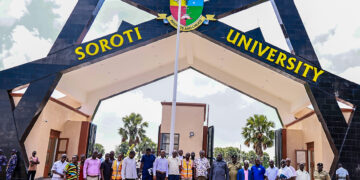








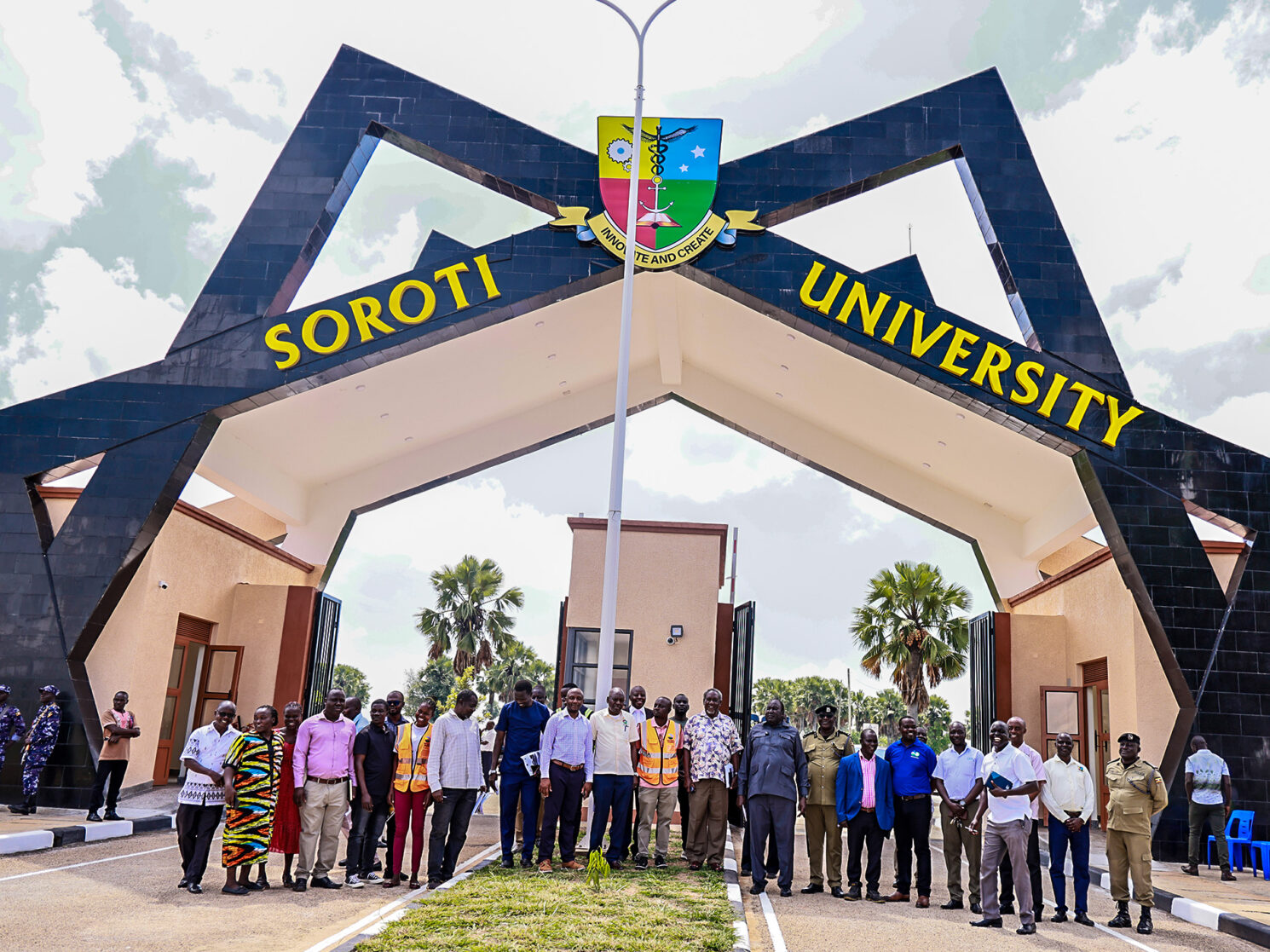
Soroti University has temporarily closed its newly commissioned Shs1.2 billion main gate after parts of its granite cladding reportedly came loose and fell, raising concerns about the safety of pedestrians, motorists and other road users.
The gate, built by the National Housing and Construction Company (NHCC) with government funding, was handed over to the university about three weeks ago.

In a notice dated October 14, 2026, Engineer Paul Anguria, the university’s Deputy Chief of Estates, ordered the immediate closure of the entrance and directed staff, students, visitors and members of the public to use the previous alternative access route as the defects are addressed.
Anguria said the problem involved the separation and falling of stone cladding from the gate’s arch, creating a potential danger to human life and property.
“The Directorate of Estates and Works wishes to inform the University community that the Main Gate has developed defects involving the debonding and falling of granite/stone cladding from the gate arch. This poses a significant risk to human life and property,” the notice states.
He said the university had contacted the contractor to investigate and repair the affected sections. Both pedestrian and vehicular access through the main gate will remain restricted until the necessary remedial work is completed.
According to the notice, the entrance will only be reopened after the defects have been rectified and the university’s technical team has inspected the structure and confirmed that it is safe for use.
Soroti University Public Relations Officer Juma Hassan Nyene said the gate was still covered by a defect liability arrangement, which requires the contractor to address construction faults identified after the project’s completion.
Although the facility had been handed over to the university, Nyene said NHCC remained responsible for assessing the damage and carrying out the repairs at no additional cost to the institution.
“The contractor is still responsible for repairs on the gate for about six months to one year. The contractor will come and assess what could have happened and make the corrections at no cost to the university,” Nyene said.
He explained that the project involved more than the construction of the visible entrance structure, noting that it also included a solar power system, security cameras, information and communication technology equipment and other related infrastructure.
Nyene also welcomed public scrutiny of the project, including questions about its cost and procurement process. He said the university was committed to accountability and was willing to provide clarification through the relevant project management and procurement structures.
“Whoever is concerned about the cost can get to the project manager because, as Soroti University, we are open to scrutiny and checks and balances,” he said.
He added that individuals seeking further information about the project could approach the project manager or use the appropriate procurement channels to obtain clarification.
The closure comes only weeks after the university received the gate, raising questions about the cause of the cladding failure and the quality of the completed works. However, the university has not announced the findings of a technical assessment, and the precise cause of the defects remains unclear.
The institution has also not provided a timeline for reopening the entrance, saying access will be restored only after repairs are completed and its technical personnel certify the structure as safe.










 English