
















The slow pace of construction works on the Masaka-Kyotera-Mutukula highway is increasingly becoming more than an infrastructure challenge.
It is evolving into a costly economic burden for businesses, transporters and communities that depend on one of Uganda’s busiest international trade corridors.


What was expected to improve trade between Uganda and neighbouring Tanzania has instead left roadside businesses struggling, transport costs rising and local governments counting revenue losses as construction drags on.
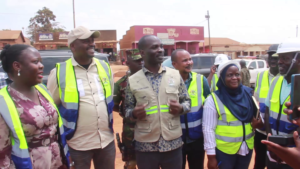
The concerns reached a new level after the Minister of Works and Transport, Fred Byamukama, inspected the 88-kilometre road and directed the contractor, Chongqing International Construction Cooperation (CICO), to complete the works within 90 days.
The minister also alleged that UGX 150 billion meant for the project had been mismanaged through collusion between ministry officials and the contractor, an issue he said contributed to the slow progress.
The road is being upgraded at a cost of UGX 692 billion. Construction started in 2024 and was expected to take 40 months. However, only 23 percent of the work has been completed.
For traders operating along the highway, every additional day of delay translates into lost income.
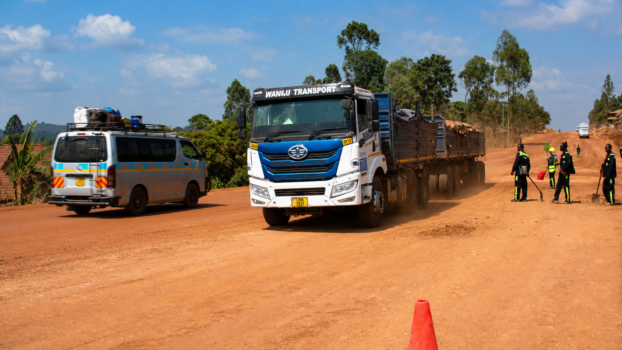
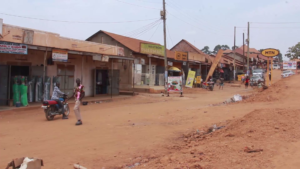
In Kalisizo, shop owners say thick dust generated by construction traffic has driven customers away while damaging merchandise and household property.
During community sensitisation meetings before construction began, residents say they were assured that regular water spraying would control dust, but many argue this has not been consistently done.
Sebastian Kimera, a resident of Kalisizo, says several businesses have either scaled down or closed entirely because customers no longer find the trading centres comfortable to visit.
His concern reflects a wider economic reality. Small roadside enterprises depend heavily on passing motorists, truck drivers and local customers.
When dust becomes unbearable, foot traffic declines, sales fall and businesses struggle to survive. For many small entrepreneurs operating on limited capital, reopening after months or years of closure is often impossible.
Kyotera District Woman Member of Parliament Fortunate Rose Nantongo says government should treat completion of the road as an economic priority rather than merely a construction project.
The Masaka-Mutukula highway serves as Uganda’s gateway to northern Tanzania through the Mutukula border, carrying agricultural produce, fuel, manufactured goods and cross border passenger traffic.
“Any disruption along the route affects supply chains extending far beyond the communities where construction is taking place.”
Transport operators say deteriorating road conditions have also increased operating costs.
Drivers report that excessive dust reduces visibility, making it difficult to maintain control of vehicles, especially when motorists speed through unfinished sections.
Some transport companies have reportedly become reluctant to deploy vehicles on the route for fear of costly mechanical damage.
To reduce accidents while construction continues, drivers have proposed installing temporary speed humps and stronger traffic control measures.
Poor road conditions create a cycle of rising business costs. Vehicles require more frequent repairs, journeys take longer, fuel consumption increases and insurance risks become higher.
Those additional costs eventually filter through to consumers through higher transport fares and commodity prices.
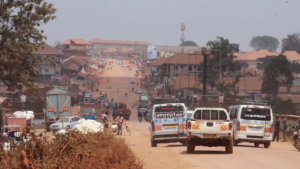
Masaka City is also feeling the financial effects.
Mayor Florence Namayanja says delays have reduced the city’s local revenue while heavy construction vehicles have damaged urban roads, creating additional maintenance costs for the local authority.
The situation illustrates how delayed infrastructure projects can generate hidden economic losses that extend beyond the original construction budget.
Local governments lose business taxes, traders lose customers and public infrastructure deteriorates faster than anticipated.
Another emerging concern is supply chain reliability.
At Kijonjo River, where part of the road was washed away by heavy rains, residents told the minister that vehicles transporting goods can no longer pass through the affected section.
The disruption has affected movement of farm produce and other essential commodities, reducing market access for farmers and traders.
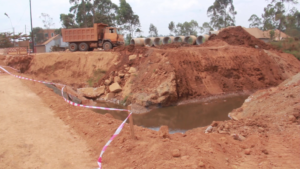
While the contractor cited prolonged rainfall together with delayed delivery and clearance of construction materials as major obstacles, business leaders argue that the economic damage is becoming too significant to justify further delays.
Kyotera County MP Harunah Kasolo criticised the contractor’s performance, warning that once businesses collapse because of prolonged disruptions, many never recover.
His observation reflects a broader challenge facing infrastructure development. While major road projects are expected to stimulate long term economic growth, delays can produce the opposite effect by destroying existing livelihoods before new opportunities emerge.
Following the inspection, Byamukama warned that failure to complete the project within 90 days could result in termination of the contractor’s contract.
Whether that deadline is achieved remains uncertain.
What is becoming increasingly clear, however, is that the cost of delay extends far beyond the unfinished tarmac. Every month the project remains incomplete means fewer customers for roadside traders, higher costs for transporters, lower revenues for local governments and continued disruption along one of East Africa’s important commercial corridors.
For businesses operating between Masaka and the Mutukula border, the road is not simply a transport link. It is the economic lifeline upon which thousands of livelihoods depend. Completing it on schedule is no longer only an engineering objective, but an urgent business and economic necessity.
ENDS.








 English