















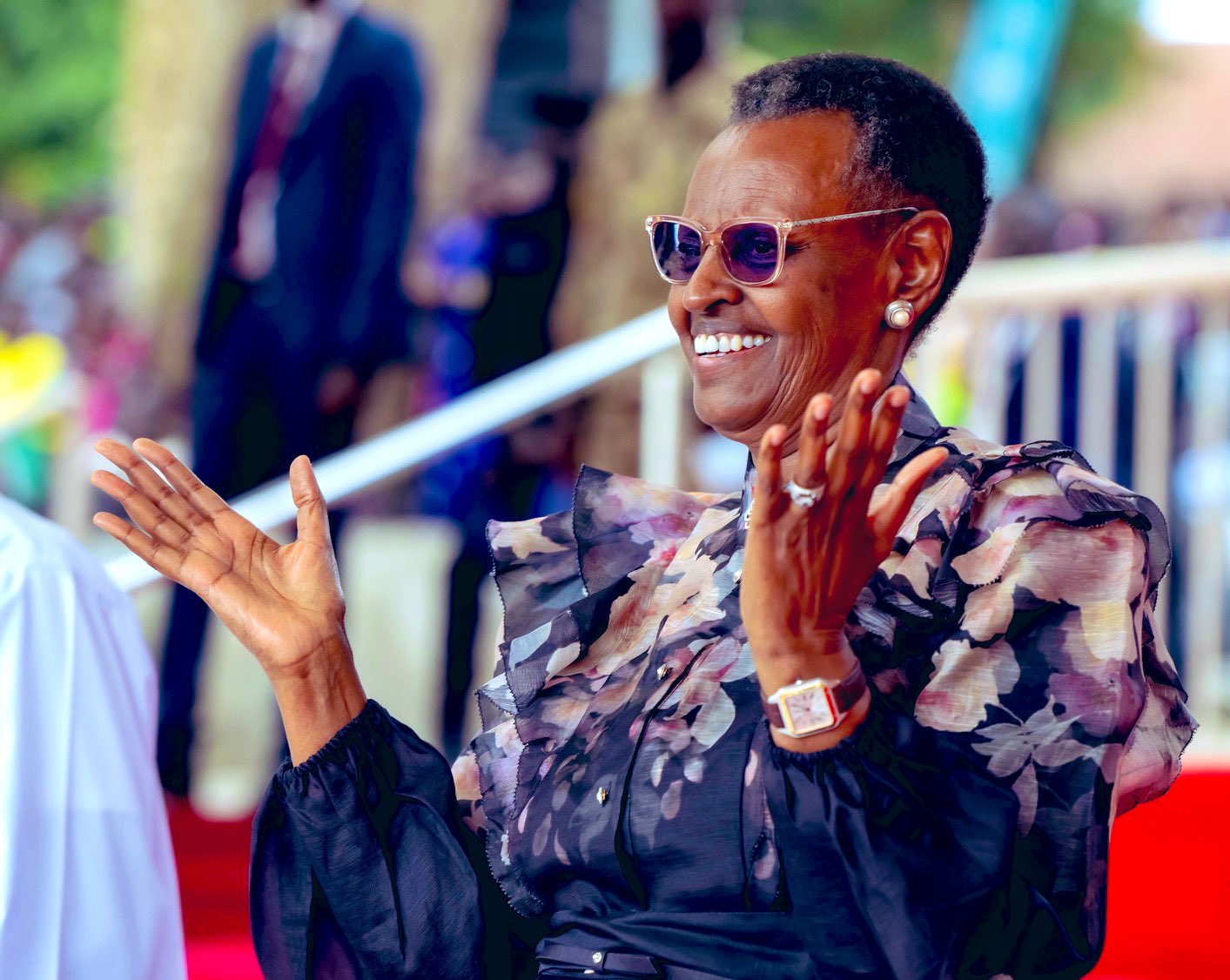
First Lady and Education Minister-designate Janet Kataha Museveni is expected to appear before Parliament’s Appointments Committee virtually on today Tuesday after failing to attend the vetting session physically on Monday as earlier scheduled.
Mrs Museveni had been listed among the 46 presidential appointees slated for vetting during the committee’s first day of sittings. Her name appeared alongside several cabinet nominees and Deputy Chief Justice-designate Kazibwe Moses Kawumi.
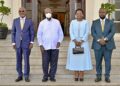

However, the day ended before she and Justice and Constitutional Affairs Minister-designate Norbert Mao appeared before the committee.
Parliamentary sources indicate that the First Lady, who has been reappointed to head the Ministry of Education and Sports, is among a number of nominees expected to participate in the exercise remotely through Zoom.
The Appointments Committee started scrutinising President Yoweri Museveni’s latest cabinet nominees on Monday and is expected to conclude the process on Tuesday.
The proposed virtual appearance has sparked debate among opposition politicians and sections of the public, with critics arguing that ministers seeking parliamentary approval should physically appear before legislators.
Former Kira Municipality MP Ibrahim Ssemujju Nganda criticised the arrangement through a post on X, questioning whether Parliament would relax its procedures to accommodate the First Lady’s vetting.
Mrs Museveni has served as Minister of Education and Sports since 2016, when she replaced Jessica Alupo in President Museveni’s cabinet. If approved again, she will extend her leadership at the ministry beyond a decade.
During her tenure, the education sector has undergone several major reforms. The government introduced the revised lower secondary curriculum in 2020, shifting the system from content-based learning to competence-based education. The ministry also implemented continuous assessment at O-Level as part of broader examination reforms.
Her period in office has also seen increased investment in technical and vocational education, expansion of seed secondary schools in underserved communities, and management of the education sector during the COVID-19 pandemic, including the closure and phased reopening of schools.
The ministry further rolled out digital learning initiatives and reforms aimed at strengthening teacher training, supervision, and curriculum delivery.
In sports, Uganda registered improved performances internationally, especially in athletics, where long-distance runners continued to shine on the global stage.
Despite these developments, the education sector continues to face persistent challenges. Government schools under Universal Primary Education (UPE) and Universal Secondary Education (USE) programmes still struggle with overcrowded classrooms, limited infrastructure, teacher absenteeism, and inadequate learning materials.
Education stakeholders have also raised concerns over high school dropout rates, particularly among girls, as well as funding constraints amid growing enrolment.
Questions have additionally emerged regarding the implementation of the new lower secondary curriculum, with some teachers citing insufficient training and limited instructional support.
In higher education, concerns remain over graduate unemployment and the mismatch between skills acquired at institutions and labour market demands.
Mrs Museveni’s anticipated appearance before the Appointments Committee comes at a time when Parliament is facing renewed calls to strengthen ministerial accountability and improve engagement between cabinet members and legislators.
While critics point to her limited participation in parliamentary proceedings during the previous term, supporters argue that her record in steering education reforms and overseeing one of government’s largest ministries supports her continued stay in office.







 English