


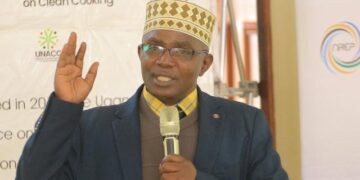







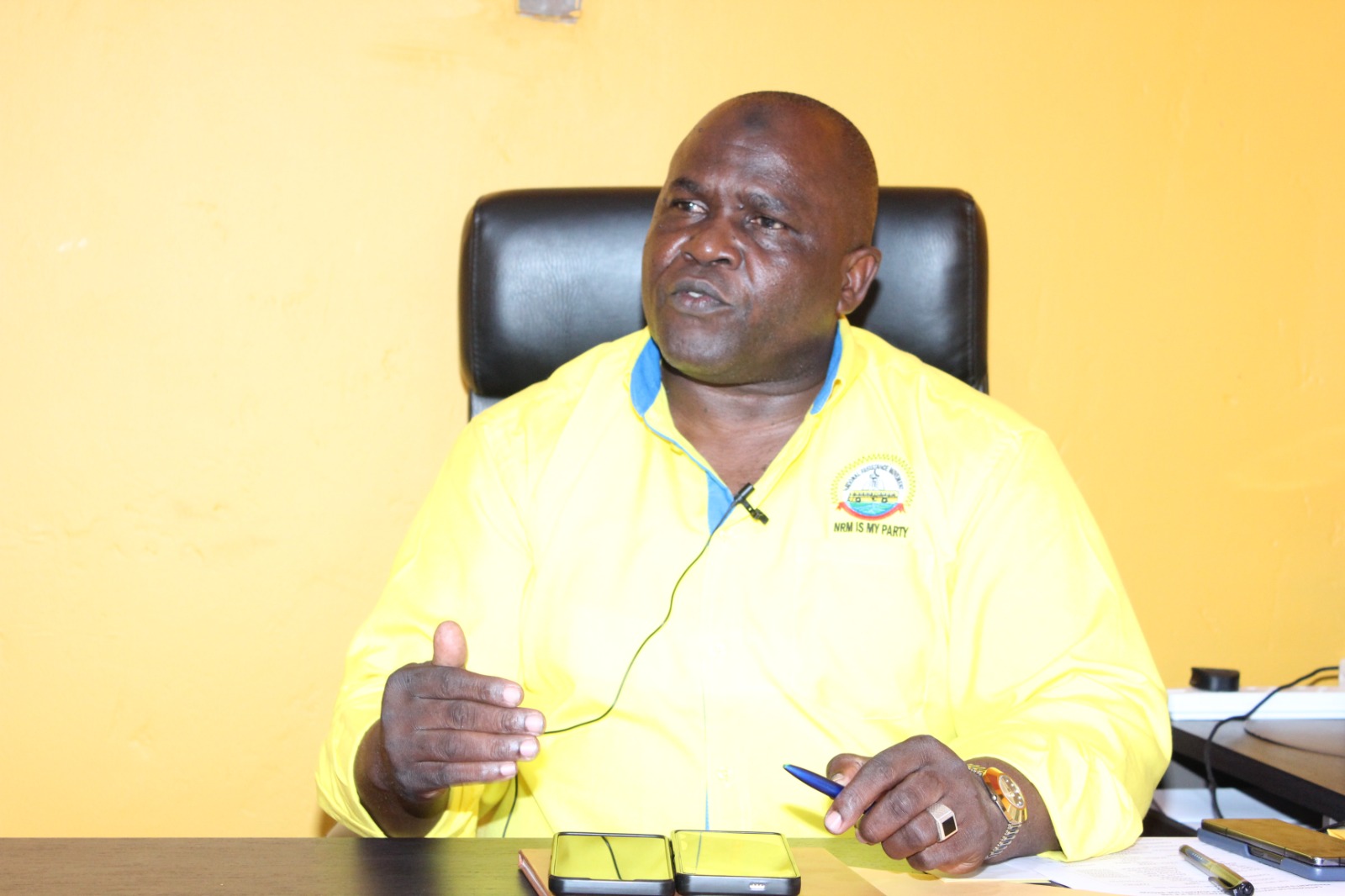
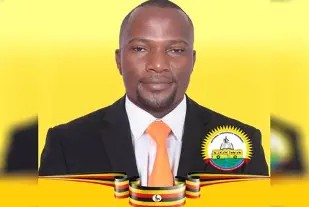
Mukono District National Resistance Movement (NRM) chairman Hajji Haruna Semakula has called on candidates who lost in the January 2026 general elections to accept the results, allow elected leaders to serve their terms and redirect their energies towards preparing for future electoral contests.
Semakula’s appeal, however, has exposed lingering divisions within the ruling party in Mukono, particularly following the defeat of former Mukono Municipality NRM flag bearer Daisy Sonko Nabatanzi, whose supporters have reportedly turned against the district chairman over his remarks.

Speaking on Friday at the funeral of Joseph Katabazi, a former enforcement officer at Mukono Municipal Council, in Lweza, Mukono Central Division, Semakula urged politicians to move beyond electoral rivalries and embrace cooperation in the interest of the district’s development.
His message appeared to be an attempt to calm political tensions that have persisted since the January polls, which saw the opposition National Unity Platform (NUP) secure all parliamentary seats in Greater Mukono, dealing the NRM a significant electoral setback.

However, rather than bringing an end to the disagreements, Semakula’s remarks have triggered fresh hostility within local NRM circles, with supporters of Sonko reportedly directing insults at him, exposing the depth of disagreements over how the party should respond to its electoral defeat.
The dispute also reflects a wider disagreement within the NRM over whether defeated candidates should concentrate on rebuilding the party or continue pursuing legal challenges against the declared winners.
A call for politics beyond party lines
Interestingly, Semakula was not alone in advocating political reconciliation at the funeral.
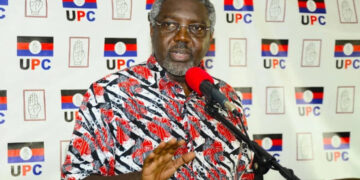
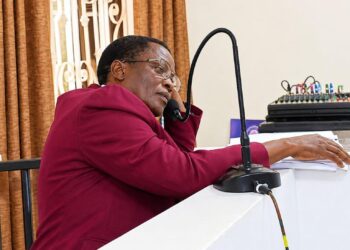
Mukono Municipality MP Betty Nambooze Bakireke, a senior NUP figure, also urged politicians across the political divide to put aside partisan differences and work together to address the needs of the electorate.
Her remarks were particularly significant given the political rivalry that characterised the January elections, in which Nambooze defeated Sonko by a substantial margin.
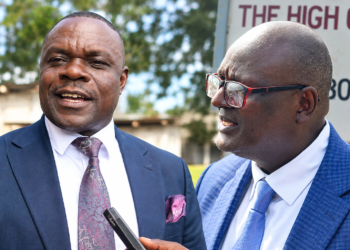
The call for cooperation also found expression in the remarks of Mukono Municipality Mayor Robert Kabanda, another senior NUP leader in Greater Mukono, who pointed to his working relationship with Mukono District LC5 Chairman Francis Lukooya Mukoome, an NRM leader.
Kabanda said the two leaders have been working together on development initiatives despite belonging to opposing political parties.
One of the major projects they are pursuing is the Kame Valley Market investment in Mukono Central Division, which is expected to contribute to the municipality’s economic development.
Their working relationship is particularly noteworthy because Lukooya’s January election victory is being challenged in the High Court by his NUP rival, Johnson Muyanja Ssenyonga.
The ongoing petition has, however, not prevented the two leaders from engaging on matters concerning service delivery, demonstrating that political competition does not necessarily have to translate into permanent hostility.
Sonko’s election petition adds to the political tension
At the centre of the divisions within Mukono NRM is the unresolved parliamentary election petition filed by Sonko following her defeat to Nambooze.
Official election results showed Nambooze securing approximately 22,700 votes against Sonko’s 5,800, leaving a margin of about 16,900 votes.
Unconvinced by the outcome, Sonko filed Election Petition No. 4 of 2026 before the High Court in Mukono, presided over by Justice Godfrey Himbaza, challenging Nambooze’s victory on allegations including bribery, undue influence and other electoral irregularities.
Among the allegations raised in the petition is that Nambooze or her agents allegedly gave money to omweso and Ludo players in Ssaza Village, Ggulu Ward, ostensibly to buy drinks and influence voters.
Nambooze has denied the allegations, telling court that investigations into the claims had not established the existence of the alleged gaming club or the purported payments.
The petition has since encountered a number of evidentiary challenges, including the rejection of certain video recordings and accompanying annexures after the court found that they did not satisfy the applicable legal requirements for electronic evidence and affidavit evidence.
The proceedings have also been complicated by attempts by some of Sonko’s witnesses to withdraw their affidavits, reportedly citing fear and intimidation.
Meanwhile, Nambooze’s legal team has challenged the admissibility of some of the remaining affidavits, particularly those belonging to witnesses who did not appear in court for cross-examination.
With the hearing of the petition concluding around mid-November, the parties are now awaiting the court’s determination.
Nevertheless, the legal proceedings have become part of the wider political disagreements within the Mukono NRM, with some supporters insisting that the party should stand behind its former flag bearer until the court delivers its judgment.
The struggle to rebuild Mukono NRM
Beyond the dispute surrounding Sonko’s petition, Semakula’s remarks touch on a more fundamental question facing the NRM in Mukono: how to recover from its poor performance in the January elections.
The party suffered a significant setback after NUP swept the parliamentary contests in the district, reinforcing Mukono’s position as a difficult political battleground for the ruling party.
Following the elections, Semakula attributed the NRM’s poor performance partly to overconfidence among some candidates and inadequate grassroots mobilisation. He argued that some aspirants had failed to campaign aggressively enough despite the district’s increasingly competitive political environment.
His latest appeal suggests that he believes prolonged disagreements over the election results could further undermine efforts to reorganise the party.
For the district chairman, the priority appears to be rebuilding political structures, strengthening grassroots mobilisation and demonstrating effective leadership through service delivery rather than allowing internal disputes to dominate the party’s agenda.
There is also a legal dimension to the debate. Election petitions are a constitutional avenue through which aggrieved candidates can challenge electoral outcomes. However, petitioners must present credible evidence establishing the alleged irregularities and demonstrate that they substantially affected the result, where the law requires such proof.
This means that the existence of an election petition should not automatically be interpreted as evidence that an election was stolen, just as the declaration of a winner does not extinguish a candidate’s constitutional right to seek judicial redress.
For Sonko’s supporters, pursuing the case is therefore a legitimate effort to protect the integrity of the electoral process, and they appear unwilling to abandon the contest before the court makes its determination.
For those advocating reconciliation, however, the continued political exchanges risk turning an electoral defeat into a prolonged internal conflict that could leave the NRM even more vulnerable in future elections.
Between reconciliation and political rivalry
What is emerging in Mukono is a contest between two approaches to post-election politics: reconciliation and continued political confrontation.
The working relationship between Kabanda and Lukooya offers an example of how leaders from opposing political parties can cooperate on development priorities even when electoral disagreements remain unresolved in court.
By contrast, the hostility directed at Semakula following his call for defeated candidates to move on illustrates how difficult it remains for sections of the local NRM to reconcile themselves to the January electoral outcome.
The challenge for the ruling party is not simply to defend its past electoral performance but to understand why voters rejected its candidates and develop a credible strategy for winning back public confidence.
While the courts remain the appropriate institutions for resolving election disputes, party rebuilding, political accountability and service delivery cannot be suspended until every petition is concluded.
Ultimately, Mukono’s political future may depend on whether its leaders can distinguish between legitimate electoral competition and personal or institutional hostility.
For the NRM, the immediate test is whether it can transform the divisions exposed by the January elections into an opportunity for internal reflection and renewal, rather than allowing the disagreements to weaken its structures further ahead of the next electoral cycle.







 English
