


















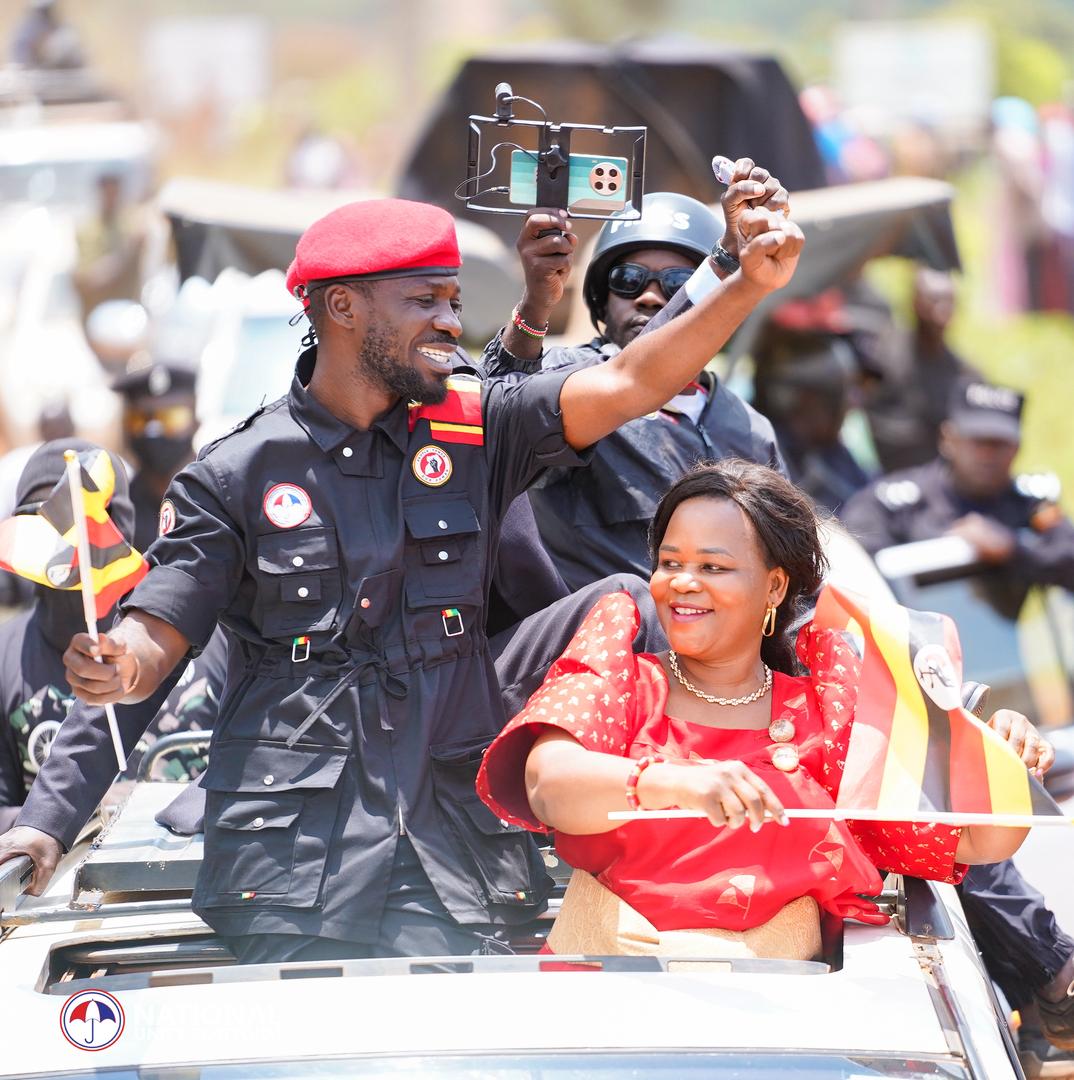
The High Court in Iganga has dismissed an election petition challenging the election of Bugweri District Woman Member of Parliament Stellamaris Nankwanga, ruling that the allegations of electoral bribery were not sufficiently proved and that complaints concerning her academic qualifications and nomination should have been raised with the Electoral Commission before polling.
In a judgment delivered on November 13, 2026, Justice Simon Peter Mulundane Kinobe dismissed a petition filed by Walukamba Mercy, who sought to have Nankwanga’s election annulled over alleged irregularities in her academic documents, discrepancies in her names and alleged attempts to influence voters through the distribution of iron sheets and promises of cows.


The judge held that Walukamba could not wait until after the election to challenge defects in Nankwanga’s nomination documents when the law had provided an opportunity for registered voters to inspect nomination papers and raise objections before the Electoral Commission.
The dispute arose from the January 15, 2026 parliamentary elections in which Nankwanga was declared the winner with 15,151 votes, while Walukamba finished third with 10,767 votes.
Following the declaration of the results and their publication in the Uganda Gazette, Walukamba petitioned the High Court, arguing that Nankwanga had not been validly nominated and was therefore ineligible to contest for the Bugweri District Woman Representative seat.
At the centre of the academic qualifications dispute was the claim that Nankwanga had failed to present a certificate of equivalency from the National Council for Higher Education (NCHE) demonstrating that her qualifications met the minimum Advanced Level standard required for election to Parliament.
Walukamba argued that the documents presented during nomination, including a Uganda Certificate of Education (UCE) results verification letter, a Certificate in Mental Health Nursing from Butabika School of Psychiatric Nursing and a Post Basic Diploma in Public Health from Medicare Health Professionals College, did not establish that Nankwanga possessed the requisite qualifications.
She also questioned why Nankwanga described herself on her nomination papers as holding a Diploma in Public Health, while the academic document she presented was titled Post Basic Diploma in Public Health.
The petitioner further raised concerns over variations in Nankwanga’s names, arguing that some documents bore the names Nankwanga Stellamaris while others indicated Stellamaris Nankwanga. She contended that the differences required a statutory declaration to establish that the documents belonged to the same person.
However, Nankwanga maintained that she had presented authentic and sufficient academic documents to the Electoral Commission and that the differences in the titles of her qualifications resulted from an institutional documentation error by Medicare Health Professionals College.
She told court that she had enrolled for a two-year Diploma in Public Health course at the college and that the institution later acknowledged the error and issued corrected documents.
Nankwanga also argued that her Certificate in Mental Health Nursing, issued by the Uganda Nurses and Midwives Examinations Board, together with her enrolment as a Mental Health Nurse by the Nurses and Midwives Council, were recognised under the 2015 benchmarks for determining academic qualifications equivalent to Advanced Level education.
She further maintained that the variation in the order of her names did not affect her identity and did not require a statutory declaration.
The Electoral Commission, through its Senior Legal Officer Kayondo Abubaker, supported Nankwanga’s position, arguing that nomination-related complaints should have been lodged within the statutory inspection period and resolved through the Commission’s established procedures.
The Commission also maintained that a statutory declaration was not the appropriate legal instrument for correcting errors in academic documents.
Court rules on pre-election disputes
In resolving the first issue, Justice Kinobe examined whether the High Court could entertain complaints relating to nomination and academic qualifications when the petitioner had not first presented them to the Electoral Commission.
The judge referred to Section 15 of the Electoral Commission Act, which empowers the Commission to examine and determine complaints concerning irregularities at any stage of the electoral process.
The provision also allows an aggrieved party to appeal to the High Court against a decision of the Commission confirming or rejecting an alleged irregularity.
The judge further cited Section 32 of the Parliamentary Elections Act, which allows registered voters to inspect nomination papers and lodge complaints challenging the qualifications of nominated candidates.
Justice Kinobe held that the statutory framework was deliberately designed to ensure that disputes arising during nomination are resolved before voters proceed to the polls.
He rejected the petitioner’s argument that the High Court’s unlimited original jurisdiction under Article 139(1) of the Constitution allowed it to independently entertain the nomination complaint without first involving the Electoral Commission.
The judge explained that the High Court’s jurisdiction must be read alongside Article 61(1)(f) and Article 64(1) of the Constitution, which provide for the Electoral Commission’s role in resolving electoral disputes and the High Court’s appellate jurisdiction over its decisions.
He cited several previous decisions, including Grace Nalubega v Juliet K. Suubi Kinyamatama, Lutanywa Jack Odur v Electoral Commission and Nandagire Christine Ndiwalana v Katushabe Ruth, which emphasised the importance of resolving nomination disputes through the prescribed electoral procedures.
However, the judge identified exceptional circumstances in which the High Court could entertain pre-election complaints after an election.
These include situations where a defect in nomination documents was concealed and could not reasonably have been discovered during the nomination period, where the Electoral Commission failed to determine a complaint properly lodged before it, or where an appeal was overtaken by the conclusion of the electoral process due to circumstances beyond the litigant’s control.
In Walukamba’s case, the judge found that none of these exceptions had been established.
He observed that the alleged discrepancies in Nankwanga’s names and the differences in the descriptions of her academic qualifications were apparent on the face of the nomination documents and could have been identified through a simple inspection.
The court also found that Walukamba had not demonstrated that she or anyone acting on her behalf had lodged a formal complaint with the Electoral Commission challenging Nankwanga’s academic qualifications.
Justice Kinobe consequently declined jurisdiction to determine the substantive question of whether Nankwanga’s academic documents satisfied the legal requirements for nomination.
He struck out that ground of the petition without determining whether the qualifications themselves were sufficient.
Court rejects iron sheets and cow bribery allegations
The court separately examined allegations that Nankwanga had committed electoral bribery by distributing iron sheets to voters at Idudi Zone C and promising to give cows to polling stations where she secured 100 per cent of the votes.
Walukamba had relied on a photograph showing Nankwanga holding iron sheets alongside several other people, arguing that the materials had been distributed to influence voters.
However, Nankwanga denied the allegation, explaining that the photograph was taken on July 5, 2024, during a community activity organised by her Community Based Organisation, Stella Foundation, long before the 2026 election campaigns.
She told court that the foundation had distributed the iron sheets to support community activities and that the photograph had subsequently been shared on WhatsApp groups.
Her explanation was supported by Mugweri Salimu, who appeared in the photograph and told court that the iron sheets had been distributed through Stella Foundation to assist homeless youths to establish temporary shelters.
Justice Kinobe observed that the petitioner had not provided evidence establishing when and where the photograph was taken or demonstrating that the iron sheets were distributed during the campaign period.
The judge further noted that there was no credible evidence establishing that the people appearing in the photograph were registered voters or that the materials had been given to induce them to vote for Nankwanga.
On the allegation concerning cows, Walukamba claimed that Nankwanga made the promise during a campaign rally at Idudi, Kikunu Mosque grounds, on December 2, 2025.
The petitioner relied on affidavits sworn by two of her supporters, Kizito David and Byansi Usama, who claimed to have witnessed the alleged promise.
However, the judge raised concerns about the credibility of the affidavits, observing that, apart from their introductory paragraphs, the two documents contained substantially identical wording.
He said the similarity suggested that the affidavits could have been prepared from a common draft rather than independently reflecting the witnesses’ personal recollections.
In reaching that conclusion, the judge referred to the Supreme Court decision in Amama Mbabazi v Yoweri Kaguta Museveni and Others, in which the court expressed reservations about affidavits containing identical wording, noting that such evidence could lack credibility where it did not reflect the independent knowledge of the individual deponents.
Nankwanga denied making the alleged promise, while Nyende Samwiri, who was identified in connection with the alleged arrangement and testified as a defence witness, also denied that any such promise had been made.
The petitioner further claimed that a video circulating on social media had captured Nankwanga making the statement.
However, Justice Kinobe observed that the evidence presented as an annexure was a photograph rather than the actual video recording.
He noted that the photograph could not establish the words allegedly spoken by Nankwanga.
The judge also declined an application by the petitioner to adjourn the proceedings to allow her to produce the video and its translation.
According to the judgment, the court had issued directions on September 14, 2026, requiring parties to disclose and exchange documents they intended to rely on, giving them approximately two weeks to comply.
The petitioner only sought an adjournment after the scheduling process had been concluded and the matter set down for hearing.
Justice Kinobe said election petitions were subject to strict statutory timelines and that the need to afford parties a fair hearing had to be balanced against the public interest in their expeditious determination.
He was not satisfied that the explanation provided justified further delaying the proceedings.
Court explains legal test for electoral bribery
In examining the bribery allegations, the judge referred to Section 87 of the Parliamentary Elections Act, which criminalises giving or providing money, gifts or other considerations to influence a person’s voting decision.
He explained that merely establishing that a candidate distributed a gift or provided assistance was not sufficient to prove bribery.
The petitioner had to demonstrate that the benefit was given with the intention of influencing the recipient to vote or refrain from voting for a particular candidate.
Citing the Supreme Court decision in Kizza Besigye v Yoweri Museveni, the judge outlined three essential ingredients of bribery: that a gift was given to a voter, that it was given by the candidate or an agent with the candidate’s consent, and that it was intended to influence the recipient’s voting decision.
The court also referred to Harris Mukasa v Dr Lulume Bayiga, emphasising the need to establish that the people allegedly bribed were registered voters.
Justice Kinobe concluded that Walukamba had failed to establish the necessary elements of bribery in both allegations.
He found that the photograph of the iron sheets did not establish an electoral connection, while the alleged promise to distribute cows was not supported by sufficiently credible and independent evidence.

The court consequently found that Walukamba had failed to prove that Nankwanga personally, or through anyone acting with her knowledge, consent or approval, committed bribery or another illegal electoral practice.
The judge resolved the second issue in favour of Nankwanga and dismissed the allegations.
In his final orders, Justice Kinobe dismissed the entire petition with costs to the respondents.
The judgment was delivered on November 13, 2026.







 English
