
















Mukono Municipal Council has taken an unusual political and procedural turn, with councillors opting to conduct their deliberations in Luganda, in what appears to be an attempt to bring local government business closer to ordinary residents while making council proceedings more appealing to social media audiences.
The shift was witnessed during a recent council session, where councillors abandoned the usual English-dominated deliberations and enthusiastically debated municipal affairs in Luganda, injecting a different atmosphere into the proceedings.


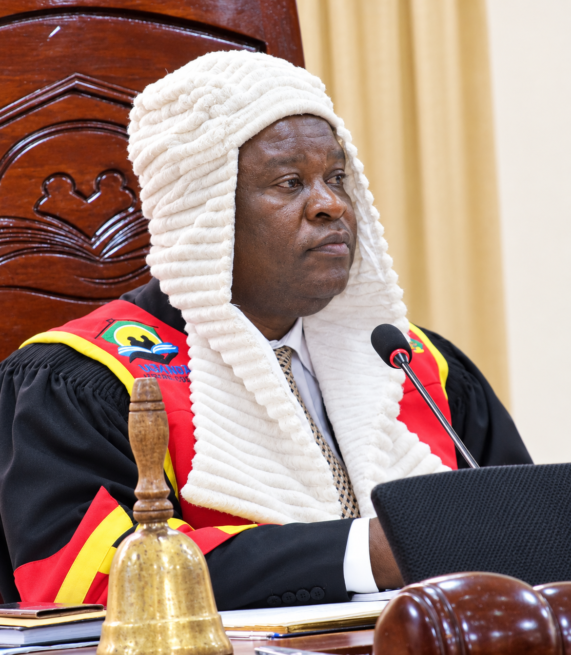
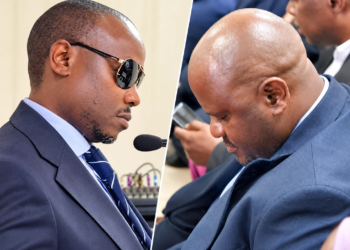
At the centre of the development was Constantine Kanga, the municipal council speaker, who openly acknowledged that the idea followed a suggestion from a media practitioner who had approached him and encouraged the council to conduct its sessions in Luganda to attract greater public attention.
Kanga’s remarks offered an interesting glimpse into the changing relationship between local government institutions, the media and the public, particularly at a time when council proceedings are increasingly finding their way onto social media platforms.
For years, council sessions have largely been conducted in English, a language commonly associated with formal government business, official documentation and institutional communication.
However, the decision to embrace Luganda appears to challenge the assumption that meaningful council business must necessarily be conducted in English.
The development also raises an important question about the purpose of public council meetings: should proceedings primarily preserve established administrative traditions, or should they be conducted in a language that enables the greatest possible number of residents to understand, follow and participate in local governance?
While the council’s decision may improve public understanding, it also presents a procedural question regarding the use of local languages in formal council business, particularly the requirements governing the suspension of rules and the adoption of alternative procedures.
The interesting aspect of the Mukono development is that the use of Luganda in council proceedings is not necessarily a departure from the established rules of local government.
In fact, Uganda’s revised Standard Rules of Procedure for Local Government Councils, issued by the Ministry of Local Government in May 2026, expressly provide for the use of vernacular languages.
Rule 4(1) establishes English as the standard language for council proceedings and debates. It also provides for a member who cannot express himself or herself in English to seek prior special permission to use a vernacular language, with an interpreter provided by the Clerk.
However, Rule 4(2) makes a more significant provision. It states that, notwithstanding the English-language requirement, a council may resolve to debate in any vernacular language, provided that the minutes are kept in English.
This provision gives Mukono Municipal Council room to adopt Luganda as its language of debate, provided members formally resolve to do so. It is therefore important to distinguish between an informal understanding among councillors and an actual council resolution authorising the change.
The distinction matters because the rules are not simply a collection of administrative preferences. They govern how council business is conducted and bind all members.
There is also a separate provision on the suspension of rules. Rule 11(1) allows a council to suspend provisions relating to its proceedings or business through a resolution supported by not less than half of the members present. Under Rule 11(2), such suspension is limited to the particular purpose and period for which it was approved.
However, Rule 11(4) specifically excludes Rule 4 from the provisions that can be suspended under that procedure. This is an important distinction: the council does not need to suspend the English-language requirement to adopt Luganda because Rule 4(2) already provides a lawful route for doing so.
In other words, the appropriate procedure is to invoke Rule 4(2) and adopt a resolution to conduct debates in Luganda, rather than treat the language change as an informal suspension of council rules.
The English-language requirement for official records also remains intact. Rule 106 of the revised rules requires the Clerk to maintain minutes in English, while Section 10 of the Local Governments Act similarly requires council records to be kept in English.
This explains why the Clerk could continue reading the order paper and previous meeting minutes in English even as councillors conducted their subsequent deliberations in Luganda. The language of debate and the language of official records serve different procedural purposes.
There is, however, another interesting detail in Rule 4(1). It provides that a member who changes from one language to another during a submission should immediately be ruled out of order by the Speaker. The provision makes consistency in the adopted language an important consideration.
Consequently, Vincent Lubwama’s arrival and subsequent submission in English introduced an interesting procedural moment. If the council had formally resolved to conduct its debate in Luganda, the Speaker would have needed to clarify how the adopted language was to be applied to members who wished to contribute in English. His contribution alone, however, does not establish that the council had formally reverted to English.
The Speaker’s responsibility is particularly important here. Under the Local Governments Act, the Speaker presides over council meetings and has overall authority to maintain order and enforce the rules of procedure.
The question, therefore, is not whether councillors are permitted to speak Luganda. They are. The more important question is whether the council followed the prescribed procedure in adopting it as its language of debate.
A Political Communication Strategy or Genuine Democratic Inclusion?
Beyond the procedural debate, Mukono’s decision also exposes an interesting political and communication dilemma facing local government institutions in the digital age.
Kanga’s revelation that the idea originated from a media practitioner is particularly telling. It suggests that the council is increasingly conscious that conducting business within the council chambers is no longer enough.
There is a growing desire to take those proceedings to the public, where political accountability is increasingly shaped by social media conversations, short video clips and public reactions.
Luganda, being widely understood across much of the Greater Kampala metropolitan area and Buganda region, offers councillors an opportunity to communicate their positions in a language that many residents can easily follow.
For residents, this could be a welcome development. Council meetings deal with issues that directly affect people’s lives, including garbage collection, roads, drainage, markets, public health, local revenue and municipal development projects. There is little value in holding public meetings if the majority of the people expected to benefit from the decisions cannot understand what is being discussed.
However, the move also raises questions about whether the council is prioritising meaningful public engagement or simply responding to the growing appetite for social media visibility.
There is a difference between making government business accessible and turning formal council proceedings into content designed primarily to generate online attention.
The real test will be whether the increased public attention translates into greater scrutiny of municipal expenditure, improved service delivery and stronger accountability from elected leaders and technical officials.
There is also the question of inclusivity. Although Luganda may be convenient for the majority of councillors and residents in Mukono, the municipality is not necessarily linguistically homogeneous. Residents who do not understand Luganda should not be excluded from following decisions made in an institution that represents them.
A practical approach would be to maintain English minutes as required by law while exploring ways of providing accessible summaries, translations and public communication in other commonly understood languages.
The Bigger Question
Perhaps the most revealing aspect of the session was the transition from English to Luganda and the subsequent appearance of English when Lubwama joined the debate.
It provided a small but interesting demonstration of the tension between institutional procedure, political expression and the practical realities of communication.
Kanga may have been responding to a simple suggestion from a media practitioner, but the decision has opened a much bigger conversation about the language of democracy at the local government level.
The council has an opportunity to demonstrate that accessibility and procedural discipline are not mutually exclusive. It can speak the language of its constituents without abandoning the rules that govern its operations.
Ultimately, the success of the Luganda experiment should not be measured by the number of social media views, comments or shares generated by council sessions.
It should be measured by whether ordinary residents become better informed about municipal decisions, whether councillors become more accountable to their electorate and whether the language change produces more meaningful participation in local governance.
After all, a council that speaks the language of its people must also demonstrate that it listens to their concerns.
ENDS.








 English
