













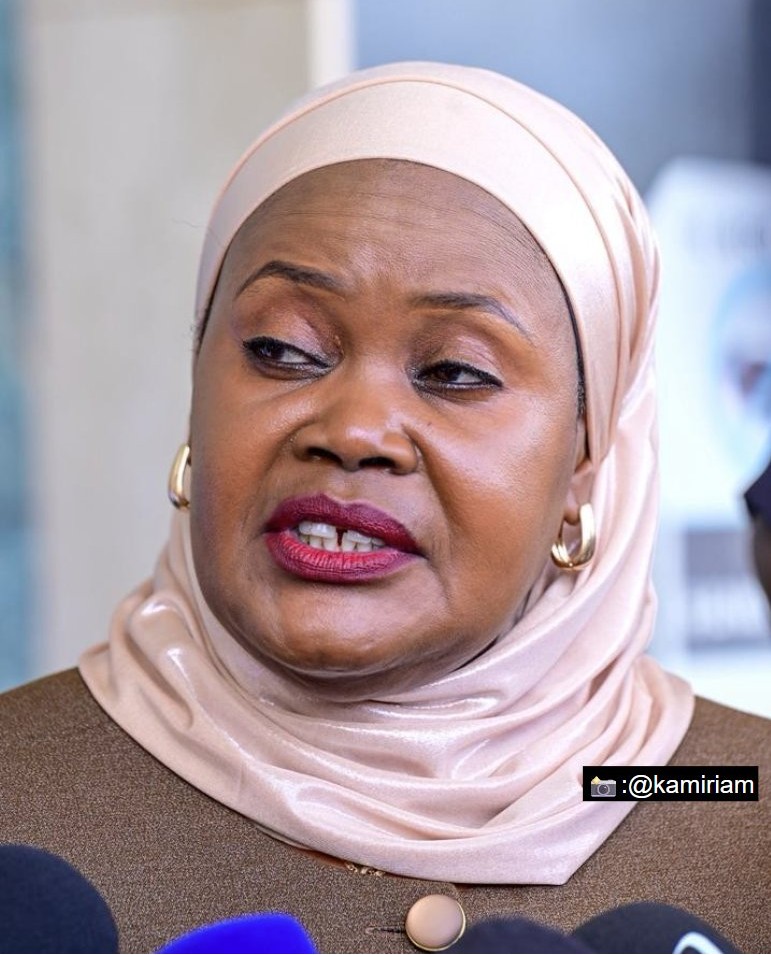
The newly appointed Third Deputy Prime Minister and Minister without Portfolio, Rukia Nakadama, has committed to tackling the long-standing problem of ministers failing to attend parliamentary plenary sittings, saying the practice has weakened government accountability and disrupted legislative business.
Appearing before Parliament’s Appointments Committee on Monday for vetting, Nakadama said the absence of ministers during key House sittings has repeatedly stalled proceedings and denied legislators timely responses on government matters.

She stressed that the trend must be urgently corrected in the 12th Parliament, warning that it undermines coordination between the Executive and the Legislature.
“There are things that need to change in the Office of the Prime Minister,” Nakadama said after her vetting. “From what I have observed while attending Parliament, ministers often do not show up as expected. This should not continue.”
She explained that on several occasions, Parliament has been forced to suspend or delay business while waiting for ministers scheduled to respond to questions or present government proposals.
To address the challenge, Nakadama revealed that the Office of the Prime Minister is considering introducing a structured attendance roster to ensure clear responsibility and accountability among Cabinet members assigned to parliamentary sittings.
“We intend to introduce a roster system so that ministers know when they are required in Parliament. They must be available to answer questions and present Bills without unnecessary delays,” she said.
The issue of absentee ministers has been a recurring concern among Members of Parliament, who argue that it slows down debate and weakens oversight of government programs.
Nakadama emphasized that the new Cabinet must adopt a more disciplined approach, adding that such disruptions should not be repeated under the current parliamentary term.
“This should not happen in the 12th Parliament,” she said firmly.
Her remarks came as the Appointments Committee continued vetting President Yoweri Museveni’s 46 Cabinet nominees. The process is part of the approval procedure required before the nominees officially assume office.
Among those vetted are several high-profile figures, including Deputy Prime Ministers Rebecca Kadaga, Crispus Kiyonga, and Nakadama herself, alongside ministers designated for key sectors such as finance, defence, health, justice, and local government.
Other nominees appearing before the committee include Henry Musasizi for Finance, Chris Baryomunsi for Health, Sam Mayanja as Attorney General, Kahinda Otafiire for Water and Environment, Balaam Barugahara for Local Government, and Justine Kasule Lumumba for Information.
The vetting exercise, chaired by Speaker Jacob Marksons Oboth-Oboth, is reviewing a total of 81 ministerial appointments made by the President, with more than 30 nominees already examined.
President Museveni, while inaugurating the new term, described it as a “Kisanja Nomore Sleep” administration, cautioning that ministers who fail to deliver on their responsibilities risk dismissal as the government pushes for improved service delivery and economic transformation.





 English