



















Young mothers living around Mbalala Industrial Park are struggling to raise children fathered by foreign workers who left the country without taking responsibility.
Residents living near the fast-growing industrial hub have raised concern over a troubling trend involving some foreign nationals employed in various factories.


According to community members, several foreign workers have formed intimate relationships with local women, including casual laborers within the park, sired children, and later left the country without taking responsibility for their offspring.
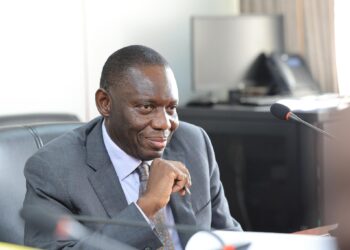
The matter came to light during a community engagement over the weekend, when former State Minister for Water and Environment Ronald Kibuule met voters at Namawojjolo in Nama Sub- County.
It was here that residents, particularly women, voiced their frustration over being left to care for children without the support of their foreign fathers.
“These men come, they get involved with our girls, leave them pregnant and disappear. The mothers are left stranded. It is painful,” said one resident, a local elder who asked to remain anonymous. “The children are innocent, but they suffer the most.”
Several women in the community are reportedly struggling to raise their children alone. With little income, they face immense difficulties providing food, clothing, healthcare, and education.
“We are seeing a generation of children born into neglect, shame, and confusion,” one mother said. “These women cannot even afford school fees. The fathers are gone. Who will help us raise these children?”
As Uganda continues its drive toward industrialization, industrial parks like the one in Mbalala have attracted a wave of foreign investment, particularly from countries in Asia.
While this has contributed significantly to job creation and economic growth, it has also introduced social challenges that remain unaddressed.
In response to the community’s plea, Ronald Kibuule expressed deep concern and pledged to take the matter seriously.
He emphasized that while foreign investment is welcome, it should not leave behind social scars.
“This is not just a social issue. It is a human rights concern,” Kibuule said. “We must ensure that foreign investment does not come at the cost of our people’s dignity and wellbeing.”
As an interim measure, Kibuule proposed lobbying for the establishment of a community school within the area, supported by willing investors.
He explained that such a school could help relieve some of the burden on vulnerable families and give affected children access to basic education and care.
In addition to the school, Kibuule recommended several community-focused interventions that would not interfere with the operations of investors.
He suggested creating a legal aid desk in the area to help mothers understand their rights and access advice on child support and family law.
This service could be coordinated through local government offices or civil society groups.
He also noted the importance of engaging non-governmental organizations to deliver parenting support, child health services, and counseling for affected families.
Kibuule further proposed the formation of a voluntary child support and welfare fund, with contributions from willing companies and development partners.
Such a fund could offer scholarships, food packages, or healthcare subsidies for vulnerable children born within the industrial community.
Recognizing the need for long-term resilience, he promised to champion the introduction of skills training programs for single mothers to help them earn sustainable incomes.
Vocational courses such as tailoring, baking, and craft-making could be rolled out in partnership with training institutions and NGOs.
He also emphasized the need for more awareness campaigns within industrial zones to promote responsible behavior among both local workers and foreigners.
These would encourage respectful relationships and improve cultural understanding among the diverse workforce.
“These are practical steps that do not threaten investor interests but instead strengthen the social fabric that makes investment sustainable,” Hon. Kibuule said. “Investors can become part of the solution by supporting local welfare in a way that fosters goodwill and stability.”
Residents welcomed the proposals but emphasized the importance of swift implementation. They called on both local leaders and the national government to act decisively.
“We are not saying foreigners should not come,” said a local leader. “But they must respect our people and take responsibility for what they do while here. The government must also put systems in place to protect its citizens, especially women and children.”
As Uganda deepens its engagement with foreign investors, the situation in Mbalala highlights the need for responsible investment and better safeguards for the host communities.
For the mothers and children left behind, the hope remains that their cries will no longer be drowned out by the noise of machines and the pursuit of profit.







 English