


















At the heart of Kasenge in Mbalala Industrial Park, the hum of machines inside CCLE Rubber Company has become, for some workers, a reminder not of productivity and opportunity, but of risk and uncertainty.
Over the past months, multiple sources from within the factory have raised concerns about a pattern of workplace accidents affecting employees across different departments, including tear building, vulcanization, and boiler operations.
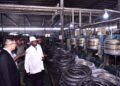
The incidents, according to workers familiar with operations, have resulted in serious injuries ranging from deep cuts and burns to loss of limbs and permanent disability.
The most recent incidents are reported to have occurred in May, involving several young employees whose lives and livelihoods have been severely disrupted.
Among them is Robert Ndikabaana, 42, who allegedly suffered a deep neck injury on 28 May after being struck by a machine. Mary Abeja, 24, is said to have sustained a severe arm injury on 22 May after her hand was caught in machinery, resulting in a broken bone.
Samuel Etanu, 23, reportedly suffered steam burns on his right leg on 18 May while working in a high-temperature section of the factory. Another worker, Paran Omale, 28, is said to have lost four fingers on Labour Day after his hand was caught in a machine.
Family members of the affected workers describe lives abruptly changed—young earners now facing long recovery periods, uncertain futures, and growing financial pressure due to dependants who rely on them.
Allegations of Safety Gaps and Weak Enforcement
Workers also allege that safety practices inside parts of the facility are inconsistent, particularly in high-risk sections where heavy machinery and hot processing systems are used.
Some employees claim that protective gear is either insufficient, inconsistently provided, or not strictly enforced.
There are also concerns raised about employment conditions, with allegations that some workers operate without formal contracts.
Others claim that documentation related to workplace injuries is sometimes not promptly provided or is difficult to access after incidents occur.
Such claims, if verified, would raise serious questions about compliance with Uganda’s occupational safety requirements, which place responsibility on employers to ensure safe working environments, provide protective equipment, and report workplace injuries.
Management Response
Attempts to obtain an official response from CCLE management were unsuccessful. One of the company’s managers, referred to by workers as “Big Ben,” reportedly declined to comment when contacted about the incidents and concerns raised regarding worker safety.
Industrial Growth vs. Workplace Risk
CCLE Rubber Company was commissioned in 2019 and forms part of the growing industrial base in Mbalala Industrial Park, an area that has attracted manufacturing and processing firms as Uganda continues to push its industrialisation agenda.
However, as the industrial park expands, questions are emerging about whether occupational safety oversight is keeping pace with rapid production demands.
Rubber processing and related manufacturing activities involve high-risk environments, including moving machinery, high-pressure steam systems, and chemical exposure—all of which require strict safety protocols.
The pattern described by workers points to a broader structural issue often seen in rapidly expanding industrial settings: production growth outpacing safety systems.
If multiple incidents are occurring across different departments within a relatively short timeframe, it may suggest weaknesses in one or more of the following areas: Lack of guards, emergency stop systems, or maintenance lapses can significantly increase accident risk.
Workers in high-risk environments require continuous safety training, especially when handling machinery or steam systems.
Even where policies exist, weak supervision can lead to non-compliance becoming normalized. Delays or inconsistencies in documentation can prevent proper investigation and recurrence prevention.
The allegations regarding informal employment contracts and withheld documentation, if substantiated, would further complicate accountability mechanisms, making it harder for injured workers to claim compensation or for regulators to track workplace hazards.
Ultimately, the situation highlights a critical tension between Uganda’s industrialisation drive and the enforcement of workplace safety standards.
Without stronger oversight and transparent internal reporting systems, industrial growth risks being undermined by preventable human cost—paid by workers like those reportedly injured at CCLE.
ENDS.








 English