
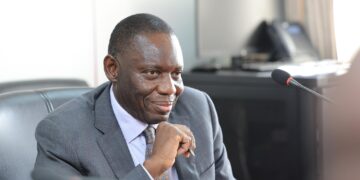








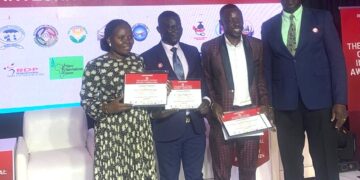


As veteran politician Matia Kasaija bows out of Cabinet after serving nearly ten years as Uganda’s Finance Minister, he leaves behind a legacy defined not only by economic management but also by the humour, blunt honesty, and memorable expressions that made him one of the country’s most recognisable public officials.
For many Ugandans, journalists, and Members of Parliament, Kasaija was more than the man responsible for reading the national budget. He became a political personality whose off-the-cuff remarks regularly dominated headlines and social media conversations.

Throughout his time at the Ministry of Finance, Kasaija developed a reputation for speaking candidly, often abandoning prepared speeches in favour of spontaneous reactions that blended humour with political messaging.
Supporters described him as genuine and relatable, while critics occasionally accused him of being careless with words. Yet even those who disagreed with him admitted that he brought an unusual human touch to one of government’s most demanding offices.
At 82 years old, Kasaija exits public office after overseeing Uganda’s economy through some of the most difficult periods in recent history, including the COVID-19 pandemic, rising global inflation, and economic disruptions linked to the Russia-Ukraine conflict.
Despite those challenges, his colourful public statements often overshadowed the technical details of fiscal policy. One of his most iconic moments came in 2018 while explaining Uganda’s economic performance.
Attempting to illustrate growth, Kasaija compared the economy to an aircraft preparing for takeoff, declaring that it was moving “swiiiii,” while gesturing dramatically with his hands. The phrase quickly became a national talking point and remains one of the most quoted political soundbites of the decade.
Years later, after the pandemic and global economic turbulence slowed growth, Kasaija again turned to transport metaphors while defending the economy’s resilience. He told Parliament that although the country had experienced an “accident,” the economic “train” had not stopped moving.
Another phrase that cemented his place in Uganda’s political folklore was his repeated assurance to MPs that “money will come” whenever concerns emerged over delayed government funding.
The remark gained widespread popularity online and became synonymous with his tenure at the Finance Ministry. During the presentation of the 2025/26 national budget, Kasaija jokingly revived the phrase, telling legislators, “Money has come,” before laughing in his trademark raspy voice.
Behind the humour, however, was the difficult responsibility of financing government operations and development programmes. Kasaija frequently acknowledged the pressure involved in sourcing funds, particularly from international lenders and development partners.
On one occasion, he openly complained about the burden of continuously seeking financial support abroad, saying the process sometimes made him feel like a beggar.
Yet he later softened his position, reminding lawmakers and fellow ministers that government resources were always limited and that raising funds for national priorities was never an easy task.
Kasaija also gained respect for occasionally admitting mistakes publicly, a trait not commonly associated with senior politicians.
During investigations into controversial supplementary expenditures involving compensation claims linked to the Uganda Land Commission, he conceded that proper procedures had not been followed and admitted that his ministry should have handled the matter differently.
In another public appearance, he blamed corruption among some technocrats for undermining his efforts as minister, arguing that dishonest officials often frustrated implementation of government programmes.
Youth unemployment remained another recurring concern throughout his speeches. Kasaija repeatedly appealed to investors and policymakers to prioritise job creation, warning that widespread unemployment among young people posed a long-term threat to national stability.
During his stewardship, government rolled out several economic intervention programmes aimed at wealth creation and recovery, including Operation Wealth Creation, Emyooga, the Parish Development Model, and post-pandemic recovery funds for businesses and small enterprises.
Uganda’s economy also expanded significantly under his leadership. When Kasaija assumed office as Finance Minister, the country’s nominal GDP stood at roughly 32 billion dollars. By the time of his departure, it had grown to an estimated 66 billion dollars, while economic growth rates recovered to approximately 6.5 percent annually after the pandemic slowdown.
Still, his tenure was not without controversy. One of the biggest scandals linked to his final years in office involved the diversion of iron sheets intended for vulnerable communities in Karamoja. Kasaija admitted that the iron sheets were delivered to his home but insisted he had never requested them, maintaining his innocence before eventually returning the items.
Opinions about his final years in office remain divided. Former Kira Municipality MP Ibrahim Ssemujju Nganda argues that age may have affected Kasaija’s ability to fully manage the ministry in later years, claiming that much of the work had gradually shifted to technocrats and junior ministers.
Others disagree. Former Tororo County MP Geoffrey Ekkanya maintains that Kasaija remained capable and energetic, describing him as one of the cleaner historical figures within the ruling NRM government.
Whether remembered for balancing national budgets, negotiating financial support, championing government programmes, or producing unforgettable political catchphrases, Matia Kasaija leaves office as one of the most distinctive Finance Ministers in Uganda’s modern political history.



 English