









The Supreme Court has overturned key findings in a 20-year-old land dispute involving former property dealer Patrick Kasulu, bringing partial resolution to a long-running case over a property in Ntinda.
The dispute stems from 2004, when Nelson Ochaya Marie, the registered owner of a house on Martyrs Lane, reportedly engaged Kasulu, then operating as a prominent real estate agent under Property Masters, to help identify a buyer for his property.

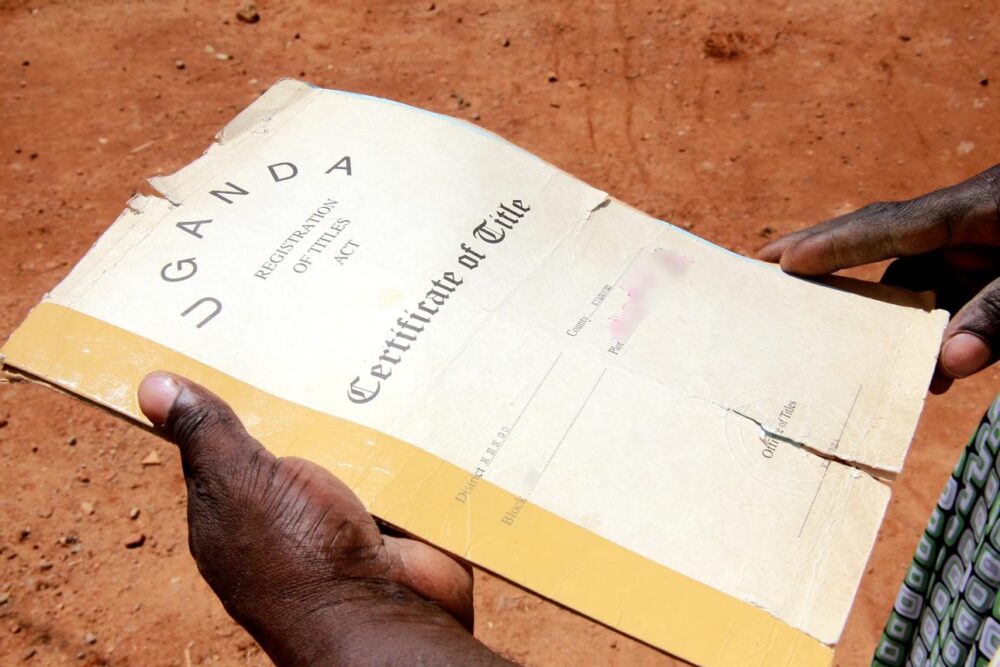
Court documents indicate that Kasulu advised Ochaya to temporarily vacate the premises to ease viewings for potential buyers. Ochaya also handed over the original land title to Kasulu to facilitate marketing of the property.
A prospective buyer, identified as businessman Kamenge Deudonne, later expressed interest. Because the lease on the land had expired, Kamenge allegedly requested Ochaya to first apply for a lease extension before any sale could proceed.
Ochaya complied and submitted the necessary documents, which were handed over to Kamenge. However, he later lost contact with both Kasulu and Kamenge and believed the transaction had collapsed.
Years later, Ochaya discovered that a fresh land grant had been processed in his name and that multiple changes had been made on the title without his knowledge or consent.
The records showed that the property had been transferred first to Kamenge and later sold to John Kabayo, who then used it as collateral for a loan from Housing Finance Bank, which registered a mortgage over the property.
The matter escalated in 2012 when Housing Finance Bank advertised the property for public auction following an alleged loan default. This prompted Ochaya to file a lawsuit in the High Court, insisting that he had never sold the property and had never signed any transfer documents authorising the change of ownership.
He sued Kamenge, Kabayo and Housing Finance Bank, seeking cancellation of the title transfers and removal of the mortgage. However, the High Court dismissed his claim, a decision that was later upheld by the Court of Appeal.
Dissatisfied, Ochaya appealed to the Supreme Court.
In its ruling, the Supreme Court found that the lower courts failed to properly examine the central question of how Kasulu, who was not registered on the land title, allegedly managed to dispose of the property.
In a lead judgment authored by Justice Christopher Izama Madrama, the court noted that no sale agreement was presented to prove that Ochaya had sold the land to Kasulu. It further observed that Kasulu nonetheless proceeded to transfer the property to Kamenge while presenting himself as the owner.
The court also emphasized that once Ochaya denied signing any transfer documents, the responsibility shifted to the respondents to prove their authenticity, which was not sufficiently done.
The Supreme Court concluded that no valid sale between Ochaya and Kasulu had been established, rendering Kasulu’s subsequent transfer to Kamenge unlawful since it was not executed by the registered owner.
However, the court upheld the later transfer of the property to Kabayo and the mortgage in favour of Housing Finance Bank, finding that Kabayo qualified as a bona fide purchaser for value without notice of wrongdoing.
The justices also ruled that despite some irregularities in the mortgage documentation, the security interest remained valid because the essential legal requirements for an equitable mortgage had been satisfied.
At the same time, the court found that Kabayo under-declared the value of the property to the Uganda Revenue Authority, stating 440 million shillings instead of the actual purchase price of 525 million shillings. He was ordered to settle the resulting tax shortfall.
Kamenge was found liable for fraud and directed to refund 525 million shillings obtained from the transaction. He was also ordered to pay 150 million shillings in general damages to Ochaya.
The total award of 675 million shillings will attract six percent annual interest from 2012, significantly increasing the final payable amount to over 1 billion shillings.
Despite his central role in the transactions, Patrick Kasulu was not listed as a respondent in the case.
The appeal was heard by a panel of Justices Percy Night Tuhaise, Mike Chibita, Elizabeth Musoke and Monica Mugenyi.






 English