


















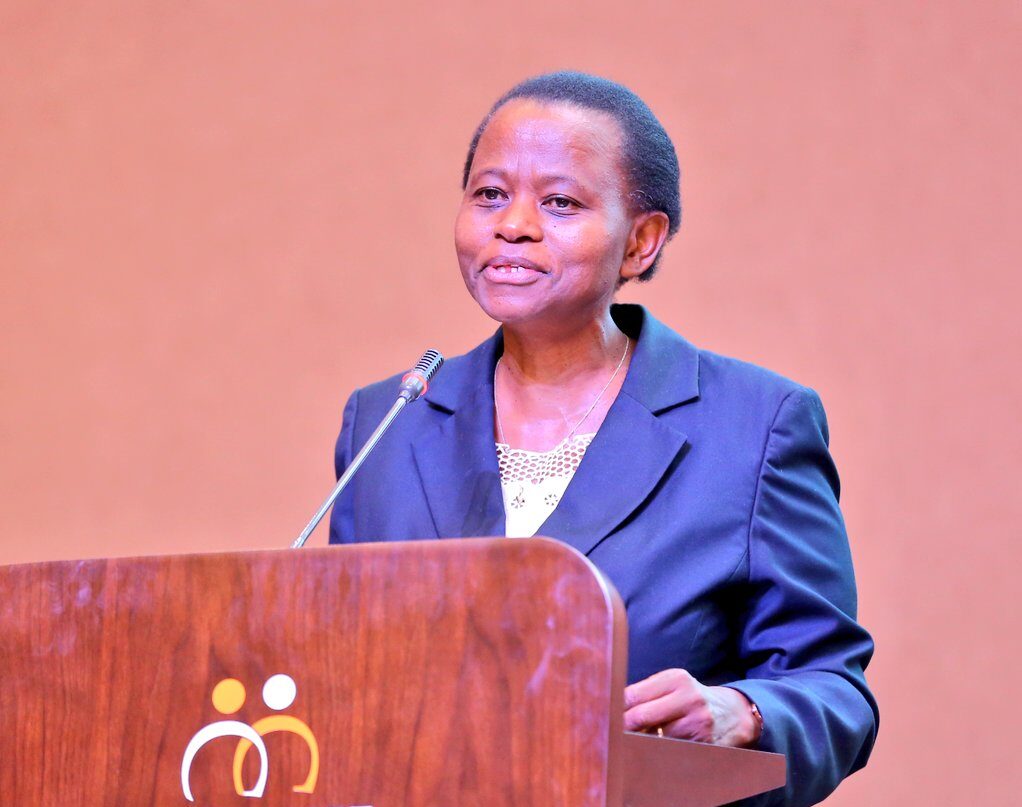
Head of Public Service and Secretary to Cabinet Lucy Nakyobe Mbonye has warned state prosecutors against allowing politics, corruption and abuse of office to influence their work, saying such practices are steadily weakening public trust in Uganda’s justice system.
Speaking during the opening of the Annual Prosecutors’ Symposium in Kampala on Monday, Nakyobe urged prosecutors to remain independent and professional despite pressure from influential individuals seeking to manipulate criminal cases for political or personal gain.


She told prosecutors that they must reject political interference, bribery, conflicts of interest and any attempts to tamper with evidence or misuse prosecutorial authority.
According to Nakyobe, the powers entrusted to prosecutors are among the most sensitive responsibilities held by public officials because their decisions directly affect people’s freedoms, reputations and rights.
She warned that when prosecutors become tools for intimidation, extortion or oppression, they not only destroy innocent lives but also damage the credibility of government institutions.
“The power of the prosecutor can protect justice, but if abused, it can destroy lives and undermine confidence in the state,” she said.
Nakyobe said public dissatisfaction with delayed court cases, weak prosecutions and unethical conduct within the justice system was contributing to growing criticism about the rule of law in the country.
She told prosecutors that accusations about the absence of rule of law partly reflected how the public viewed the conduct of officers within the justice chain.
The Head of Public Service particularly condemned the misuse of criminal charges in land disputes, saying complaints had increased about individuals being falsely accused and detained to facilitate illegal land grabbing schemes.
She cited the case of a man identified as Ayigihugu, who allegedly contacted her while on remand claiming he had spent four months in prison as individuals attempted to take over his family land despite police reportedly dropping charges against him.
“No citizen should lose land, liberty or dignity because public officers abuse the powers entrusted to them,” she said, while calling for thorough investigations into the matter.
Nakyobe also criticised delays in handling criminal cases, poor coordination between prosecutors and investigators, and failure by some prosecutors to properly manage court schedules.
“Justice delayed is justice denied. Equally important, justice manipulated is justice destroyed,” she said.
She reminded prosecutors that their responsibility is not simply to secure convictions but to pursue justice fairly, independently and in accordance with the law.
Her remarks come at a time when several people, especially supporters of the opposition National Unity Platform, remain in prison amid claims from relatives and lawyers that some charges are politically motivated.
The symposium, held under the theme “Enhancing Professionalism for Responsive Prosecution Services,” has brought together prosecutors from institutions including the Office of the Director of Public Prosecutions, the Inspectorate of Government and the Uganda Wildlife Authority.
Meanwhile, Director of Public Prosecutions Lino Anguzu said the prosecution service must play a central role in Uganda’s governance and development agenda through fighting corruption, organised crime and protecting public resources.
Anguzu said a country could not attract investment in an environment characterised by corruption, fraud, land grabbing, cybercrime and violence.
He argued that prosecution services should be viewed not only as legal institutions but also as pillars of governance, public trust and economic transformation.
The DPP cautioned prosecutors against approving weak criminal cases, saying careless decisions to charge suspects often destroy innocent lives, waste public resources and weaken confidence in the justice system.
He stressed that prosecutorial decisions must be guided by evidence, the law and public interest rather than pressure or convenience.
“You must not be pressured to sanction charges that are non-starters,” Anguzu said.
He further encouraged prosecutors to continuously upgrade their skills to handle emerging crimes such as cybercrime, financial fraud and transnational organised crime.
Anguzu also called for greater adoption of technology, including digital case management systems and electronic evidence handling, to improve accountability and efficiency within prosecution services.
He urged prosecutors to uphold what he described as the three Ds — devotion, dedication and discipline — saying institutional reforms would depend on professionalism, integrity and accountability.
During the week-long symposium, participants are expected to discuss topics including cross-examination skills, anti-corruption enforcement, cybercrime investigations, victim protection, stress management and reforms aimed at restoring public confidence in the justice system.













 English