

















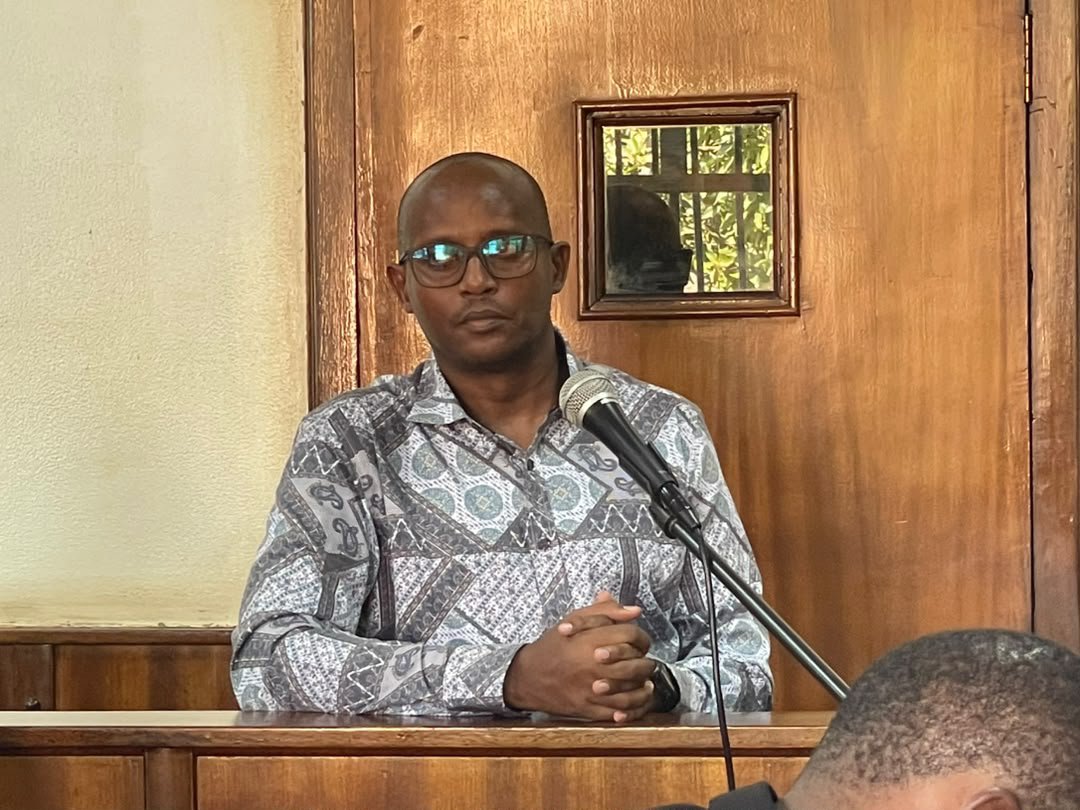
The extradition proceedings against former African Policy Adviser Michael Katungi Mpeirwe will proceed after the Buganda Road Chief Magistrates Court rejected his attempt to have the case suspended pending a constitutional challenge to Uganda’s extradition law.
Chief Magistrate Ritah Neumbe Kidasa ruled on Thursday that the filing of an application challenging the proceedings does not, by itself, stop a case from moving forward. She held that proceedings can only be suspended after a competent court issues a specific stay order.


Katungi is facing an extradition request from the United States, where he is wanted over allegations linked to international arms trafficking, cocaine trafficking and providing material support to a Mexican drug cartel.
His lawyers, led by Medard Lubega Sseggona, had asked the court to halt the extradition proceedings until the Constitutional Court determines Constitutional Petition No. 40 of 2026, in which Katungi is challenging provisions of the Extradition Act.
The defence argued that allowing the proceedings to continue could expose Katungi to irreversible prejudice if the Constitutional Court later finds that aspects of the extradition process are unconstitutional.
Sseggona told court that the defence filed its application for a stay on July 9, 2026, arguing that surrendering Katungi to the United States before the constitutional questions are resolved could render any favourable constitutional ruling ineffective.
He argued that the court would have no practical means of reversing the situation if Katungi were extradited and the Constitutional Court subsequently found that the proceedings had violated his rights.
Defence lawyer Frank Kandiho reinforced the argument using a shoes-and-socks analogy, suggesting that the constitutional questions should be resolved before the extradition process reaches a point that cannot be reversed.
The lawyers also challenged the legal foundation of the extradition request, arguing that Uganda does not have a bilateral extradition treaty with the United States.
They questioned the constitutionality of Sections 4 and 5 of the Extradition Act, contending that the provisions raise broader questions about Uganda’s sovereignty and the legal framework governing the surrender of suspects to foreign jurisdictions.
The defence further submitted that Katungi was already in custody and was not facing criminal proceedings in Uganda, meaning there was little justification for allowing the extradition process to continue while the constitutional petition was pending.
The State opposed the application, describing it as an attempt to delay the proceedings.
State Attorney Adrine Tusingwire argued that lodging a stay application does not automatically suspend a case. She said the defence was required to obtain an order from a competent superior court before the magistrate could halt the extradition proceedings.
Tusingwire also pointed to the defence’s previous participation in the case, noting that the lawyers had obtained permission to cross-examine the person who swore an affidavit supporting the US extradition request.
The parties had agreed that the cross-examination would take place on August 13, the same date on which the stay application came up for consideration.
The State argued that it was inconsistent for the defence to participate in preparations for the hearing and subsequently seek to stop the proceedings on a date that had already been agreed upon by both sides.
Tusingwire warned that allowing successive applications to halt the proceedings could lead to prolonged delays and potentially prevent the extradition request from being determined.
In her ruling, Magistrate Kidasa sided with the State, finding that there was no automatic suspension of proceedings simply because a stay application had been filed.
She also faulted the defence for not pursuing the stay application with sufficient urgency. Although the application was filed on July 9, the magistrate noted that the defence continued participating in subsequent court proceedings, including securing permission to cross-examine the deponent supporting the extradition request.
According to the magistrate, the defence’s conduct suggested that it was advancing the main extradition case while simultaneously relying on the pending stay application as a basis for stopping the proceedings.
Kidasa therefore declined to halt the extradition hearing and directed that the court proceed with consideration of the evidence supporting the US request.
However, Thursday’s decision does not dispose of Katungi’s constitutional petition or his separate application seeking a stay.
The court maintained Miscellaneous Application No. 89 of 2026 for hearing on August 31, 2026.
The ruling also follows a decision by High Court Judge Simon Peter Kinobe last week in which he rejected an earlier attempt by Katungi to stop the extradition proceedings and directed Buganda Road Court to resume the hearing.
US Allegations
Katungi was arrested on June 27, 2026, after Buganda Road Court issued a warrant following a formal extradition request from the United States submitted through Uganda’s Ministry of Justice and Constitutional Affairs.
US prosecutors accuse him of being part of an international network allegedly involved in securing and supplying military-grade weapons to Mexico’s Cartel de Jalisco Nueva Generación.
The weapons allegedly included rocket launchers, grenades, sniper rifles, anti-personnel mines and anti-aircraft weapons.
He is also accused of participating in a conspiracy to distribute at least five kilograms of cocaine, knowing that the drugs would eventually be smuggled into the United States.
The US case further alleges that Katungi worked with Bulgarian national Peter Dimitrov Mirchev, Kenyan national Elisha Odhiambo Asumo and Tanzanian national Subiro Osmund Mwapinga.
Prosecutors allege that the group used fraudulent end-user certificates in an effort to disguise the intended destination of the weapons.
Katungi remains on remand at Murchison Bay Prison in Luzira as the Ugandan court considers the evidence and legal arguments surrounding the US extradition request.
The extradition case will now continue despite the unresolved constitutional challenge, leaving the Constitutional Court to separately determine whether the provisions of Uganda’s extradition law challenged by Katungi are constitutionally valid.










 English