















The Judicial Service Commission (JSC) has disclosed that it dismissed a complaint lodged by opposition politician Dr. Kizza Besigye against High Court Judge Justice Emmanuel Baguma after finding that it did not meet the legal threshold required for the Commission to investigate.
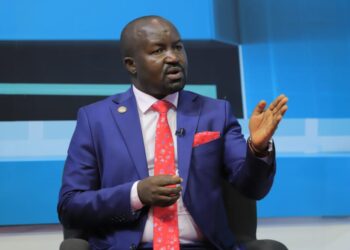
The revelation was made on Friday by the Chairperson of the Judicial Service Commission, Dr. Douglas Singiza, during the launch of the Commission’s Strategic Plan III, Client Charter and Service Delivery Standards at the Supreme Court in Kampala.

Dr. Singiza explained that the Commission only handles complaints falling within its constitutional and statutory mandate, stressing that dissatisfaction with a judge’s judicial decisions alone is not sufficient grounds for disciplinary proceedings.
“We have a threshold for handling complaints. Once a complaint does not meet the administrative criteria, we do not entertain it,” he said.
He noted that complaints challenging a judge’s exercise of judicial discretion, such as granting or refusing bail, cannot be investigated by the Commission unless there is evidence of misconduct such as corruption, bias or other improper conduct.
According to Dr. Singiza, litigants who are dissatisfied with court decisions have other legal remedies available, including filing fresh applications, seeking reviews or appealing to higher courts. Administrative concerns may also be raised with the Chief Justice or the Principal Judge where appropriate.
“When you allege that a judge has not granted you bail, there are options available. You can apply again or appeal. You do not come to the Judicial Service Commission simply because a judicial officer has exercised judicial discretion,” he said.
He added that the Commission would only intervene where there is credible evidence that a judicial officer abused that discretion through acts such as soliciting a bribe or engaging in other forms of misconduct.
Responding specifically to questions about Besigye’s complaint, Dr. Singiza said the Commission had already communicated its decision to the former presidential candidate.
“I can state without any fear of contradiction that we have written several letters to the complainant informing him that the particular complaint did not meet the threshold of admissibility,” he said.
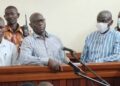
Besigye and his co accused, Hajji Obeid Lutale, petitioned the Judicial Service Commission in August 2025 seeking Justice Baguma’s removal from office after he repeatedly denied them bail and allegedly failed to act on an earlier bail application filed in April 2025.
In their complaint, they accused the judge of incompetence, bias and unfairness. They argued that their case had been committed to the International Crimes Division of the High Court but was instead allocated by Justice Baguma to the Criminal Division.
The two also alleged that the judge prevented Besigye from addressing the court and wrongly stated that there was no record of the charges they had previously faced before the General Court Martial, despite the existence of affidavits and court documents.
Besigye and Lutale further argued that they had been unlawfully arrested in Kenya and returned to Uganda without following established extradition procedures. They maintained that they were detained incommunicado at Makindye Military Barracks for four days without access to lawyers or family members before being arraigned before the General Court Martial despite being civilians.
They also contended that even after the Supreme Court ruled that military courts lack jurisdiction to try civilians, Justice Baguma failed to give due consideration to those findings when handling their case.
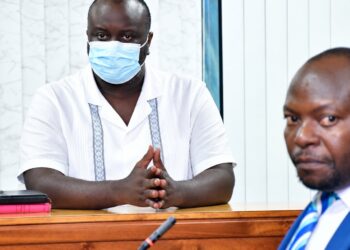
The Commission’s disclosure comes only days after Justice Baguma, on July 8, 2026, dismissed another joint bail application filed by Besigye and Lutale in the ongoing treason case in which they are jointly charged with Captain Denis Oola.
The three accused face treason charges arising from allegations that they plotted to overthrow the government.
According to the prosecution, they held meetings in Geneva, Athens, Nairobi and Kampala to mobilise support, solicit funding, acquire weapons and organise paramilitary activities.
Prosecutors further allege that Besigye met a Kurdish intelligence operative identified as Andrew Wilson and received 5,000 US dollars to facilitate the transportation of 36 Ugandans to Kisumu, Kenya, for alleged military training. The recruits were reportedly intercepted and deported before the training could take place.
The prosecution also claims that Besigye sought to acquire surface to air missiles, ricin poison and counterfeit currency, and planned to use drone technology in an alleged plot to assassinate President Yoweri Museveni.
The state has indicated that it intends to rely on audio and video recordings, social media communications, immigration records and telephone data as evidence during the trial.
Meanwhile, Dr. Singiza said the newly launched Strategic Plan III, Client Charter and Service Delivery Standards are intended to strengthen accountability, improve service delivery and enhance the Commission’s effectiveness as its constitutional responsibilities continue to expand.
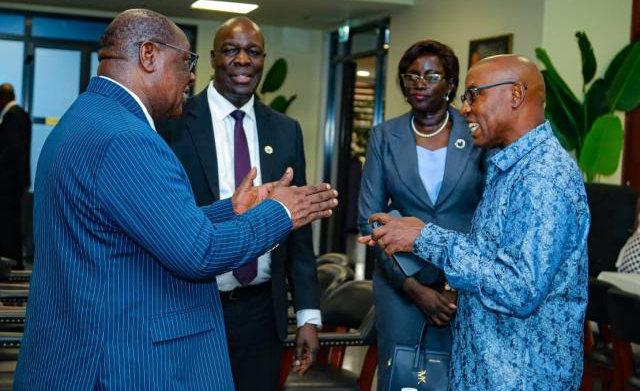
The launch followed a stakeholders’ meeting attended by institutions across the justice sector, including the Judiciary, Uganda Prisons Service, Uganda Police Force and the Office of the Attorney General.









 English