







The Government has been ordered to pay 100 million Shillings in compensation to the family of Mustafa Sajjabbi, a former resident of Mayuge District who was beaten to death by police officers while in custody 24 years ago.
In a ruling delivered in Kampala on Monday, the Uganda Human Rights Commission (UHRC) Tribunal found the State liable for violating Sajjabbi’s right to life following his arrest and death under police custody on October 1, 2002.

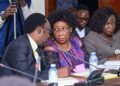
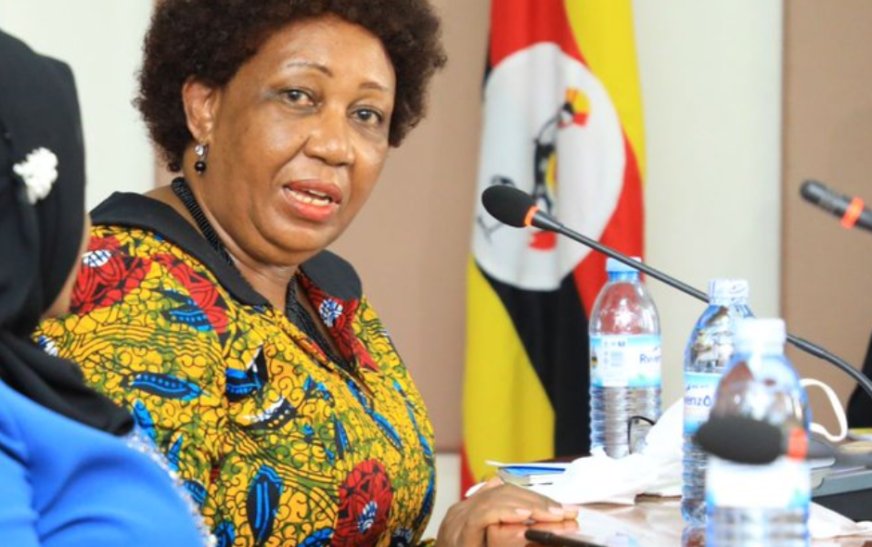
UHRC Chairperson Mariam Wangadya, who presided over the hearing, said the evidence established that Sajjabbi had been deliberately and intentionally killed by the officers who arrested him.
The decision followed a complaint filed by Sajjabbi’s son, Uthman Babalanda, a teacher and administrator of his father’s estate. Evidence presented before the Tribunal showed that police officers arrested Sajjabbi at his home alongside another of his sons, Adam Mwawosi, before taking them to Mayuge Police Station.
Mwawosi told the Tribunal that the officers accused him and his father of theft and demanded that they produce a firearm allegedly used in robberies. When the two denied possessing a gun, the officers reportedly assaulted them, repeatedly beating and kicking Sajjabbi across his body.
The following day, the family learnt through a radio announcement that Sajjabbi had died. However, they were informed that his body had been transferred to Kampala.
The family later discovered that the State had buried him at a government cemetery behind Namboole Stadium without notifying them. His body was eventually exhumed on October 11, 2022, and taken back to Mayuge for reburial at the family home.
In its assessment of the evidence, the Tribunal noted that representatives of the Attorney General neither cross-examined the complainant’s witnesses nor presented any witnesses or written submissions to challenge the allegations.
The only account provided by the police was contained in a 2005 letter from the then Mayuge District Police Commander, which stated that the suspects had been handed over alive to Operation Wembley in Kampala. However, Wangadya observed that the letter did not explain the circumstances surrounding Sajjabbi’s death.
Citing the European Court of Human Rights decision in Akdeniz and Others v. Turkey, the Tribunal held that where a person dies while in State custody, the government bears the responsibility of providing a plausible explanation for the death.
“The entire purpose of taking him from his home was to kill him,” the Tribunal stated, describing the killing as deliberate and intentional.
The Tribunal further observed that the State’s decision to bury Sajjabbi without informing his family pointed to an apparent awareness by the officers of the gravity of their actions.
It awarded the family 100 million Shillings in general damages, attracting interest at 10 per cent per annum. The Tribunal described Sajjabbi’s final hours as “agonising” and the conduct of the officers involved as “barbaric” and “impossible to justify”.
Sajjabbi was survived by three widows and 13 children, among whom the compensation is to be shared equitably.
Speaking shortly after the ruling, Babalanda said the family had waited for more than two decades to obtain justice after reporting his father’s death to the Commission.
“Though our dad will not come back, the community, the country will know that there is an injustice moving on in the country,” he said.
He added that his father had been buried in a mass grave alongside seven other bodies and appealed to the government to protect citizens rather than become an instrument of harm against them.
The ruling was among eight complaints considered by the Commission on the first day of its adjudication of human rights cases in the Kampala Metropolitan area.









 English
