



















The Court of Appeal has upheld a 30-year prison sentence imposed on a man convicted of murdering a Uganda People’s Defence Forces (UPDF) soldier in Amuru District after the soldier returned to a woman with whom the convict had previously been in a relationship.
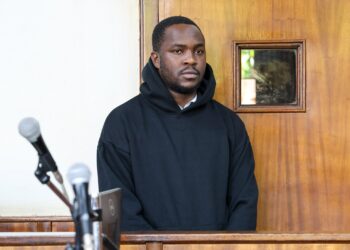
In a judgment arising from Criminal Appeal No. 0011 of 2016, the court dismissed an appeal by Francis Ocaya, who had challenged the sentence imposed by the High Court in Gulu, arguing that it was harsh and excessive in the circumstances of the case.


The three justices who heard the appeal were Eva Luswata, Dr Asa Mugenyi and Musa Ssekaana.
Ocaya was convicted on his own plea of guilty to murdering Godfrey Birungi, a serving UPDF soldier, and sentenced to 30 years’ imprisonment by Justice Elizabeth Ibanda Nahamya on December 12, 2015.
According to the facts accepted by the trial court, the murder occurred on October 14, 2010, at Keyo Village in Lamogi Sub County, Amuru District. Ocaya and another person who remains at large were accused of attacking Birungi at the home of Josephine Aceng, with whom the soldier had been living.
The court heard that Birungi had been cohabiting with Aceng before he was deployed for service outside the country. During his absence, Aceng began living with Ocaya, although the relationship later ended.
Birungi returned to Aceng’s home on October 12, 2010, a development that angered Ocaya, who had been left by the woman.
At about 3am on October 14, 2010, Birungi and Aceng were sleeping when Ocaya and his accomplice reportedly broke into the house. The two men dragged Birungi away after assaulting Aceng and taking some of her property.
Aceng reported the incident to the local council chairperson, who informed the police. A search was conducted, and Birungi’s body was discovered abandoned by the roadside.
A postmortem examination established that Birungi died from asphyxia caused by strangulation and hypovolaemia resulting from haemorrhage and anaemia.
Ocaya reportedly disappeared from the village after the incident and went into hiding. He was arrested in Gulu Town in April 2011 and subsequently charged with murder.
In his appeal, Ocaya argued that the trial judge had failed to properly weigh the mitigating circumstances against the aggravating factors when determining his sentence.
His lawyer submitted that the trial court had concentrated on the aggravating circumstances while failing to give adequate consideration to factors that could have justified a more lenient sentence.
The defence also argued that the trial judge had relied on circumstances that were not properly established on the record when assessing the seriousness of the offence. Counsel asked the Court of Appeal to reduce the sentence to 18 years’ imprisonment.
To support the appeal, the defence cited previous decisions in which courts had reduced sentences imposed on people convicted of murder.
In Wamboya v Uganda, the Court of Appeal reduced a 30-year sentence to 20 years for a 23-year-old convict, taking into account his age and potential for rehabilitation.
The defence also cited Mbunya Godfrey v Uganda, in which the Supreme Court substituted a 25-year prison term for a death sentence imposed on a man convicted of murdering his wife.
Another case cited was Alidriga Majid v Uganda, in which the Court of Appeal reduced a 35-year sentence to 25 years for a 22-year-old man convicted of murder.
However, the state opposed the appeal, arguing that the 30-year sentence was neither harsh nor excessive. The prosecution relied on the sentencing guidelines, which provide a starting point of 35 years’ imprisonment for murder.
In evaluating the appeal, the Court of Appeal reiterated that appellate courts should not ordinarily interfere with sentences imposed by trial courts unless the sentencing judge applied a wrong principle, overlooked a material consideration or imposed a sentence that was manifestly excessive or inadequate to the extent of causing a miscarriage of justice.
The justices cited the Supreme Court decision in Kiwalabye Bernard v Uganda, which emphasised that an appellate court should interfere with a sentence only where the trial court’s exercise of discretion results in a manifestly excessive sentence or one so low that it amounts to a miscarriage of justice.
The court also considered the trial judge’s treatment of the mitigating and aggravating circumstances.
In her sentencing remarks, Justice Ibanda Nahamya acknowledged the seriousness of murder but considered that there was an element of provocation arising from Ocaya’s relationship with Aceng. She observed that his feelings for the woman had influenced his actions and said she would exercise leniency.
The Court of Appeal noted that although the trial judge had not repeated every mitigating factor presented, that omission did not automatically make the sentence excessive. It was sufficient that the judge had demonstrated an appreciation of the mitigation in arriving at the sentence.
The justices further referred to the Supreme Court’s guidance in Yustina Aharikundira v Uganda, which cautions that sentencing is a matter of judicial discretion and that appellate intervention is justified only when a sentence exceeds the permissible range.
The court was not persuaded that Ocaya’s sentence warranted intervention. It observed that murder is a grave offence that attracts severe punishment, including the maximum penalty of death, and that the trial judge had already taken the mitigating circumstances into account.
Consequently, the court dismissed the appeal and upheld the 30-year prison sentence.
ENDS.












 English
