
















Semmy Erin should be spending these first weeks of motherhood learning the rhythms of life with her newborn, sharing the responsibilities of parenthood with her husband and watching their three children begin another chapter of family life.
Instead, barely two weeks after giving birth, she is mourning James Erin, the 32-year-old man with whom she expected to raise their children.


The newborn is too young to understand death. The older children may struggle to comprehend why their father is no longer coming home. As they grow, however, his absence will become part of their childhood, a permanent reminder of a life interrupted before the family had fully welcomed its newest member.
James was reportedly killed by an elephant in Agago District, northern Uganda, amid a series of wildlife attacks that left three people dead and two others injured within five days.
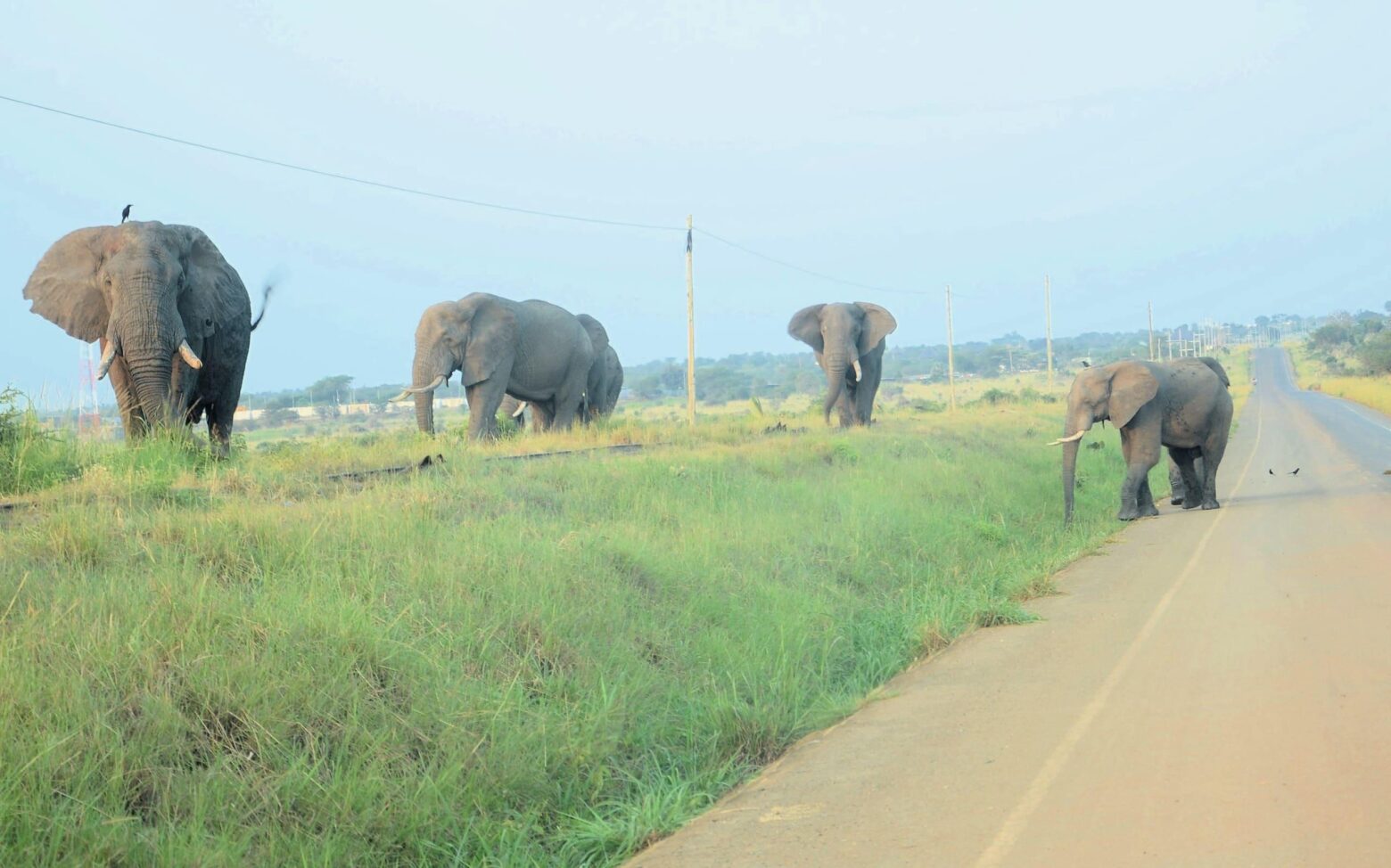
His death is one of the most devastating expressions of a crisis affecting communities living in the path of elephants moving beyond Kidepo Valley National Park. For these communities, the animals are not simply a conservation success story. They can also represent an immediate threat to human life, household food supplies and the livelihoods of families dependent on farming.
The tragedy raises questions that extend beyond the circumstances of one fatal encounter. How can Uganda protect its wildlife while ensuring that people living around protected areas are not left to bear the consequences of wildlife movements? What happens to families whose breadwinners are killed? And how long should communities wait for lasting protection when warnings, compensation promises and emergency interventions have yet to eliminate the danger?
For Semmy, these are no longer abstract policy questions. They are the realities of raising three children without their father.
A death that has left a family exposed
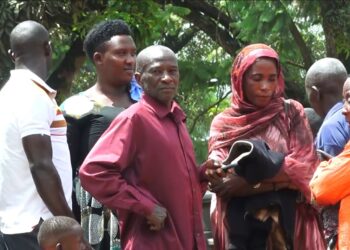
James, a member of the Lipa Clan, was buried on Monday, October 19, 2026, at Apii-B Cell, Punatar Ward, Ayabi Town Council in Kwania District.
His death has left Semmy with the responsibility of caring for three young children, including a newborn requiring constant attention. Beyond the emotional devastation, the family must now confront the practical consequences of losing a husband and father.
Children need food, clothing, healthcare, shelter and education. A newborn brings additional demands at a time when the mother herself needs care, rest and emotional support. If James contributed to the family’s income through farming or other work, his death also threatens the household’s ability to meet its basic needs.
The consequences of losing a breadwinner are rarely confined to the day of the funeral. They can unfold over years, affecting children’s education, nutrition and opportunities, particularly where relatives and community support cannot replace the lost income.
Semmy’s situation illustrates why wildlife-related deaths must be understood not only as incidents requiring investigation but also as social and economic emergencies for surviving families.
According to reports from the affected communities, James was among people caught up in encounters with elephants that had entered farmland in Agago. The incidents occurred in Lapono and Lukole sub-counties, where residents have repeatedly raised concerns about wildlife destroying crops and threatening lives.
A report published by Nile Post on October 17 said the attacks within five days had killed three people, including 15-year-old Palex Oyo and James, and injured two others. The same report said two elephants were subsequently found dead in separate villages, prompting concern over retaliatory killings and the circumstances surrounding the animals’ deaths.
The pattern is alarming because the danger is not limited to people who deliberately enter wildlife habitats. In farming communities, people must tend their gardens, protect their crops, move between settlements and secure their livelihoods. When elephants enter cultivated land, ordinary activities can suddenly become life-threatening.
When the garden becomes a danger zone
For many rural households in northern Uganda, farming is the foundation of survival. Land provides food for the family and, when harvests are sufficient, income for school fees, healthcare and other household expenses.
An elephant entering a garden can therefore cause damage on several levels. It may destroy crops that a family depends on for food, eliminate produce intended for sale and force farmers to choose between abandoning their gardens and risking encounters with the animals.
The danger becomes even more acute when residents attempt to drive elephants away themselves.
In its reporting on the Agago incidents, Nile Post cited accounts of a herd of more than 70 elephants believed to have strayed from Kidepo Valley National Park and entered gardens in Bwol and Te-Obiya villages. The report described the deaths of James and Palex and the killing of two elephants following the attacks.
These reports point to a difficult reality: the economic pressure to protect a harvest can push residents into dangerous encounters with animals capable of killing a person within seconds.
Yet the choice should not be between losing a harvest and risking one’s life.
At James’s burial, Uganda Wildlife Authority representative Geoffrey Opoka reportedly said wildlife teams were tracking more than 500 elephants and 1,000 buffaloes said to be outside the protected area. He also warned that other wildlife, including lions, leopards and cheetahs, had moved beyond park boundaries and attacked livestock.
These figures, as reported at the burial, underscore the scale of the concern. They also demand further clarification from wildlife authorities about the animals’ locations, movements, the areas facing the greatest danger and the measures being taken to prevent additional attacks.
The presence of dangerous wildlife outside a protected area does not automatically mean that every encounter will result in an attack. However, where animals repeatedly enter populated areas, the risks become a matter of public safety requiring timely intervention.
Pastor Joel Obonyo of Apita Seventh-day Adventist Church said residents were living in fear as elephants continued to destroy crops, attack livestock and threaten human life.
His concern captures the psychological burden carried by communities that must continue their daily routines despite the possibility of encountering dangerous animals.
A warning to remain vigilant may help prevent some incidents. It cannot, by itself, establish safe boundaries between people and elephants or guarantee that a family will not encounter an animal on its way to a garden.
The gap between warnings and protection
Opoka urged residents not to search for elephants after receiving reports of their presence. He also advised them to remain in well-lit areas at night and carry torches as a precaution.
These measures are useful, particularly where residents have advance information about wildlife movements. But they raise a fundamental question: what protection is available to people when elephants appear in their gardens during daylight, when they are travelling to work or when they must attend to crops to feed their families?
Residents cannot reasonably be expected to manage a wildlife emergency alone. Elephants are powerful, unpredictable animals, and attempts by untrained people to chase them away can turn a dangerous situation into a fatal one.
UWA says its response teams, field rangers and wildlife-monitoring personnel are working to locate animals and direct them back towards the national park. Such operations are important, but repeated incursions suggest that emergency responses must be accompanied by preventive measures.
The challenge is not unique to Agago. In August 2026, Radio Community Network reported that leaders in Karenga District were also demanding urgent intervention following persistent elephant attacks in communities near Kidepo Valley National Park.
Serving Our Community
The recurrence of similar concerns in neighbouring areas suggests that wildlife movements across the wider landscape need to be addressed through coordinated planning rather than isolated responses to individual incidents.
Authorities need to establish where elephants are moving, which settlements and farming areas are most exposed, when animals are likely to pass through vulnerable areas and how quickly rangers can respond to reports.
An effective early-warning system should do more than tell residents that elephants have been sighted. It should provide timely, credible information about affected locations, identify safe actions and connect communities directly to wildlife response teams.
District leaders, local council representatives and community members should also have clear reporting channels. Where mobile connectivity is poor, arrangements must ensure that residents can report sightings and receive warnings without depending exclusively on smartphones or internet access.
Longer-term interventions may include strategically designed barriers, carefully managed wildlife corridors and targeted protection around high-risk settlements. Any proposed infrastructure must account for elephant movements, ecological needs, land ownership and the rights of communities living near protected areas.
Electric fencing, for example, has been raised by leaders in northern Uganda as a possible intervention. But fencing requires proper planning, maintenance, funding and agreement over its alignment. It cannot be treated as a complete solution without considering where animals will move and whether risks could simply be transferred to neighbouring communities.
The priority should be to combine immediate protection with evidence-based, long-term management of recurring wildlife movements.
Compensation: a legal entitlement, not an act of charity
For Semmy and her children, preventing another attack will not reverse the loss they have suffered. Their immediate challenge is how to rebuild a family life that has been abruptly disrupted.
At James’s burial, Opoka reportedly said UWA would follow up compensation claims for people killed or injured by elephants and for crop and property damage in accordance with Uganda’s wildlife laws.
James Oyet Owiny, the Lukole Sub-county chairperson in Agago, pledged local-government support to help the family pursue compensation. Richard Eluk, the former LCIII chairperson of Ayabi Sub-county in Kwania, said efforts would be made to support the bereaved family, alongside assistance from UWA, members of the Lango community in Agago and the Cecilia Atim Ogwal Foundation.
Ayita View, head of the Lipa Clan, also urged clan members to remain calm while the family pursues compensation.
These commitments are important, but their value will ultimately be measured by what happens after the funeral: whether the family receives clear guidance, whether its claim is processed transparently and whether compensation is paid within a reasonable period.
Uganda’s legal framework provides a basis for such claims. The Uganda Wildlife Act, 2019, establishes a Wildlife Compensation Scheme intended to finance claims involving human deaths, injuries and property damage caused by specified wild animals outside protected areas.
Sections 82 to 84 provide for a Wildlife Compensation Verification Committee, the scheme’s financing and the assessment and approval of claims. The Act identifies elephants and buffaloes among the animals whose attacks can attract compensation for death or injury, and for specified property damage.
The law also states that claims that cannot immediately be paid from the scheme become public debts payable when funds become available. This provision is significant because it recognises that a verified claim should not simply disappear because money is unavailable at the time payment is due.
However, a legal entitlement does not automatically translate into immediate financial relief. A family may still have to assemble documentation, establish the circumstances of a death, submit a claim and wait for verification and approval.
For a recently bereaved household, those administrative demands can become an additional burden.
The compensation process therefore needs to be accessible, transparent and responsive to the circumstances of affected families. Local authorities should help survivors understand the requirements, submit documents and follow up claims. UWA should communicate the status of applications, explain delays and make clear what further information is required.
There is also a need to distinguish compensation for the loss of a family member from the broader question of how surviving children will be supported. A payment may provide some financial relief, but it cannot replace the deceased’s future earnings, parenting, companionship or contribution to the household.
Where a family loses its principal income earner, authorities and community support organisations should consider how immediate needs can be addressed while a formal compensation claim is being processed.
For Semmy, this could mean support with the children’s essential needs, assistance with the newborn’s care and help navigating the compensation process. Such assistance would not replace her husband, but it could prevent an already devastating loss from deepening into prolonged hardship.
When frustration turns against conservation
The killing of two elephants reportedly found dead after the Agago attacks has introduced another dimension to the crisis: the risk that prolonged fear and frustration will lead to retaliatory violence against wildlife.
The circumstances surrounding the animals’ deaths require investigation, and responsibility should be established through evidence rather than assumption. But the reported incidents illustrate the danger of a breakdown in trust between communities and wildlife authorities.
When people believe that their crops are repeatedly destroyed, their lives endangered and their complaints ignored, some may conclude that they must protect themselves by whatever means they can.
That response can have serious consequences. Retaliatory killings threaten wildlife conservation, may expose those responsible to legal consequences and do little to address the conditions that bring people and elephants into conflict.
The Wildlife Act provides for the reporting and assessment of threats posed by wild animals and requires that killing an animal to minimise property damage be considered a last resort, with due regard to the species’ conservation status.
But the law’s conservation objectives must be matched by credible protection for people.
Conservation is difficult to sustain when the communities living closest to wildlife feel that they bear its costs without receiving adequate protection or timely support. People are more likely to cooperate with wildlife authorities when they trust that dangerous animals will be managed effectively and that legitimate claims will be handled fairly.
This is not an argument for allowing the destruction of wildlife. It is an argument for recognising that protecting wildlife and protecting human life are connected responsibilities.
The Government must address the conditions that create conflict before grief hardens into hostility. That requires more than urging calm after an attack. It requires visible interventions, credible communication and accountability for the delivery of promised assistance.
A regional problem demanding a coordinated response
The reported movement of elephants and buffaloes beyond Kidepo Valley National Park raises questions about the adequacy of existing arrangements for monitoring wildlife and protecting communities across district boundaries.
At the time of the burial, UWA’s reported figures indicated that hundreds of elephants and more than a thousand buffaloes were outside the protected area. Those numbers require continuing verification and clear communication, but the reported scale alone warrants close coordination among wildlife authorities, district administrations and other responsible government agencies.
The first priority must be preventing further deaths and injuries. That means identifying dangerous animal movements, communicating alerts quickly, deploying response teams when animals enter populated areas and advising residents not to confront them.
The second is to reduce the damage to livelihoods. Authorities should assess recurring entry points and vulnerable farming areas, identify practical barriers or other preventive measures, and work with communities to ensure that interventions do not simply shift the problem elsewhere.
The third is accountability. District leaders and UWA should publish clear information on reported attacks, affected communities, compensation claims and the progress of preventive interventions. Such information would allow the public to assess whether the response is reducing risk or merely reacting to each new incident.
Parliament and the responsible ministries also have a role in examining whether the compensation scheme and wildlife-management operations have the resources needed to fulfil their legal and operational responsibilities.
These questions should be approached with evidence. The reported number of animals outside the park does not, by itself, establish why they moved, whether existing measures are adequate or which intervention would be most effective. Those are matters for wildlife monitoring, ecological assessment and transparent evaluation.
But uncertainty about the best long-term solution should not become a reason to delay immediate protective measures.
The children left behind
For Semmy, the policy debate is inseparable from the life she must now build without James.
Her newborn will grow, and the older children will eventually understand more fully what their father’s death means. They may learn how he lived, what he hoped for them and how the family changed after the day an elephant attack took his life.
What they cannot recover is the time they should have had with him.
The family’s tragedy is a reminder that the consequences of human-wildlife conflict extend far beyond the moment of an attack. They enter homes, reshape childhoods and place new burdens on people who may already be struggling to make ends meet.
A compensation payment, if approved and paid, could help meet some of the family’s needs. Community support could ease its immediate hardship. Better wildlife monitoring and faster emergency responses could reduce the risk faced by other households.
None of these measures can restore James to his wife and children. Their purpose is to ensure that his death does not become part of a continuing pattern in which families are left grieving while the underlying dangers remain unresolved.
Uganda has a legitimate interest in protecting its wildlife and preserving the ecological value of Kidepo Valley National Park. But that commitment must be accompanied by an equally serious obligation to protect the people whose homes and livelihoods lie within the wider landscape used by wild animals.
The test of the response will not be how many warnings are issued after an attack or how many promises are made at a burial. It will be whether fewer people are killed, fewer families lose their livelihoods, emergency interventions become more reliable and compensation reaches eligible claimants without unnecessary delay.
James Erin’s death has left a young widow raising three children, including a newborn, without their father. The other families affected by the reported attacks face their own struggles with grief, injury and lost livelihoods.
Their experiences demand a response that goes beyond sympathy.
For Semmy and her children, the loss is already permanent. For other families living in the path of roaming elephants, the opportunity to prevent another tragedy remains.
The question is whether the authorities will turn the warnings, commitments and legal protections into practical action before another household is forced to bury a loved one.
ENDS.




 English
