
















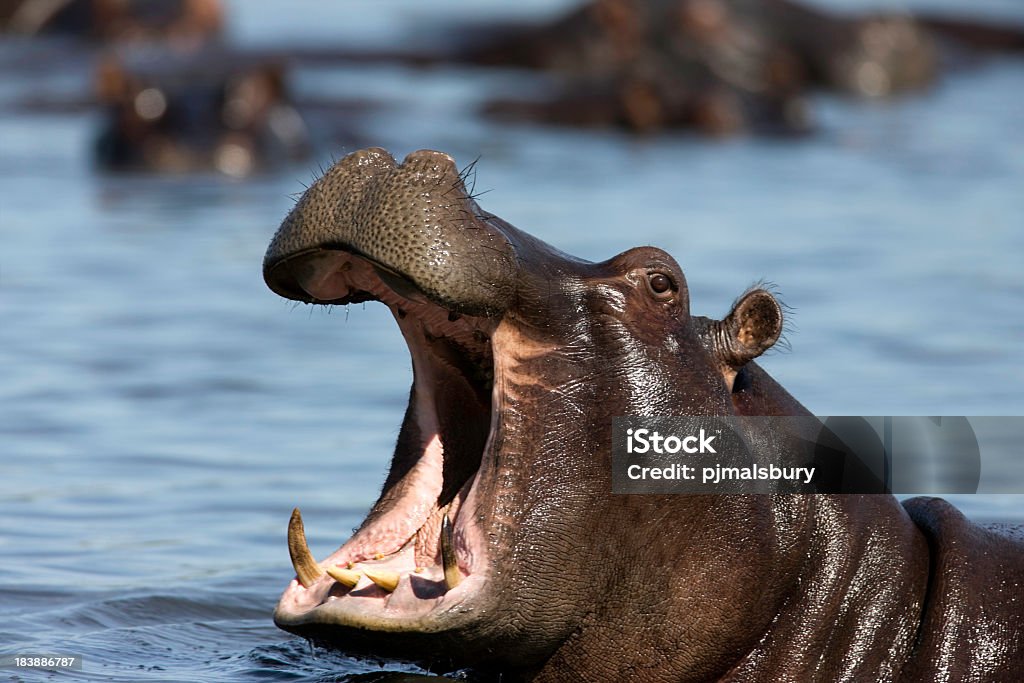
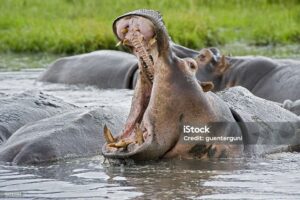
After dark, hippos emerge from lakes and their natural habitats to find food. They often venture into nearby gardens and food plantations, devouring or trampling over crops.


These semi-aquatic animals pose a serious risk to people in Rakai district, particularly those living near the lake shores. In many communities, residents, mostly farmers who step out at night to inspect or protect their crops from hippo destruction, risk fatal encounters with these giant mammals.
Uganda is home to a rich diversity of wildlife, from elephants, hippos, buffaloes, lions, leopards, chimpanzees, gorillas and numerous smaller species. These animals play an important ecological role and contribute to the country’s economy, tourism and cultural heritage.
However, as human settlements and agriculture increasingly encroach on wildlife habitats the interactions between people and wild animals are becoming more frequent, often resulting in crop destruction, serious injuries and at worst, loss of life of both humans and livestock, hence generating conflict.
Around Lakes – Kacheera and Kijanebarola in Rakai District, this human-wildlife tension has become a persistent challenge for communities struggling to protect both their lives and livelihoods. For some residents, mornings are a display of crops destroyed overnight, while others’ encounters with the animals have left permanent disabilities, deformities, or even ended in death.
Yet hippos remain valued and protected, and people living alongside these powerful animals must find a way to coexist with them. For Reuben Mwesigwa, a resident of Lyakisana village in Kacheera sub-county, that conflict is far more than a discussion about wildlife conservation. It is a painful experience he has lived with for three years after the injuries he suffered from a hippo attack.
“I was inspecting my banana plantation at night when I came face-to-face with a giant hippopotamus. Before I could escape, it swiftly charged at me,” Mwesigwa recounts the painful ordeal.
Family members rescued him, but he suffered a broken leg that has remained permanently deformed. Although he survived the attack, Mwesigwa’s life never remained the same. Farming, which used to be a main source of livelihood for his household, has become increasingly difficult. “I currently depend on assistance from fellow residents for survival,” he says.
In the neighbouring Lwanga village, a 70-year-old Didas Kabula, is also living with a permanent disability from a similar encounter in 2024. Kabula was checking goats in a pen behind his house when the hippo stormed from behind and bit him. The incident reportedly occurred at around 7:30 pm. The animal’s tooth tore through my left shoulder before fellow residents came to rescue me,” he says.
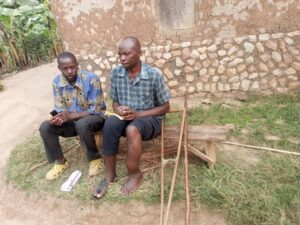
Mwesigwa and Kabula’s experiences highlight the dangers host communities face when hosting protected wildlife, whose conservation is important, yet their presence can devastate lives and livelihoods.
Residents living around L. Kacheera and L. Kijanebarola, describe hippos entering gardens, ravaging crops, and attacking people and livestock. In addition, community representatives have documented local accounts of more than ten residents who have lost their lives following hippo attacks.
However, these accounts raise a difficult question about wildlife conservation in Rakai; how can communities protect their lives and livelihoods while living alongside hippos that must also be protected?
Between Conservation And Survival
For the farmers, the struggle begins long before a physical encounter with hippos. It starts with money and labour invested in setting up their gardens, hoping for good yields, only to watch hippos destroy their crops.
Siraje Wasswa, a tomato farmer in Katovu B village, Kacheera Sub-county, says hippos repeatedly enter his garden, which lies about one kilometre from the lakeshore. He reportedly spends money on seedlings, labour, irrigation and other inputs to sustain his crops, expecting improved production and profit from the sales.
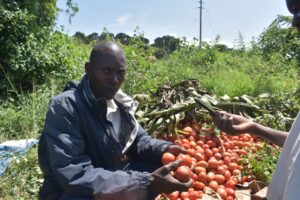
But the animals sometimes raid the garden and destroy large quantities of the tomatoes, wasting his effort and investment. “Despite constant frustration, I don’t want to take the law into my hands because trapping or killing the animals comes with severe consequences, yet I don’t have the resources to fence the garden,” Wasswa says.
Maria Nakisekka, a cabbage farmer in Katoogo village, says she takes loans to meet farming costs. But when these giant herbivores raid and destroy the crops, the losses can leave her with little to sell. This makes it difficult for her to meet household expenses or repay her debts. Nakisekka further estimates losing 5 to 10 tonnes of produce in a single raid.
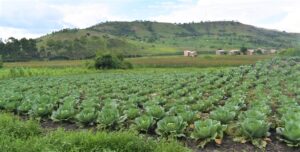
Her financial vulnerability, also reflects a familiar plight of farmers whose livelihoods largely depend on crop harvests they cannot fully protect.
To farmers, crop destruction means more loans and debts carried into another season, and limited resources to buy seeds and farming tools.
William Kabeni, a farmer in Kakiri village, grows cabbages and tomatoes on more than five acres of land. He wants a practical way of keeping hippos out of his garden without trapping, poisoning or killing them.
According to Kabeni, he values wildlife conservation and believes the animals should be protected for tourism. “But in his view, any conservation should not leave people suffering when their crops are destroyed,” he argues.
Insight Post Uganda has established that some residents genuinely desire to conserve wildlife. For others, the choice is mainly shaped by the fear of legal consequences, hopes for compensation or a lack of practical alternatives.
When Deadly Encounters Affect Life
For residents whose livelihoods depend on physical labour, an injury can affect not only their health, but the survival of their family members since it reduces their ability to cultivate land or earn a stable income.
However, these hippo encounters and risks are not only limited to farmers who attend to their gardens and plantations. But also fishermen, whose livelihoods depend on lakes for fish, residents who fetch water for domestic use, others who graze their domestic animals near the shores and those who use canoes for sailing, and other routines can bring them into proximity with hippos.
Francis Babikyengirye, the Kacheera Sub-county Councillor, says he has records of people who have died in incidents involving hippos in his area over several years.
Among the cases he cites is Asaf Tibesasa, Mukogote village in Lyakisana parish, who was reportedly killed in 2024 while guarding his maize plantation at night. Another Mande Ssebabi, from Kyankobe village in Kakiri parish, who was reportedly attacked while fishing on the lake in 2024.
William Kafuuma, a local human rights activist, says he has been tracking families affected by hippos around L. Kijanebarola. In a report seen by this website, Kafuuma has compiled various accounts of fatal encounters between 2021 and 2025.
He further estimates around 25 hippos in the lake, although the estimated figure has not been verified by the district tourism officer and UWA officials, who also have no correct figure.
However, the unknown hippo population challenges conservation authorities and effective responses.
Julius Musamya, the Rakai District Tourism Officer, says hippos have increasingly strayed into communities in Byakabanda, Kibaale Town Council, Rakai Town Council, and other areas.
He explains that without this vital information about the number of hippos in the district, any interventions may risk addressing individual incidents without confronting a wider pattern of the human-wildlife conflict.
He attributes the problem partly to farmers who encroach and cultivate wetlands where hippos live. He explains that the local authorities often call in rangers to drive the animals back to their habitats.
However, the intervention offers temporary relief, as the animals often return to raid gardens, destroy crops and threaten residents, leaving residents facing the same problem repeatedly.
When contacted, Muhammed Kanyike, the Rakai District Agricultural officer, could not confirm the extent of crop losses caused by hippo raids or specific data on the damage in the district.
Hippo Population, Growing Incidents
According to the 2026 national wildlife report (Status and Trends of Hippopotamus in Uganda), Uganda’s hippo population increased from 8,226 to 9,026 between the two latest survey periods.
However, Bashir Hangi, the Head of Communication and Public Affairs at Uganda Wildlife Authority (UWA), clarifies that the authority’s hippo population figures cover only animals in protected areas.
“The number of hippos in Rakai district is unknown at the moment because our census covers the animals in protected areas,” he says.
Uganda’s Wildlife Act, 2019 provides for the conservation of wild animals and plants and, the sustainable management of wildlife in Uganda and a Wildlife Compensation Scheme. Sections 82 and 83 establish a verification committee and a scheme for compensation claims involving human death, injury or property damage caused by wild animals outside protected areas.
The law sets out the institutional framework, but the existing legal provision does not by itself establish whether a particular victim qualifies, how a claim will be assessed or whether payment has been made.
The compensation promise
Across the country, compensation has become a central issue in communities around protected areas and wildlife habitats.
Babikyengirye says that affected families have struggled to obtain compensation adding that wildlife officers sometimes visit communities for conservation awareness and also promise residents that their claims for compensation will be considered. Still, the process remains slow causing more frustration.
His account also raises questions about communication between wildlife authorities and affected households, particularly how and whether residents receive clear information about their eligibility for compensation.

In February 2025, Parliament’s Committee on Tourism, Trade and Industry chaired by Hon. Sylvia Nayebare, reported that only UGX3.9 billion of the required UGX7 billion for Uganda’s Wildlife Compensation Scheme had been transferred to allow the compensation of the affected people and families.
The committee further revealed that only UGX682 million had been paid for 121 verified applicants over the last two financial years. However, hundreds of victims, including some in Rakai, are still awaiting compensation for the deaths and property damage caused by wildlife, including hippos.
In March 2026, UWA received more than 2,000 compensation claims from victims of human–wildlife conflict across the country, with over half of the verified claimants already paid, according to John Makombo, the UWA Commissioner in charge of Biodiversity Management.
“The claims stem from incidents involving wildlife attacks that have caused deaths, injuries, and destruction of crops and property in communities living near protected areas,” Makombo says.
For Mwesigwa, Kabula, both left with permanent disabilities after hippo attacks, and other affected families, the wait for compensation adds to the struggle to rebuild their lives. For now, the hippos continue to move between the two lakes and nearby gardens, destroying crops and posing a threat to residents, yet the same residents are being urged to continue protecting the animals despite the risks to their lives and livelihoods.
While conservation efforts may protect the hippos, they will only succeed in the long term if the people living alongside hippos can also feel safe, protect their livelihoods and receive timely and meaningful support when wildlife causes harm. Until that happens, coexistence will remain a difficult bargain, one in which the cost is shouldered by the people who share their land with the animals.
END





 English