












Uganda’s Auditor General, Edward Akol, has been given until Tuesday to submit preliminary findings on the controversial digital number plates project or risk contempt of Parliament, as legislators question his office’s failure to audit revenue generated under the Intelligent Transport Monitoring System (ITMS).
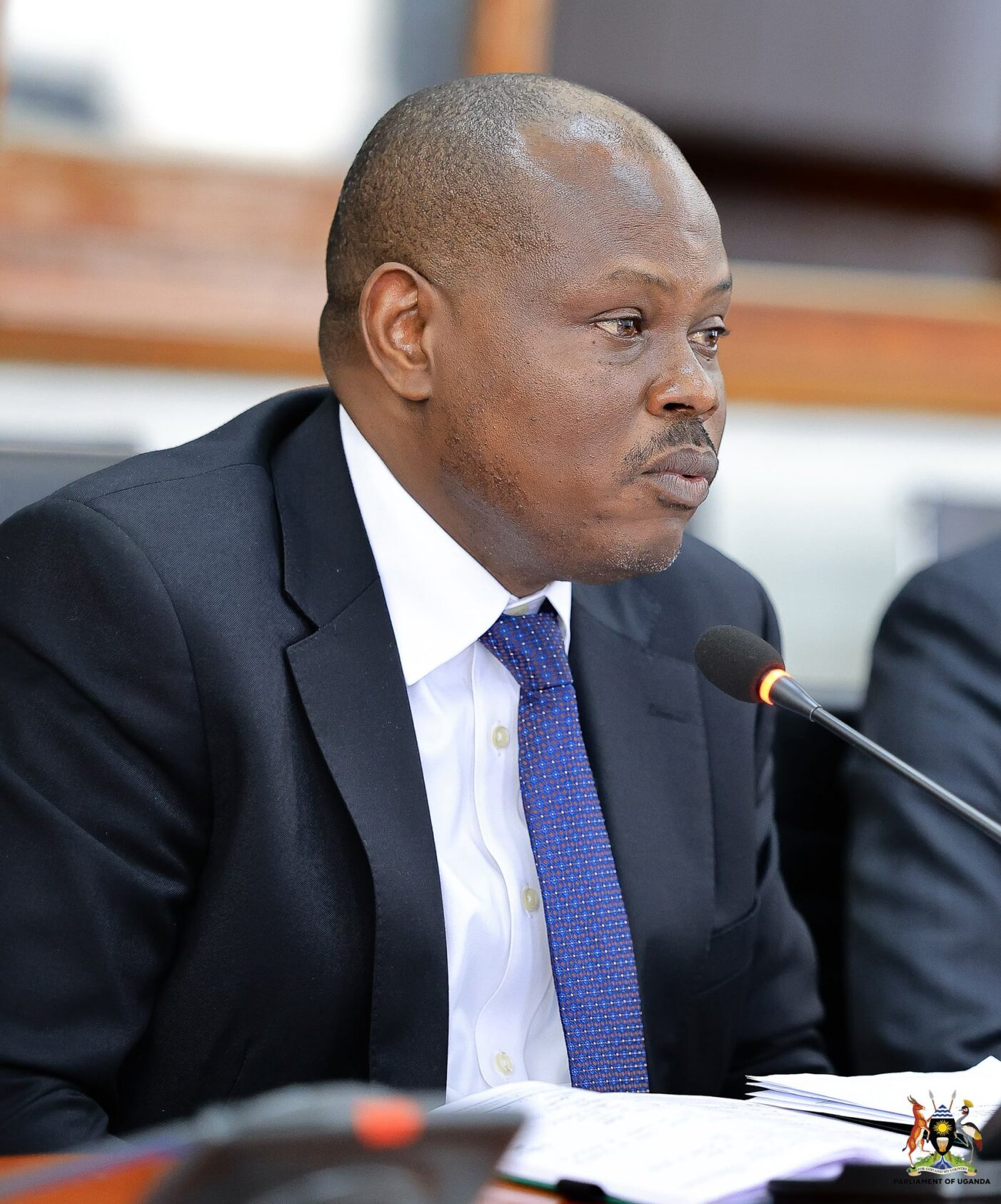
The ultimatum was issued by Parliament’s Committee on Physical Infrastructure, chaired by Mbarara South Division MP Mwine Mpaka, during a meeting with Akol on Thursday. The committee expressed dissatisfaction with the delay in auditing the project, which operates under a 10-year public-private partnership agreement signed in 2021.

Akol attributed the delays and gaps in the work of the Office of the Auditor General (OAG) to inadequate staffing, limited resources and difficulties accessing project documents. However, the explanations did little to ease concerns among legislators, who questioned why the office had not examined the revenue generated by the project despite earlier parliamentary concerns and repeated correspondence with relevant authorities.
The dispute has raised broader questions about the effectiveness of Uganda’s public audit system and the mechanisms available to Parliament to hold the Auditor General accountable when legislators believe his office has not fulfilled its mandate.
Zombo District Woman MP Topista Acamfua questioned the amounts motorists reportedly pay to acquire digital number plates, citing complaints that some customers receive receipts showing figures substantially lower than the amounts they have paid.
Acamfua told the committee that some motorists in her constituency had reportedly paid more than Shs2 million for number plates, yet their receipts indicated Shs750,000, which she described as the recognised rate.
She called for investigations into the discrepancies, questioning whether they could point to collusion among individuals involved in implementing the project.
The allegations have heightened calls for an independent examination of the project’s financial operations, including the amounts collected from motorists, the revenue remitted and the accountability arrangements governing the public-private partnership.
Bunyole County MP James Waluswaka proposed establishing a mechanism to monitor the performance of the Auditor General’s office, arguing that the institution responsible for scrutinising public expenditure should itself be subject to effective oversight.
Waluswaka said Parliament should not simply rely on audit reports but also assess whether the audits are sufficiently thorough to identify financial irregularities and safeguard public resources.
Ajuri County MP Fred Jalameso said concerns about the quality of the Auditor General’s work extended beyond the digital number plates project, pointing to what he described as recurring weaknesses highlighted by parliamentary accountability committees.
Patrick Nsamba Oshabe, chairperson of Parliament’s Central Public Accounts Committee, also questioned whether audit reports adequately support Parliament’s efforts to hold public officials and institutions accountable.
He argued that weaknesses in audit reports make it difficult for parliamentary committees to establish responsibility for suspected corruption, misuse of public funds and other financial irregularities.
The concerns reflect growing tension between Parliament and an office whose findings form a critical basis for examining the management of public resources by government agencies, accounting officers and state-owned enterprises.
The debate has also brought renewed attention to complaints by public officials about their interactions with audit staff.
During proceedings before Parliament’s Committee on Commissions, Statutory Authorities and State Enterprises (COSASE), some officials have raised concerns about the conduct and responsiveness of auditors assigned to examine their institutions.
Edward Damulira, the Ministry of Finance undersecretary, previously told COSASE that some audit staff lacked the courtesy to greet officials during audit engagements. He later withdrew the remarks after committee members challenged him to substantiate the claims.
Meanwhile, figures presented in connection with the Auditor General’s report for the 2024/2025 financial year have also drawn attention to the nature of the audit opinions issued.
According to the figures cited, 623 financial audit opinions were analysed for the financial year ended June 30, 2025. Of these, 606 were unqualified, while 17 were qualified. No adverse or disclaimer opinions were recorded in the summary.
The 17 qualified opinions accounted for approximately 2.7 per cent of the total. An unqualified opinion generally means that financial statements present a fair view, in all material respects, under the applicable reporting framework. A qualified opinion indicates that the statements are fairly presented except for specific material issues identified by the auditor.
However, the distribution of audit opinions alone does not establish whether the audits were sufficiently comprehensive to detect all suspected financial irregularities, particularly where concerns relate to revenue collection and the implementation of public-private partnership agreements.
Appearing before the Physical Infrastructure Committee on Thursday, Akol acknowledged that his office had not conducted all the audits required by law, citing staffing and resource constraints.
He said the office was expected to undertake approximately 16,000 audits annually, excluding about 10,500 Parish Development Model (PDM) support structures. Including those structures brings the workload to nearly 25,000 audits.
Against this workload, Akol said the office had approximately 600 staff, of whom 450 were involved in field engagements with audited entities.
The staffing gap, he suggested, was among the factors limiting the office’s ability to fulfil its responsibilities.
The Office of the Auditor General occupies a central position in Uganda’s public accountability framework. Its independent assessments of public expenditure inform parliamentary investigations and can lead to administrative action, the recovery of public funds or referrals for further investigation.
The committee’s Tuesday deadline now places the ITMS audit at the centre of a wider debate over the capacity of the country’s principal public expenditure watchdog, the quality of its audit work and the extent to which Parliament can ensure that suspected financial irregularities are properly examined.







 English