
















Kampala developers who fail to include trees within their compounds risk being denied occupancy permits under fresh environmental measures being rolled out by the Kampala Capital City Authority (KCCA).
Speaking at the launch of the Green Pearl Campaign in Kampala, KCCA Deputy Executive Director Benon Kigenyi said tree planting will become a compulsory requirement under the Building Control Act, 2026, for anyone seeking an occupancy permit, the certificate issued before a completed building can legally be occupied.
According to Kigenyi, developers who receive approval for construction on condition that they plant trees will have to fulfil that obligation before they are allowed to move into, rent out, or hand over their buildings.
He explained that the directive is intended to gradually restore Kampala’s shrinking green spaces and increase vegetation cover across the city. Institutions with enough land will also be expected to expand tree planting initiatives within their premises.
KCCA is further encouraging property owners to minimise excessive paving and leave portions of land exposed to allow rainwater to infiltrate the soil. Officials believe the move could help address recurring floods that affect several parts of Kampala during heavy rains.
Kigenyi noted that the authority is moving beyond awareness campaigns and intends to enforce environmental regulations more strictly, with penalties for non-compliance.
He said environmental concerns in Kampala now extend beyond waste disposal and vehicle emissions to include rising levels of noise pollution. KCCA, working together with the National Environment Management Authority (NEMA), has intensified operations against bars and entertainment venues that continue to breach noise control regulations.
Kigenyi warned that establishments that ignore repeated warnings risk having their equipment confiscated and their operating licences cancelled.
He also expressed concern about worsening air pollution, describing it as an emerging public health threat. He said prolonged exposure to contaminated air has been associated with a range of illnesses and urged greater efforts to reduce harmful emissions.
Studies conducted by researchers from Makerere University and AirQo have repeatedly shown that levels of fine particulate matter (PM2.5) in Kampala often surpass limits recommended by the World Health Organization.
Experts attribute the pollution largely to emissions from old vehicles, dust from unpaved roads, open waste burning, use of biomass fuels, and rapid urban growth.
A monitoring study released in 2024 estimated that long-term exposure to fine particulate pollution may have contributed to thousands of premature deaths recorded in Kampala between 2018 and 2021.
Researchers, however, caution that diseases such as cancer are influenced by multiple factors and cannot be linked solely to air pollution.
KCCA is also appealing to residents to plant at least one tree in their home compounds as part of wider efforts to improve the city’s environmental health.
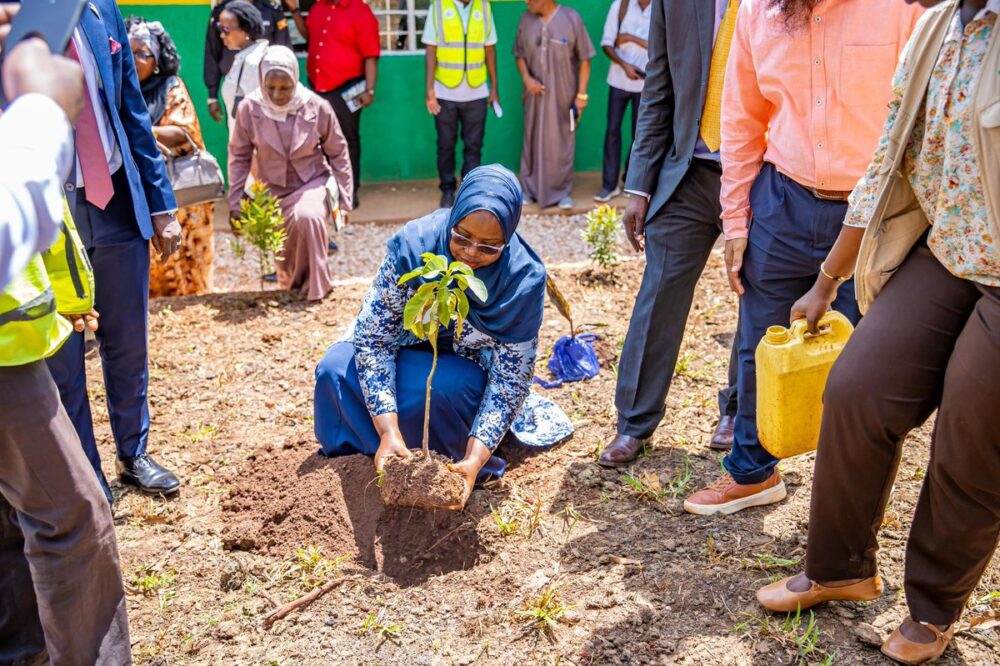
The announcements coincided with the unveiling of the Green Pearl Campaign, a programme supported by UNICEF and designed to engage young people in climate action through environmental education and tree planting activities.
Fatuma Namukhose, manager of UNICEF’s U-Report platform, said the initiative aims to reach more than one million young people, equipping them with knowledge and practical skills to become advocates for climate protection.
She said children and young people are more likely to adopt environmentally responsible habits when exposed to climate education early in life, making them important agents of change within their communities.
The campaign complements existing government initiatives such as free tree distribution by the National Forestry Authority and greening programmes implemented by KCCA.
The pilot phase will focus on Kampala and Wakiso districts, where organisers intend to plant more than 5,000 trees within the next two months before extending the programme to other parts of the country as resources permit.
The proposed occupancy permit requirement represents one of KCCA’s most significant environmental enforcement actions in recent years and signals a transition from voluntary conservation efforts to legally binding measures aimed at improving urban resilience and increasing Kampala’s green cover.









 English