

















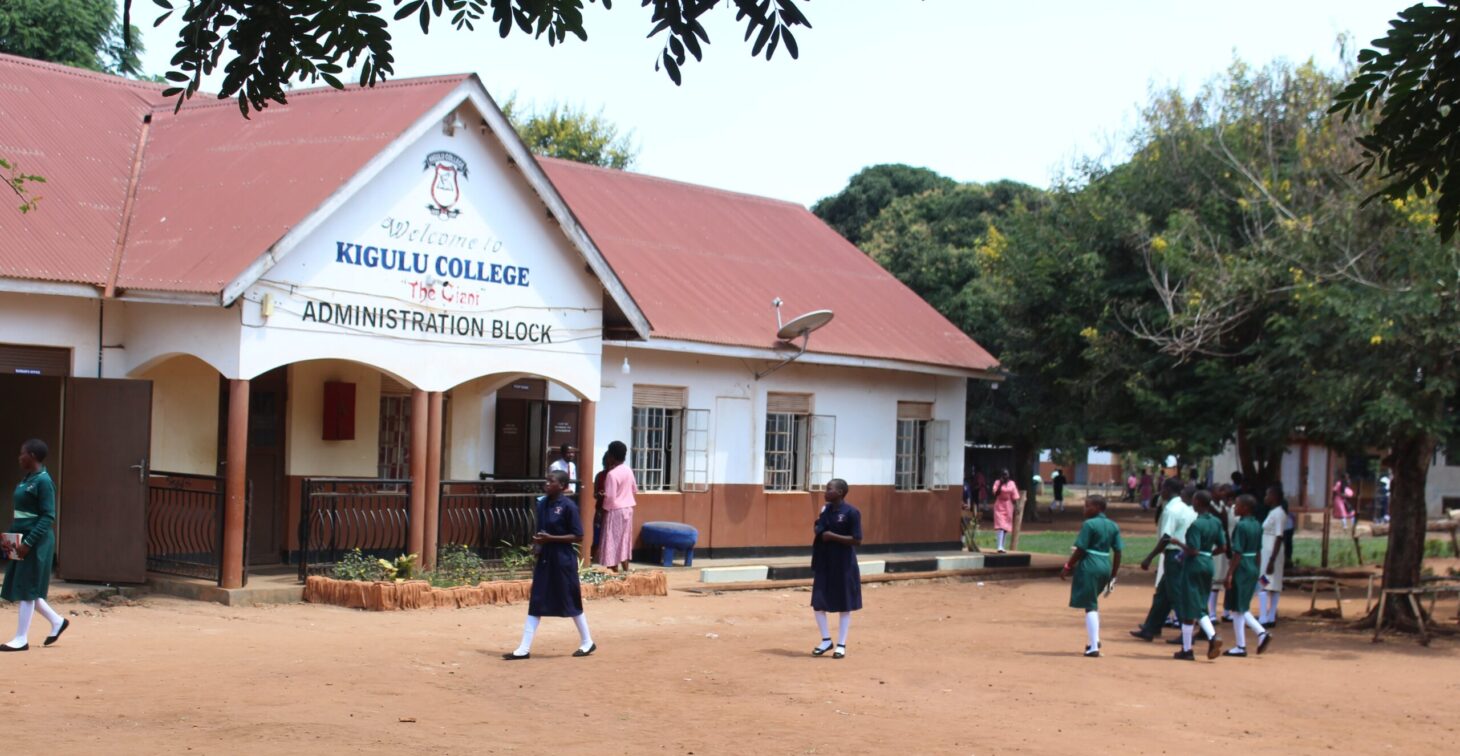
Authorities at Kigulu College in Namungalwe Sub-county, Iganga District, are struggling to provide a conducive learning environment as soaring enrolment continues to outstrip available infrastructure at the Universal Secondary Education (USE) school.
With about 2,800 students enrolled, the school’s existing facilities, including classrooms, a science laboratory and a computer laboratory, can no longer adequately accommodate the growing population, according to head teacher Ms Rehema Kasuubo Rebecca.

Founded in 1979 by the Anglican Church and taken over by government in 1984, Kigulu College has earned a strong academic reputation, attracting increasing numbers of learners over the years.
However, expansion of infrastructure has not kept pace with enrolment, leaving the institution grappling with severe shortages of classrooms, desks and other essential facilities.
“We are a USE-implementing school and are therefore not supposed to charge tuition fees. Through local contributions, we have managed to construct six additional classrooms, while the district provided two more, but these are still insufficient to accommodate the growing student population,” Ms Kasuubo said.
To ease the pressure, the school sought support from the United Nations Children’s Fund (UNICEF), which provided large tents now being used as temporary classrooms.
Some learners also study in makeshift structures built from timber, wood and iron sheets. Several older buildings have become dilapidated and require urgent renovation, but the school lacks the resources to undertake the repairs.
“When classrooms are overcrowded, the teaching and learning process is affected because both teachers and learners have limited movement,” Ms Kasuubo explained.
She added that the school has appealed to the Ministry of Education and Sports for assistance, noting that it lacks a main hall and has an inadequate number of computers.
“We are optimistic because the ministry promised to support us when funds become available. This is a public school and we cannot turn away students who wish to join,” she said.
The school requires about Shs2 billion to construct a multi-storey block comprising eight classrooms and administrative offices to ease congestion.
Ms Kasuubo nevertheless commended the government for supplying textbooks and retraining teachers to implement the new lower secondary curriculum. Kigulu College has a teaching staff of 65, of whom 40 are on the government payroll, while the remaining teachers are paid by the board of governors.
“If all my teachers were absorbed onto the government payroll, the money currently spent by the board on salaries could instead be channelled into infrastructure development,” she said.
Despite these challenges, the school has maintained an impressive academic record. Mr Baker Kasadha, the Iganga Municipal Education Officer, said Kigulu College continues to post excellent results at both O-Level and A-Level.
“Our budget this financial year is limited and we do not have plans to construct classrooms at the school. However, we have informed the relevant authorities about the congestion, and we hope something will be done,” Mr Kasadha said.
He attributed the school’s high enrolment to the confidence parents have in its academic standards.
Rev. Godfrey Wabukolo, the chairperson of the board of governors, said the school management is working closely with stakeholders to improve the learning environment.
Ms Kasuubo joined Kigulu College in 2016 as deputy head teacher from Iganga High School and was promoted to head teacher in 2021.
Popularly known as “The Giant” across Busoga Sub-region, Kigulu College is widely recognised for its outstanding academic and co-curricular achievements and is ranked among the best-performing USE schools in the region.
The head teacher, however, blamed poor performance in many USE schools across the country on negative parental attitudes towards education.
“Some parents still do not appreciate the value of education. We continue sensitising them, but there is still a lot of work to be done to help them understand its importance,” she said.









 English