














Olara Otunnu has said his long-standing political differences with President Yoweri Museveni remain unresolved, despite receiving the Ugandan government’s endorsement for his campaign to become the next United Nations Secretary-General.
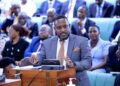
Speaking to journalists at the Uganda Media Centre on Tuesday, Otunnu said the support for his candidature reflects national unity rather than political agreement. He explained that although he and the President still hold differing views on several issues, they had agreed to work together in pursuit of what he described as a national objective.
“We have areas where our views differ, and both of us are fully aware of them,” Otunnu said. “We have discussed these issues, including recently. The differences have not disappeared, but we have chosen to support a common Ugandan cause.”
Otunnu also recalled that President Museveni had previously acknowledged opposing his earlier attempt to become UN Secretary-General in 1996, when he failed to secure Uganda’s backing.
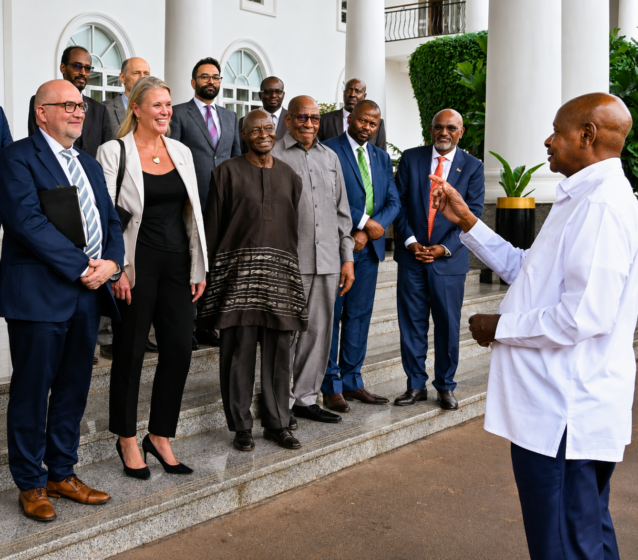
His remarks came a day after meeting President Museveni at State House Entebbe, where the President introduced him to ambassadors representing members of the United Nations Security Council. During the meeting, Museveni formally presented Otunnu as Uganda’s official candidate and urged the diplomats to relay Uganda’s endorsement to their respective governments.
In a post on X, Museveni described Otunnu as a candidate with the experience, integrity and diplomatic credentials required to lead the United Nations.
Campaign Still in Early Stages
Otunnu dismissed suggestions that his campaign has already lost momentum after receiving only two votes in the first informal straw poll conducted among Security Council members.
He argued that the result reflected the fact that Uganda entered the race later than other candidates, leaving little time to engage governments and build diplomatic support.
According to Otunnu, while rival candidates have spent more than a year visiting capitals and lobbying member states, his team is only beginning that process.
Uganda’s Permanent Representative to the United Nations and Foreign Affairs Minister-designate, Adonia Ayebare, also rejected claims that the country’s late entry had weakened the campaign.
Ayebare said previous UN Secretary-General races had shown that late entrants could still succeed, noting that the current Secretary-General, António Guterres, announced his candidature relatively late but eventually won the position.
He revealed that Uganda was awaiting travel clearance from the United States, after which the campaign team expected to travel to New York to meet UN member states and intensify lobbying efforts.
Ayebare added that the outcome of the initial straw poll should not be interpreted as a final indication of support, saying every candidate received negative votes and that the contest remained open.
Human Rights Record
Responding to questions about concerns over Uganda’s human rights record, Otunnu focused on his own career rather than the government’s performance.
He described himself as a lifelong advocate for human rights, citing his role in supporting the establishment of the International Criminal Court and his previous service as chairperson of the UN Commission on Human Rights.
Otunnu pledged that, if elected Secretary-General, he would continue promoting human rights globally, saying every person deserves to live in freedom and dignity.







 English