


















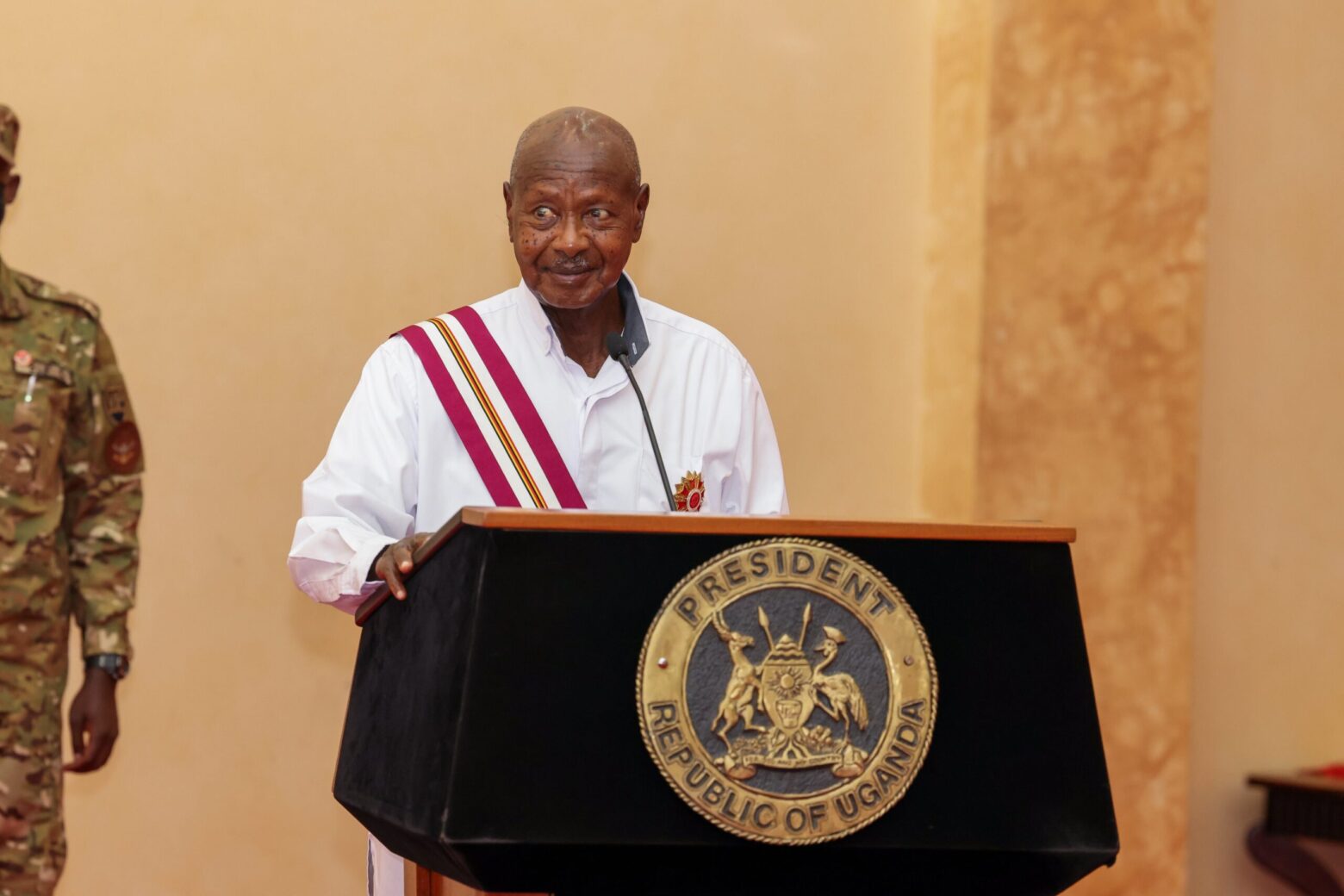
President Yoweri Museveni has ruled out using Uganda’s foreign exchange reserves to prop up the shilling, arguing that the currency’s depreciation is largely driven by reduced dollar inflows and should be addressed by expanding domestic production, boosting exports and limiting non-essential imports.
Museveni said Uganda was facing a supply-demand imbalance in the foreign exchange market, with demand for dollars from importers exceeding available supply. He attributed the pressure partly to the conflict in the Middle East, falling international prices for some export commodities, reduced foreign investment inflows and fears surrounding Ebola that had discouraged some tourists from visiting Uganda.


Speaking during the virtual celebrations to mark Uganda’s 64th Independence Day at State House, Entebbe, on Friday, Museveni questioned the rationale of using the country’s foreign exchange reserves to make dollars cheaper for businesses importing goods that could be produced locally or were not essential.
He argued that the country should focus on strengthening its productive capacity and reducing unnecessary imports instead of spending its reserves to defend the exchange rate.
The President’s remarks come amid pressure on the shilling and rising fuel prices, developments that have increased transportation and operating costs for businesses and raised concerns about the cost of living.
Museveni also defended the increase in domestic fuel prices, saying Uganda had enjoyed a period of relatively lower petroleum costs following a procurement arrangement with international oil trader Vitol. However, he said changing conditions in the global oil market had undermined efforts to maintain the earlier price reductions.
According to Museveni, the government negotiated a fuel supply arrangement that enabled Uganda to purchase petroleum products directly from refineries, reducing dependence on intermediaries in Kenya. The arrangement, he said, initially helped lower procurement costs before international market developments complicated the situation.
Museveni said the arrangement had helped shield Ugandans from higher fuel prices for several months. He argued that it was unreasonable to expect the supplier to continue offering lower prices when the cost of petroleum products on the international market had increased.
During the celebrations, Museveni asked ICT and National Guidance Minister Justine Kasule Lumumba to present figures illustrating the price reductions associated with the agreement, which was signed on August 18, 2023.
Lumumba said the quoted price of diesel had declined from USD118 to USD83 per metric tonne, representing a reduction of USD35. She added that the price of petrol had fallen from USD97.50 to USD61.50 per metric tonne, a saving of USD36, while aviation fuel had dropped from USD114.25 to USD79.25 per metric tonne, a reduction of USD35.
The figures are consistent with those published in Museveni’s September 2026 statement. Lumumba also cited annual savings of USD78.8 million from bulk fuel supplies under the arrangement, although the figure could not be independently verified against the available official records.
However, lower procurement prices do not automatically translate into equivalent reductions at fuel stations. Pump prices are also affected by international oil prices, exchange rate movements, taxes, transportation, insurance and other costs incurred along the supply chain.
On October 7, Energy Minister Monica Musenero told Parliament that the shilling had weakened from approximately Shs3,790 against the US dollar at the beginning of September to about Shs4,035 by October 5. The depreciation, she said, had increased the cost of importing petroleum products.
Musenero also attributed part of the increase in pump prices to a Shs200-per-litre rise in excise duty on petrol and diesel that took effect on July 1, 2026.
Parliament subsequently called for a detailed breakdown of the prices at which the Uganda National Oil Company (UNOC) supplies fuel to oil marketing companies. Legislators questioned whether the savings expected from bulk procurement were being adequately passed on to consumers.
Uganda depends on imported refined petroleum products, making local fuel prices particularly sensitive to movements in international oil prices and the exchange rate. When the shilling loses value against the dollar, importers require more local currency to purchase the foreign exchange needed to pay their suppliers.
Museveni, however, argued that a weaker shilling could improve returns for exporters because they receive more local currency when converting their dollar earnings.
Using coffee as an example, he explained that an exporter earning the same amount in dollars would receive more shillings when the dollar trades at Shs4,000 than when it trades at Shs3,700.
The President attributed the reduced availability of foreign currency partly to declining international prices for some export commodities. He cited coffee, whose prices he said were facing pressure amid improved production in Brazil.
He also pointed to foreign investors holding government securities, saying some were shifting their funds to the United States in pursuit of higher interest rates. Such movements, he argued, could reduce dollar inflows into Uganda as investors redirect their money towards markets offering better returns.
Tourism was another source of concern. Museveni said Ebola-related fears had discouraged some visitors from travelling to Uganda, potentially affecting foreign exchange earnings from the sector.
He maintained that the country’s response to pressure on the shilling should focus on expanding domestic production, strengthening export earnings and reducing reliance on imported goods rather than drawing down foreign exchange reserves to support the currency.
Museveni put Uganda’s inflation rate at approximately four per cent, arguing that domestic price movements should be considered alongside external shocks, including international conflicts, drought and other economic pressures.
His position places greater emphasis on expanding Uganda’s productive capacity and earning more foreign currency through exports as a long-term response to exchange rate instability, rather than using central bank reserves to influence the shilling’s immediate value.











 English