


















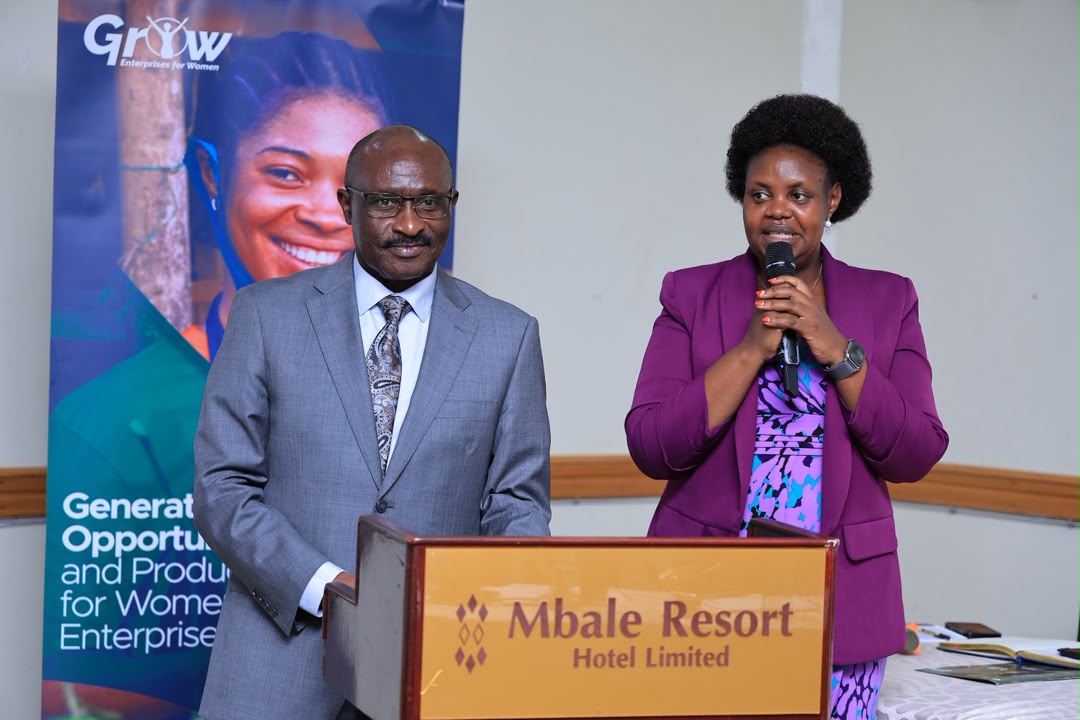
Minister of State for Labour, Employment and Industrial Relations Simon Mulongo has urged local government leaders to protect women entrepreneurs from fraudsters as the government prepares to roll out non-repayable business grants of up to Shs107.07 million.
Mulongo made the call on October 8, 2026, while addressing local leaders during an orientation meeting at Mbale Resort in Mbale City ahead of the implementation of the Business Plan Competition Grants under the Generating Growth Opportunities and Productivity for Women Enterprises (GROW) Project.


He emphasised that applying for the grants is entirely free, warning women against paying government officials, consultants or brokers in exchange for application forms or promises of funding.
Under the programme, the government intends to support at least 2,626 women-owned enterprises across the country, including at least 767 businesses in refugee-hosting districts.
The grants, ranging from Shs3.5 million to Shs107.07 million, are designed to help women entrepreneurs who failed to secure loans under the earlier GROW financing scheme because of financial limitations, banking requirements or credit constraints.
Mulongo urged district and municipal leaders, commercial officers and GROW focal point officers to disseminate accurate information about the programme and help eligible women understand the application requirements.
He also stressed that women who previously benefited from GROW loans would not qualify for the new grants, saying the funding window was intended to extend support to entrepreneurs who missed out on the earlier opportunity.
Applications will be submitted digitally through the official GROW project website or its mobile application. The application window will remain open for 30 calendar days from the official launch date.
The government will also organise business clinics across sub-regions to guide applicants in preparing business plans, budgets and supporting documents. Applicants will undergo credit reference checks and assessments covering financial sanctions, labour and human rights compliance.
The programme prioritises innovative businesses, science and technology-related enterprises, green ventures, agricultural processing, solar energy, irrigation, waste management, health technology and childcare services.
Special eligibility provisions will also accommodate women with disabilities, vulnerable groups and entrepreneurs in refugee-hosting districts, including those operating businesses in food processing, livestock rearing, tailoring and catering.
Mulongo called on local leaders to mobilise eligible women through community meetings, local radio stations and women’s networks, while reporting suspected extortion and corruption to the relevant authorities.
Funded projects will be required to operate for nine to 12 months and conclude by June 2027.







 English