











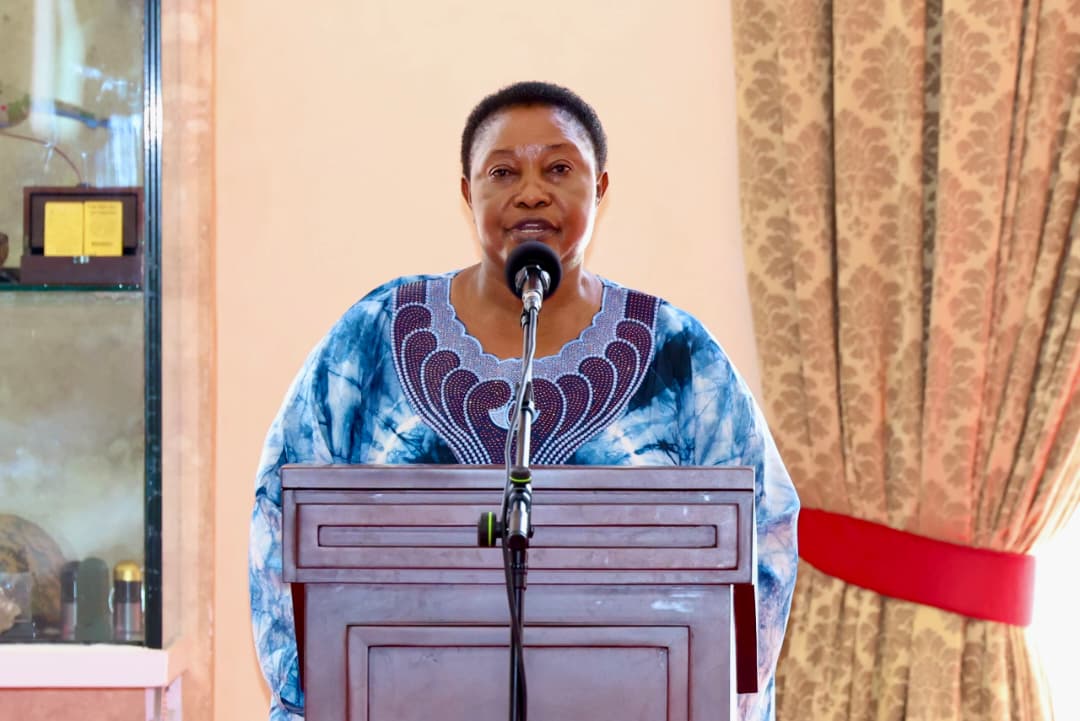
The Minister for the Presidency, Milly Babalanda, has called on Ugandans to pursue economic independence, strengthen national sovereignty, fight corruption and accelerate wealth creation as the country marks its 64th Independence Anniversary.
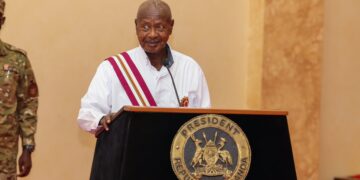
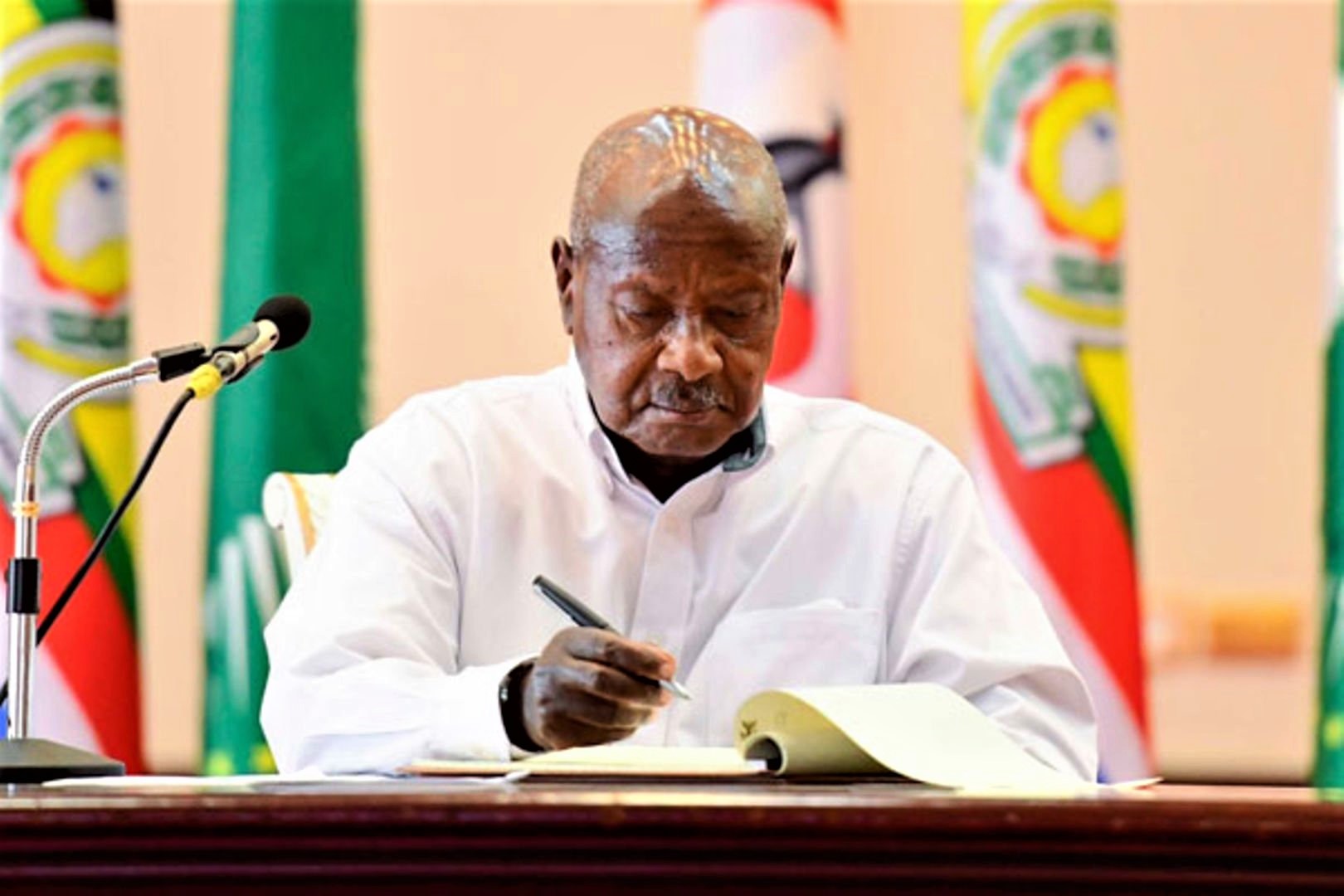
In her address at the national celebrations officiated by President Yoweri Kaguta Museveni at State House Entebbe, Babalanda said Uganda’s journey towards independence must extend beyond political freedom to encompass economic transformation, self-reliance, national security and poverty eradication.
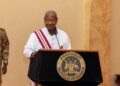

The celebrations were held under the theme, “Embracing Our Sovereignty with Hope and Visionary Leadership.”
Babalanda urged Ugandans to reflect on the country’s historical struggles, honour the sacrifices of its heroes and support efforts to build a prosperous, secure and self-reliant nation.
“Uganda’s independence was not achieved on a silver platter,” she said, paying tribute to the men and women who resisted colonial rule and laid the foundation for the country’s political liberation.
Babalanda recalled the contributions of historical figures such as Omukama Kabalega of Bunyoro and Kabaka Mwanga of Buganda, whose resistance to foreign domination became enduring symbols of the struggle to defend Uganda’s sovereignty.
She also recognised early political pioneers, including Ignatius Musazi, Semakula Mulumba, Maindi, Miti and James Kivu, for their contributions to the country’s nationalist movements.
The minister highlighted the role played by formations such as Bataka Ba Buganda in the late 1940s and the Uganda National Congress, established in 1952, in advancing political mobilisation and the quest for political and economic liberation.
She said the sacrifices of these pioneers, alongside those of other patriots whose contributions may not have been fully documented, should continue to inspire present and future generations.
Babalanda noted that the lowering of the Union Jack on October 9, 1962, marked a defining moment in Uganda’s history but stressed that political independence was only the beginning of a broader national liberation process.
She said the current generation had a responsibility to consolidate the gains of independence by addressing poverty, economic dependency, unemployment and underdevelopment.
Babalanda credited President Museveni with advancing what she described as the second phase of Uganda’s liberation, focused on economic and strategic independence.
She observed that when the National Resistance Movement (NRM) assumed power in 1986, Uganda was emerging from prolonged political instability, economic decline and weakened public institutions.
According to the minister, the government’s task was not only to restore political order but also to rebuild the economy and make independence meaningful to ordinary Ugandans.
She emphasised that political sovereignty could not be fully realised without economic independence, particularly when a country relies heavily on imported manufactured goods while exporting mainly unprocessed commodities.
Babalanda referred to the traditional export sectors represented by coffee, cotton, copper, tobacco and tea, alongside tourism, as the “3Cs and 3Ts” framework for understanding Uganda’s historical economic structure.
She said Uganda needed to move away from dependence on raw material exports towards industrialisation, domestic manufacturing, value addition and increased production.
The minister cited sugar, soap, steel, cement, pharmaceuticals and processed foods as examples of products that could increasingly be manufactured locally to create jobs, attract investment and stimulate economic growth.
“This is more than industrial policy; it is economic liberation,” she said, arguing that a stronger domestic production base would enable Uganda to retain more value from its natural resources, expand exports and reduce dependence on imported goods.
She called for sustained investment in productive sectors and urged Ugandans to contribute to wealth creation by supporting local industries, improving productivity and embracing entrepreneurship.
Babalanda also identified national security as a critical component of independence, crediting the government with rebuilding the country’s security institutions following years of instability.
She said the transformation of the Uganda People’s Defence Forces (UPDF) into a professional national army had strengthened the country’s ability to defend its territorial integrity and contribute to regional and international peace and security.
The minister added that Uganda’s ability to deploy its forces in support of peace and security initiatives beyond its borders demonstrated its growing strategic capacity.
She also commended efforts to improve professionalism, accountability and operational efficiency, as well as to combat corruption and wastage within security institutions, including initiatives under the current Chief of Defence Forces, Gen. Muhoozi Kainerugaba.
Babalanda stressed that national sovereignty must be protected against external dependence in political, economic, intellectual and cultural spheres.
She called on Ugandans to build public institutions that serve citizens efficiently and honestly, increase domestic production, create employment opportunities for young people and safeguard national interests.
During her address, Babalanda also expressed gratitude to President Museveni for entrusting her with responsibilities in the Presidency and retaining her in government.
She described the opportunity to serve as a privilege and acknowledged the President’s mentorship and confidence in her leadership.
Drawing on the biblical account in Luke 17:11–19, in which one of the ten lepers healed by Jesus returned to give thanks, Babalanda said she considered it important to publicly acknowledge the President’s support.
“Thank you for the opportunity to serve. Thank you for the mentorship. And thank you for believing that people from ordinary backgrounds can make extraordinary contributions to Uganda,” she said.
She praised Museveni for recognising leadership potential among Ugandans from different social and economic backgrounds, arguing that a person’s origins should not determine their ability to contribute to national development.
Using the biblical example of David, who rose from humble beginnings to become a leader, Babalanda said visionary leadership involved recognising potential in people whom others might overlook.
She also reflected on Museveni’s attendance at her thanksgiving ceremony in Buyende District, saying the occasion provided an opportunity for the President to communicate a broader message of hope, restoration, transformation and wealth creation.
Babalanda thanked the President for attending the ceremony, noting that his message extended beyond the personal event to address the aspirations of the people of Buyende, the wider Busoga sub-region and the country.
She said the message of wealth creation should inspire households, communities and local leaders to embrace productive economic activities and participate actively in national development programmes.
The minister urged Ugandans to translate the ideals of independence into practical action by improving household incomes, supporting local enterprises and contributing to economic transformation.
A central theme of Babalanda’s address was the need to intensify the fight against corruption, which she described as an obstacle to effective public service delivery and national development.
She called on Ugandans to support Museveni’s efforts to combat corruption and ensure that public resources are used for their intended purposes.
Babalanda said the fight against corruption must be accompanied by stronger accountability, integrity and efficiency across public institutions.
She added that national independence would remain incomplete if corruption, poverty and economic dependency continued to undermine the country’s development ambitions.
The minister urged public officials to uphold ethical standards and serve citizens honestly, while calling for a collective commitment to protecting public resources and strengthening institutions.
She maintained that the responsibility to build a prosperous Uganda rested not only with the government but also with citizens, leaders and institutions across the country.
As Uganda marked 64 years of independence, Babalanda prayed for God to grant Museveni wisdom, strength and good health to guide the country’s transformation.
Referring to Isaiah 38:5, which recounts God’s promise to extend the life of King Hezekiah, she expressed hope that the President would be granted another 18 productive years to continue contributing to Uganda’s development and complete what she described as the unfinished mission of the country’s liberation.
Her remarks reflected her support for Museveni’s continued leadership and her conviction that Uganda’s development ambitions required sustained commitment to economic transformation, national security and the fight against corruption.
Concluding her address, Babalanda said the responsibilities of independence had evolved over the past six decades. While the first generation fought to end colonial rule, she said, the present generation must confront persistent challenges of poverty, dependency and underdevelopment.
“The first generation fought to remove the colonial flag; our generation must remove the chains of poverty, dependency and underdevelopment,” she said.
Babalanda called for unity, visionary leadership and collective responsibility to build a country where citizens could enjoy the benefits of political freedom through improved livelihoods, economic opportunities and effective public services.
She urged Ugandans to honour the sacrifices of their forebears by protecting the country’s sovereignty, strengthening national institutions and accelerating the transition towards a productive and self-reliant economy.
The minister concluded by wishing Ugandans a happy 64th Independence Anniversary and invoking God’s blessings upon the nation.
“May God bless Uganda. Long live H.E. the President.”
As the country commemorates its independence on October 9, 2026, Babalanda’s message places economic self-reliance, accountable leadership, national security and the fight against corruption at the centre of Uganda’s continuing development agenda.




 English