















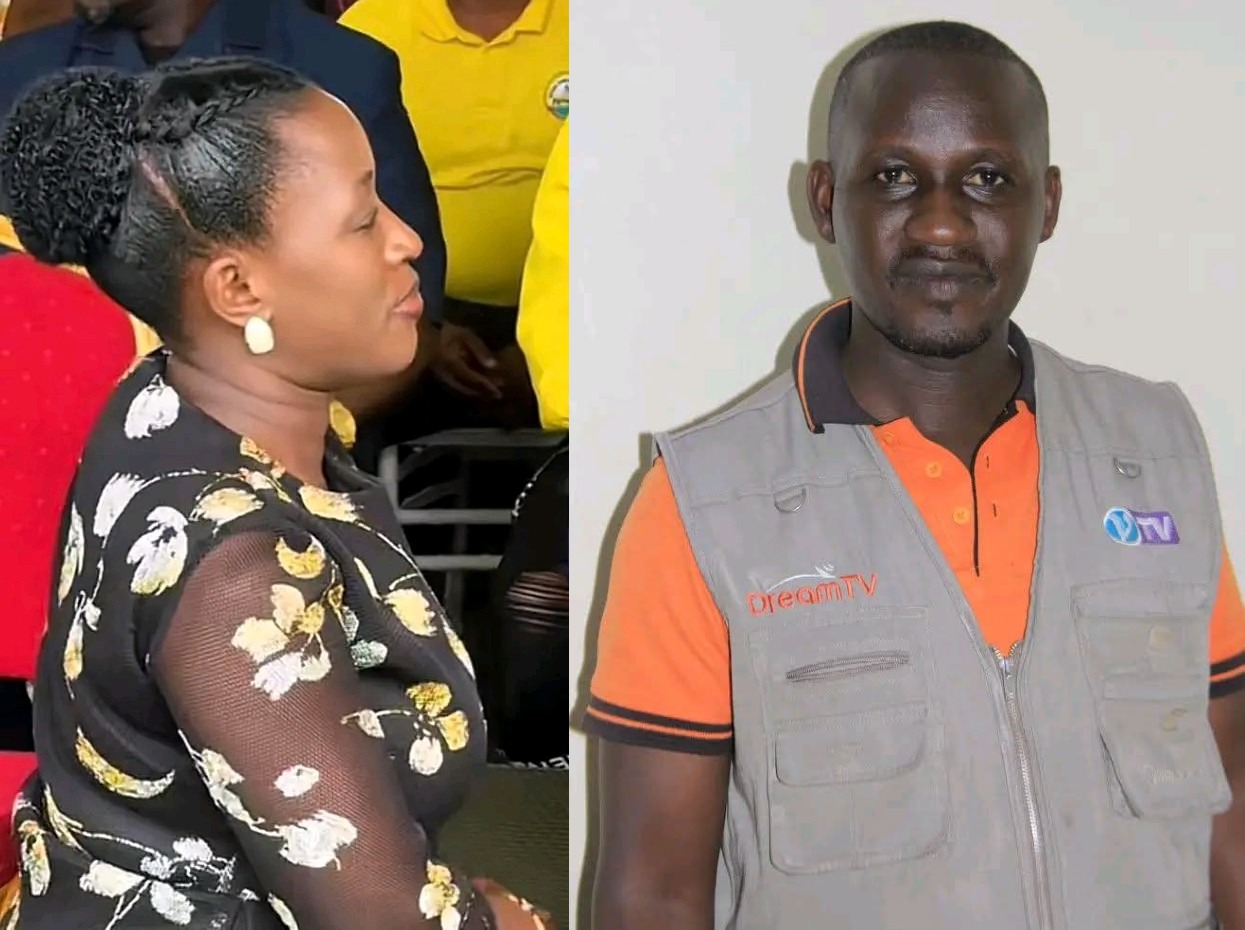
The recently court-declared Masaka City Woman MP, Justine Nameere is at the centre of a growing storm following the arrest and detention of journalists and social media users linked to allegations of an unpaid coffee seedling deal.


The unfolding events have triggered outrage within the media fraternity, with journalists accusing authorities of being used to silence scrutiny rather than investigate the substance of the claims.
On Wednesday morning, journalists stormed Masaka Central Police Station demanding the release of their colleague, Frank Bwekumbule.
He had been arrested a day earlier under circumstances that colleagues describe as irregular, including claims that he was not informed of any specific offence at the time of his detention.
The Masaka District Police Commander, Morris Oyee, initially blocked efforts to secure Bwekumbule’s release, reportedly asking journalists to leave the station.
However, when they returned in larger numbers, he allegedly disclosed that he was hesitant to release the journalist due to a case initiated by Nameere.
According to journalists present, Oyee indicated that Nameere had directly influenced the arrest after Bwekumbule was linked to viral videos containing allegations against her.
At the heart of the controversy are videos circulating on TikTok in which a coffee seedling supplier, Cissy Nanyange, accuses Nameere of failing to pay more than Shs100 million for supplies delivered during the election period.
Nanyange claims she provided coffee seedlings, commonly referred to as cuttings, on the understanding that payment would be made before polling day.
She further alleges that earlier supplies were facilitated through local political actors, including figures within the ruling party structures.
While she maintains that her grievance is purely a business dispute, Nameere’s supporters note that the timing of the alleged transactions, close to voting, could raise broader political questions.
Beyond Bwekumbule, police have also detained TikTok users Joseph Kikaawa and Frank Kaggwa, accused of hosting or amplifying the videos by featuring Nanyange on their platforms. The three individuals are being held at Masaka Central Police Station pending formal charges.
Regional Police Spokesperson Twaha Kasirye confirmed that investigations are ongoing, stating that the suspects are being processed over content published on allegedly unregistered platforms, though the accused insist they complied with registration requirements.
The arrests have drawn sharp criticism from leaders and residents, many of whom argue that the response has focused more on those sharing information than on addressing the underlying allegations.
Nyendo-Mukungwe MP-elect Gaviira Ssebina urged leaders to resolve disputes through dialogue rather than coercion, warning that such actions risk eroding public confidence.
NRM youth leader Swakib Muswangali went further, calling for intervention from the country’s top leadership, including President Yoweri Museveni and Gen. Muhoozi Kainerugaba, to examine what he described as an abuse of authority.
“I personally witnessed the delivery of coffee seedlings,” Muswangali said. “If there is a payment dispute, it should be resolved fairly instead of targeting those who bring the issue to light.”
For the Greater Masaka Journalists’ Association (GREMAJA), the incident reflects a broader pattern. Its president, Farish Magembe, revealed that Bwekumbule had recently survived an assault by unknown attackers, an incident that has seen little investigative progress despite reportedly being captured on police cameras.
“It is concerning that his assault case has stalled, yet his arrest was processed so quickly,” Magembe said. “This creates the impression of selective justice.”
Bwekumbule’s family shares similar concerns. His brother, David Kintu, said the journalist had barely recovered from his injuries when he was arrested.
“Journalists should be allowed to do their work without fear,” he said.
By press time, Nameere had not issued a public response to the allegations or the accusations of influencing arrests.
As pressure mounts, the situation in Masaka is increasingly being viewed as a critical moment for accountability and media freedom.
For journalists on the ground, the issue goes beyond one case; it is about whether scrutiny of those in power can be carried out without fear of reprisal.
For now, Nameere remains at the centre of the controversy, with both her actions and the response of law enforcement under intense public and professional scrutiny.
ENDS.






 English