










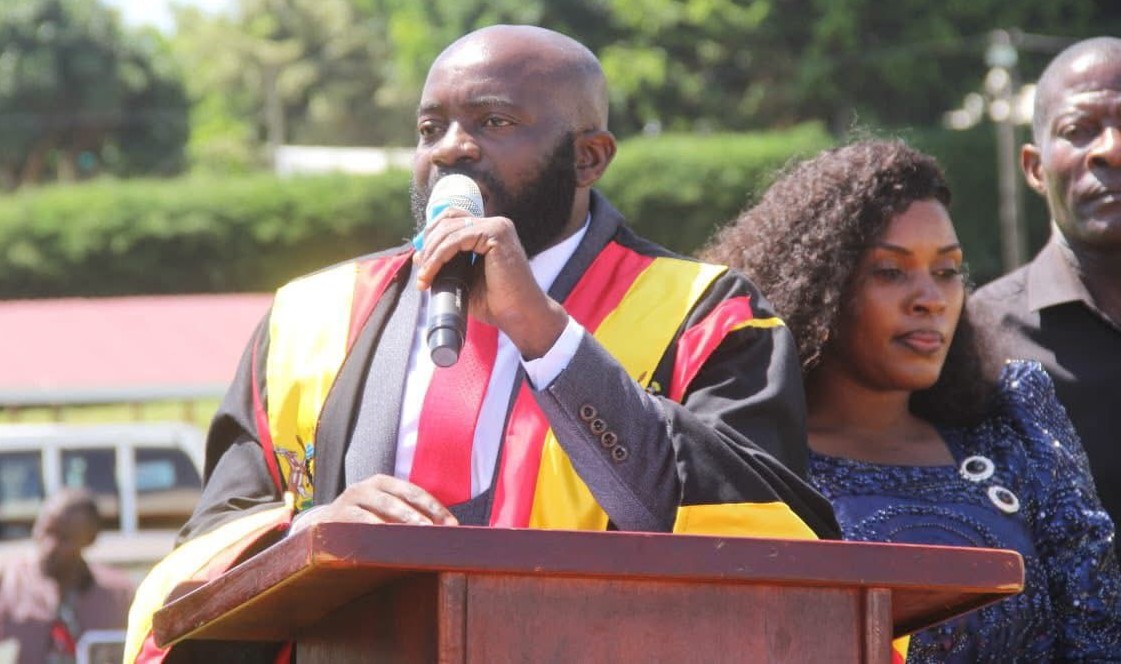
The political landscape of Nyendo–Mukungwe Division in Masaka is entering a new chapter following the swearing-in of a fresh leadership team headed by newly elected Division Mayor Ronald Kasekende, a figure many residents already describe as energetic, exposed, and determined to redefine urban governance.
Kasekende officially took oath alongside other newly elected leaders during a ceremony held at Sport Arena Grounds in Kitovu, presided over by Chief Magistrate Abert Asiimwe.


The new mayor assumes office at a time when Nyendo–Mukungwe is grappling with mounting urban challenges ranging from poor waste management and revenue leakages to disorderly settlements and weak enforcement of city regulations.
In his inaugural remarks, Kasekende projected himself as a hands-on leader ready to confront these issues head-on.
He pledged to prioritise sanitation, law and order, urban planning, and stronger accountability systems within the division administration.
One of the central pillars of his agenda is tackling the growing garbage crisis that has increasingly become a public health and environmental concern in the city.
Available records from Masaka City Council indicate that the area generates at least 100 tonnes of garbage every week, much of which is dumped in open sites where it is either burnt or left to decompose.
Kasekende proposed the formulation of a bylaw regulating the use of non-decomposing materials such as plastics and polythene bags, arguing that unmanaged disposal of such materials continues to damage the urban environment.
Under his proposal, organisers of public and social events may soon be required to present clear waste management and cleaning plans before being granted permission to hold gatherings within the division.
The mayor further warned that his administration will not tolerate the roaming of animals in urban areas, encroachment on road reserves, or illegal occupation of service lanes.
Residents, he said, should prepare for stricter enforcement operations aimed at restoring order in the rapidly expanding division.
Beyond sanitation and law enforcement, Kasekende also pledged to close local revenue leakages by working closely with the Division Town Clerk and technical staff.
He believes improved revenue collection will strengthen the division’s capacity to deliver essential services to residents.
Political observers say Kasekende’s emergence introduces a different style of leadership in Nyendo–Mukungwe. Unlike many local leaders who rise strictly through grassroots mobilisation, Kasekende is widely viewed as a relatively exposed and well-travelled politician whose broader outlook could influence his approach to governance and urban management.
Supporters argue that his exposure may help him benchmark better urban practices from other cities and adapt modern administrative approaches to local challenges.
His speeches already suggest a governance style focused on systems, enforcement, environmental management, and efficiency.
His political advantage is further strengthened by the backing of Florence Namayanja, the influential Masaka City Mayor whose political endorsement and mobilisation efforts reportedly played a key role in consolidating support behind him.
Namayanja remains one of the dominant political figures in the city, particularly within opposition politics, and analysts believe her support gives Kasekende both political protection and strategic leverage as he begins his tenure.
Meanwhile, the new Division Council also settled on fresh legislative leadership, electing Luyombya Charles Edgar of the National Unity Platform as Speaker after defeating other contenders in the race.
The new council leadership says it intends to work collaboratively with the executive arm to improve accountability, strengthen service delivery, and address the growing urban pressures facing residents in the division.
ENDS.




 English