











Parliament on Wednesday approved a government request to borrow up to €168.9 million (approximately UGX 730 billion) to finance the second phase of the Solar Powered Irrigation and Water Supply Systems Project, despite strong objections from sections of legislators who demanded accountability for the first phase before any fresh borrowing.
The approval marks the first major external loan endorsed by the 12th Parliament and will be sourced from the UK Export Finance and Citi Bank.
Concerns Over First Phase Implementation
The debate in the House grew tense as MPs questioned the urgency of the loan and raised concerns about weaknesses in the implementation of Phase One of the irrigation programme.
Older Persons MP James Kakooza criticized the Ministry of Finance for repeatedly presenting borrowing requests at short notice, arguing that Parliament was being pushed into approving major debt without adequate scrutiny. He also questioned why a financing arrangement that dates back to 2021 had suddenly been treated as urgent.
Leader of the Opposition Joel Ssenyonyi supported the idea of expanding irrigation to improve agricultural productivity but insisted that government first accounts for how earlier funds were used.
He cited reports indicating that some irrigation sites under Phase One were commissioned without proper feasibility studies, later found to be unsuitable. He further noted that by September 2025, about UGX 366 billion had already been spent, exceeding the approved budget, yet several sites remained incomplete or non-functional.
According to the Opposition, these shortcomings raised fears that similar challenges could persist in Phase Two if structural weaknesses are not addressed.
Responding to the concerns, Finance Minister Henry Musasizi apologized for the late submission of the loan request, attributing it to procedural and timing constraints.
He told Parliament that Uganda risked losing the financing package if approval was not granted before a June 12 deadline set by UK Export Finance. Musasizi also noted that the interest rate on the facility had increased from 3.65% in March to 3.92% in June 2026, but maintained that the overall cost—about 5.1%—was still far below commercial borrowing rates, which average around 11%.
The minister assured MPs that the funds would be applied in the 2026/27 financial year and urged the House to prioritize the urgency of the development project while maintaining oversight during implementation.
Speaker Defends Procedure
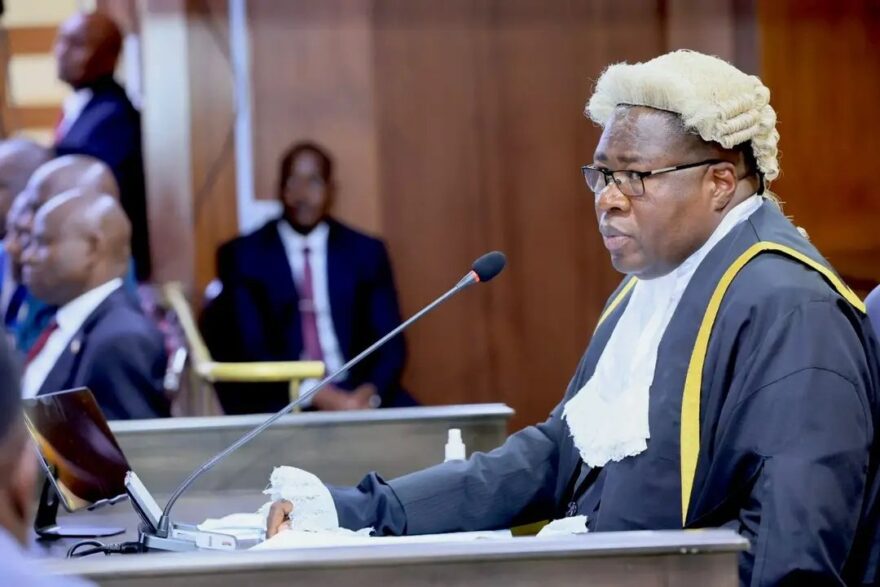
Speaker of Parliament of Uganda Anita Among’s deputy, Speaker Oboth-Oboth, acknowledged the unusual circumstances in which the House considered the loan without a fully constituted Committee on National Economy.
He explained that he had invoked Rule 8 of the Rules of Procedure to allow the Committee of the Whole House to handle the matter, saying the situation was not anticipated under normal parliamentary arrangements.
While cautioning against the perception of rushed approvals, he emphasized that Parliament was adapting to the realities of a newly inaugurated term.
Vice President Jessica Alupo also defended the borrowing, urging MPs to support expansion of irrigation infrastructure despite challenges observed in Phase One.
Drawing from her background in agriculture, Alupo argued that improved irrigation systems would enhance productivity, raise household incomes, and support government efforts to expand coffee farming and climate-resilient agriculture.
After hours of debate marked by sharp exchanges over accountability, urgency, and debt management, Parliament eventually approved the loan request.
However, MPs stressed that future borrowing must be backed by stronger oversight mechanisms to ensure value for money and to address concerns raised about the performance of earlier government-funded irrigation projects.




 English