


















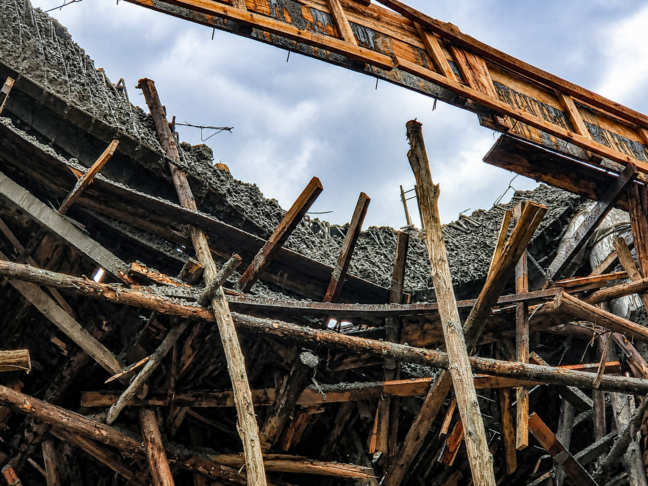
The Uganda Institution of Professional Engineers (UIPE) has called for tougher enforcement of engineering laws, warning that weak regulation is allowing unqualified people to undertake professional work and putting lives and property at risk.
Speaking at the fifth Uganda Buildcon Expo in Kampala on Thursday, UIPE Vice President for Finance and Administration Martin Kalibbala said the Engineers Registration Act of 1969 clearly prohibits anyone from practising engineering without the required registration.


However, he said gaps in enforcement have allowed unqualified practitioners to operate, particularly in the construction sector, where poor workmanship can have serious consequences.
Kalibbala said the Ministry of Works and Transport, together with the Engineers Registration Board (ERB) and UIPE, is finalising the Engineers Registration Regulations.
He said the regulations are expected to improve enforcement of the law by establishing clearer professional requirements, strengthening compliance and making it easier for members of the public to distinguish qualified engineers from unregistered practitioners.
Uganda has an estimated 12,000 engineering professionals, including engineers, technologists, technicians, graduate engineers and students. Kalibbala said only about 2,000 are currently fully registered engineers authorised to undertake major engineering projects.
He acknowledged that the number of registered engineers remains too low to meet the country’s expanding infrastructure needs.
The Engineers Registration Board, he said, is targeting an increase in the number of registered engineers to about 5,000 in the coming years to strengthen professional capacity and improve standards in the industry.
He said the shortage of registered engineers should not, however, be used as an excuse to allow unqualified individuals to undertake work reserved for professionals.
Meanwhile, State Minister for Lands Harriet Ntabaazi warned that the government is preparing tougher measures against engineers, contractors and manufacturers whose negligence or failure to meet standards contributes to building collapses.
Ntabaazi said building failures should no longer be dismissed as simple mistakes, particularly where negligence results in injury or loss of life.
She said the government is reviewing regulations governing the construction industry to improve compliance with building standards and strengthen accountability among professionals involved in the design, approval, construction and supervision of buildings.
The minister said engineers responsible for designing and supervising structures should be held accountable when their negligence contributes to structural failure, adding that cases involving loss of life should attract serious penalties.
Ntabaazi also raised concern about the manufacture and sale of substandard construction materials, including steel bars, pipes and other products used in building projects.
She called for stronger collaboration between the National Building Review Board and the Uganda National Bureau of Standards (UNBS) to ensure that construction materials on the market meet the required quality standards.
According to Ntabaazi, manufacturers should not compromise quality in pursuit of lower prices because the use of inferior materials can put lives at risk and contribute to structural failures.
She urged engineers, architects, urban planners, financiers, developers and government agencies participating in the expo to work towards establishing practical and enforceable minimum standards for construction materials and practices.
Ntabaazi further called on developers and the public to comply with physical planning requirements, warning against developments in industrial areas designated for other purposes, construction in wetlands and disregard for approved land-use plans.
She said adherence to planning and building regulations is essential to creating safer and more sustainable urban settlements.









 English