

















A joint parliamentary team has recommended sweeping revisions to the proposed Protection of Sovereignty Bill, 2026, cautioning that its initial wording risked disrupting lawful business activities and unsettling Uganda’s economy.
The proposals were tabled on Monday by the Committee on Defence and Internal Affairs working alongside the Committee on Legal and Parliamentary Affairs after an extensive consultation process involving more than 200 stakeholders drawn from government agencies, civil society, financial institutions, and academia.


In their findings, lawmakers acknowledged that while the Bill is intended to safeguard national interests from undue foreign influence, its earlier draft contained provisions that could clash with constitutional freedoms and existing regulatory frameworks.
Contributors to the review process pointed out gaps between the policy objectives and how the law was framed.
Key institutions such as the Bank of Uganda and the Uganda Law Society warned that the legislation, if left unchanged, could create overlapping oversight structures and concentrate too much authority in the hands of the Minister of Internal Affairs.
To address these concerns, the committee proposed limiting the reach of the law by exempting sectors already governed by established regulators, including commercial banks and higher education institutions.
Lawmakers also moved to tighten the definition of a “foreigner,” restricting it to non-citizens and foreign-registered entities after fears that Ugandans living abroad could be inadvertently affected.
The revised proposals further seek to shield key economic activities such as remittances, trade financing, and foreign direct investment from stringent approval requirements that critics argued could discourage investment and slow economic growth.
In a notable shift, the committee recommended replacing mandatory ministerial approval with a disclosure-based system to reduce discretionary powers.
It also proposed scaling down penalties, including reducing the maximum prison sentence from 20 years to 10 years and cutting fines by half.
The Bill, which was formally submitted to the Clerk to Parliament on May 4, is designed to address what the government describes as loopholes that allow external actors to influence Uganda’s internal affairs through funding, advocacy, or information campaigns.
Supporters argue that stronger legal safeguards are necessary to regulate individuals and organizations acting on behalf of foreign interests.
However, critics have consistently warned that vague definitions and broad provisions could unintentionally target legitimate operations such as business partnerships, academic exchanges, and development work.
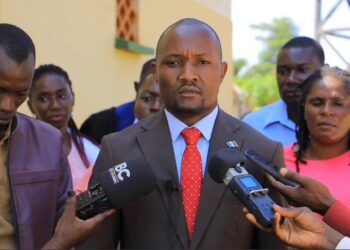
The committee report—endorsed by just over half of its members, including chairpersons Wilson Kajwengye and Stephen Baka Mugabi—reflects both consensus and division, with several opposition legislators declining to append their signatures.
Lawmakers also took into account guidance from Yoweri Museveni, who urged Parliament to ensure the law focuses strictly on hostile foreign interference without undermining lawful economic engagement.
With the proposed amendments in place, the committee has cleared the Bill to proceed to its next legislative stages, where Members of Parliament are expected to debate and potentially adopt the revised provisions aimed at balancing national security with economic and civil liberties.








 English