
















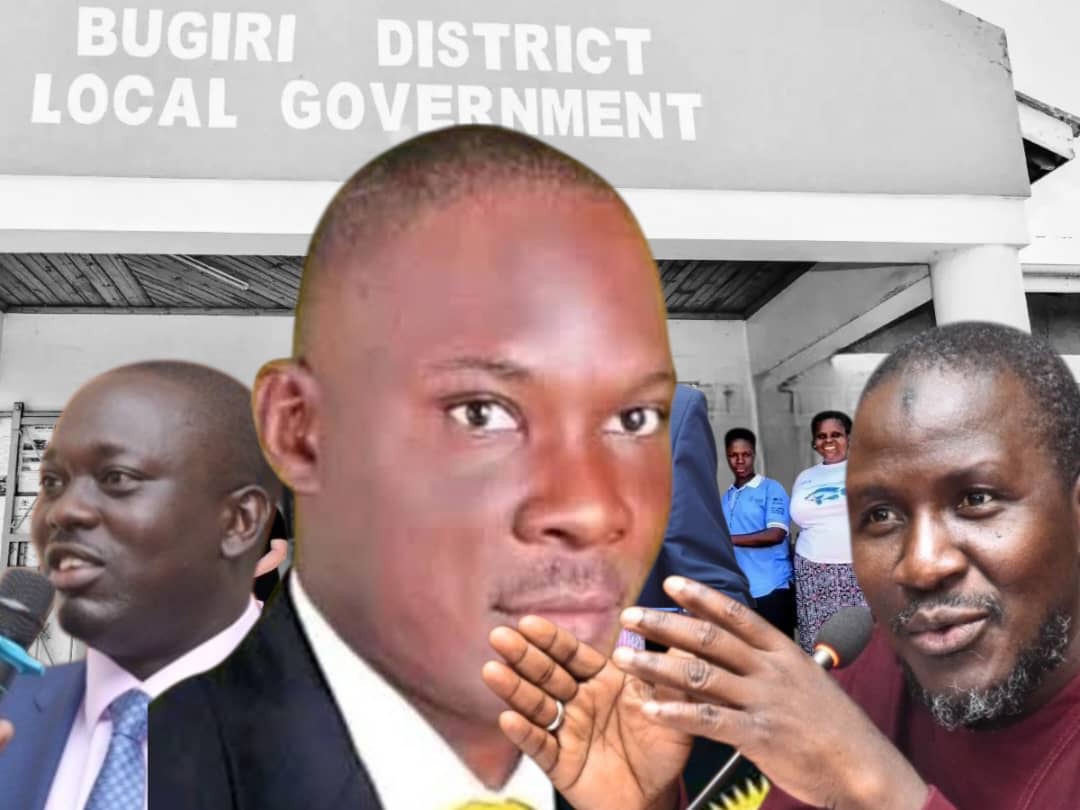
Bugiri District today is spoken of in hushed tones, not for its triumphs but for its scandals. It is a place where witchcraft rumors mingle with corruption tales, where romance is whispered as a currency for promotion, and where the public has resignedly christened their home “the forgotten district.”
The decay is not hidden; it is lived daily by citizens who watch schools collapse, roads crumble, and health facilities gasp for breath.


At the heart of this dysfunction lies a grotesque concentration of power. Kabweeru Wilson Kudaga, a man whose name has become synonymous with administrative anarchy, simultaneously occupies four critical offices—Ag. CAO, Secretary of the District Service Commission, Clerk to Council, and Ag. Deputy CAO.
His dominance has suffocated accountability, turning Bugiri into a fiefdom where service delivery is paralyzed and oversight is mocked.
The Office of the Prime Minister’s 2025/26 rankings confirmed what residents already knew: Bugiri is among Uganda’s worst-performing districts, scoring a dismal 41% in service delivery.
Roads receive allocations but remain impassable, salaries consume budgets while development stalls, and education collapses under shortages. Out of 9,166 pupils who sat for PLE, only 110 achieved Grade One, a statistic that reads less like a number and more like a death sentence for the district’s future.
Yet this is the same Bugiri that once gave Uganda towering figures. Justine Kasule Lumumba rose from its soil to become NRM Secretary General and later Minister in the Office of the Prime Minister.
Fred Mukisa, Patrick Mwondha, and Asuman Basalirwa all carried Bugiri’s name into national prominence. Their achievements should have been the district’s pride, proof of resilience. Instead, their homeland has become a cautionary tale, a place where greatness collapsed into rot.
The irony is cruel. Bugiri sends representatives to Parliament, four in number, yet in the January 15th election only Solomon Silwany survived the electoral storm.
The rest were swept aside, leaving a politically weakened district. Davidson Kasajja Mulumba and Ayub Mulikiriza clung to their local seats, but their victories did little to mask the rot beneath. The paradox is glaring: a district that once produced giants now limps among the forgotten.
But corruption alone does not define Bugiri’s tragedy. Witchcraft allegations have cast a sinister shadow. The death of Senior Fisheries Officer Sarah Majugwa sent shockwaves through the district.
Her husband, in a moment of raw grief, accused colleagues of tormenting her with sorcery. She had confided names, he said, of those who wanted her dead.
Her burial was not just a farewell; it was an indictment. And she was not alone. Other staff have died mysteriously, fueling rumors that Bugiri’s administration is not only corrupt but cursed.
Nepotism compounds the crisis. One official allegedly maneuvered his freshly graduated daughter into a senior management role, leapfrogging seasoned staff.
Two biological brothers rose rapidly in rank, leaving colleagues disillusioned. The district has become a family enterprise, a playground for insiders, while ordinary citizens languish in poverty.
Bugiri’s scandals are not new. In the past decade, the district has repeatedly been flagged by the Inspectorate of Government (IGG) for irregular recruitments and ghost workers. Reports have cited missing funds in education and health, with millions unaccounted for.
The Anti-Corruption Unit under Lt. Col. Edith Nakalema once stormed Bugiri to investigate procurement fraud, but the cases fizzled in court, buried under technicalities.
The Judiciary has also occasionally intervened, with magistrates warning against abuse of office, but enforcement has been weak. Bugiri’s administrators have learned to survive every storm, shielded by political patronage and the inertia of oversight bodies.
President Museveni himself has a history of intervening in troubled districts. In the 1990s, he personally ordered audits in districts like Mbale and Soroti after reports of mismanagement. In 2018, he dispatched the State House Anti-Corruption Unit to Wakiso and Jinja, leading to arrests of officials who had embezzled funds meant for schools.
His rhetoric has always been clear: corruption is “a cancer eating the nation.” Yet Bugiri seems to have escaped his scalpel. Despite repeated warnings, despite the President’s insistence that service delivery must improve, Bugiri remains a festering wound.
The parallels are striking. When Museveni intervened in Karamoja after scandals involving iron sheets meant for vulnerable communities, ministers were forced to return the stolen items, and prosecutions followed.
When he turned his gaze to the Ministry of Health after the Global Fund scandal, officials were dismissed and jailed. But Bugiri, despite its glaring failures, has not faced such decisive action. The district continues to wallow in dysfunction, its leaders emboldened by the absence of accountability.
The Judiciary has occasionally tried to pierce the veil. In 2022, Bugiri officials were dragged to court over allegations of misusing funds meant for road maintenance. The case, however, stalled, with witnesses intimidated and evidence lost.
The IGG has issued reports, naming and shaming culprits, but enforcement has been weak. The Anti-Corruption Unit has promised investigations, but the files gather dust. Bugiri has become a graveyard of unfulfilled interventions, a place where scandals are exposed but never punished.
The people of Bugiri are not blind. They see the nepotism, the witchcraft rumors, and the corruption. They whisper about promotions won in bedrooms, jobs sold to the highest bidder, and colleagues eliminated through dark magic.
They call their home “the forgotten district,” not out of despair alone but out of recognition that oversight has failed them.
Bugiri’s tragedy is profound. It is a district betrayed by its own custodians, a place where witchcraft, corruption, and romance have conspired to strangle progress. Unless anti-graft bodies intervene decisively, and unless the central government awakens, Bugiri will remain a cautionary tale of how greatness collapses into rot.
President Museveni’s legacy has often been tied to his ability to rescue institutions from collapse. He has intervened in ministries, districts, and agencies, wielding the sword of reform when scandals erupt. Bugiri now cries out for such intervention.
The parallels with past scandals are clear: just as the Global Fund scandal demanded action, and just as the iron sheets scandal forced accountability, Bugiri demands a reckoning.
The Inspectorate of Government must act, not just issue reports. The Anti-Corruption Unit must investigate, not just promise. The Judiciary must prosecute, not just adjourn. Bugiri’s people deserve justice, and Uganda deserves better.
This is not just a local scandal. It is a national shame. Bugiri stands as a warning: when power is unchecked, when morality collapses, even a district of giants can become a district of shadows. Witchcraft, corruption, and romance have become the unholy trinity strangling Bugiri. Unless the nation acts, Bugiri will remain forgotten, forsaken, and cursed.







 English