


















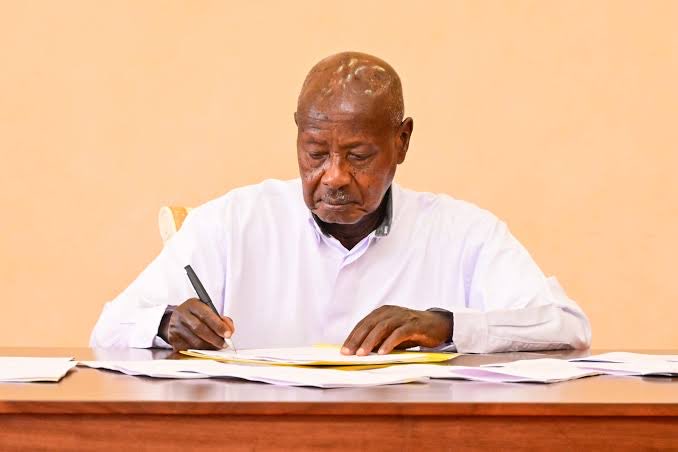
President Yoweri Kaguta Museveni has this evening assented to the Protection of Sovereignty Act, 2026, officially bringing the legislation into force in what government describes as a major step in reinforcing Uganda’s national sovereignty and governance systems.
The new law, now formally known as the Protection of Sovereignty Act, 2026, is designed to provide a legal framework for safeguarding the sovereignty of the people of Uganda. It designates the department responsible for peace and security under the Ministry of Internal Affairs as the primary implementing authority.


The Act further introduces provisions for the registration and regulation of agents acting on behalf of foreign entities within the country. It also outlines measures for monitoring and controlling funding, donations, and other forms of assistance directed to such actors, alongside related regulatory mechanisms intended to enhance transparency and accountability.
With presidential assent, the Bill has now transitioned into law and will guide enforcement and implementation by relevant state institutions in accordance with existing constitutional and policy frameworks.
According to government framing, the legislation is expected to strengthen Uganda’s capacity to safeguard independent national decision-making, while reinforcing the constitutional principle that governance and development priorities must remain anchored in national interest.
Officials also argue that the Act will improve coordination among institutions, reduce regulatory ambiguity in the management of state authority, and support ongoing efforts to promote stability, accountability, and orderly governance.
In addition, the law is viewed as complementary to Uganda’s broader development agenda, particularly in advancing economic transformation, improving public sector efficiency, and protecting national policy space as the country continues to engage with regional and international partners.









 English