
















Uganda’s long-awaited oil production journey has become a story marked more by anticipation than actual extraction, with changing ministers, revised timelines, and repeated promises of “first oil” stretching across nearly two decades.
Since commercial oil discoveries were confirmed in the Albertine region, successive government officials have projected ambitious timelines for production, only for those deadlines to shift repeatedly amid regulatory disputes, financing challenges, infrastructure delays, and political debates.

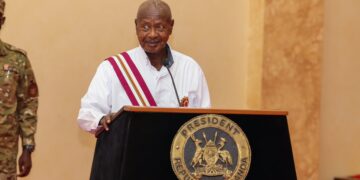
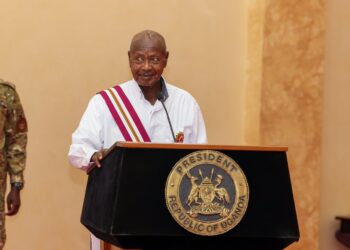
In 2006, President Yoweri Museveni announced plans for Uganda to establish a local oil refinery, expressing optimism that commercial production would begin by 2009. At the time, the announcement sparked expectations that Uganda was on the verge of joining Africa’s oil-producing nations.
Years later, during a high-level policy dialogue in 2013, then Energy Minister Irene Muloni confidently assured Ugandans that oil extraction was nearing reality and would soon fuel the country’s economic transformation.
Responding humorously, then Finance Minister Maria Kiwanuka remarked that as long as the oil remained underground it belonged to the Energy Ministry, but once extracted it would become the responsibility of Finance.
Despite the optimism, both ministers eventually left office before witnessing Uganda’s first oil.
Uganda’s oil sector had already begun taking shape under earlier ministers Syda Bbumba and Dr Ezra Suruma, who oversaw the sector during its exploration phase. Suruma’s contribution largely focused on laying the financial and policy groundwork for future petroleum revenue management.
Bbumba, however, became deeply involved in the sector’s early agreements and exploration frameworks. During her tenure, government announced commercially viable reserves estimated at billions of barrels. Her leadership also attracted controversy after Parliament scrutinized tax exemption agreements granted to oil firms, including Tullow Oil.
During parliamentary inquiries, Bbumba admitted that some agreements were signed based on advice from government legal officers without her thoroughly reviewing every detail. Nonetheless, she played a central role in Uganda’s transition from exploration to early development planning before she was transferred to another ministry.
She was replaced by Daudi Migereko, who projected that Uganda could achieve first oil by 2010. Migereko expressed confidence that petroleum companies would secure production licenses quickly and estimated early production levels at around 14,000 barrels per day.
However, those targets were never achieved.
After cabinet changes in 2009, Hilary Onek assumed leadership of the Energy Ministry while Syda Bbumba moved to Finance. Onek’s tenure was dominated by fierce debates over taxation, transparency, and foreign investment in Uganda’s oil industry.
He aggressively pursued capital gains taxes from international oil companies and opposed certain acquisition deals involving foreign firms, creating divisions within government circles. His leadership also faced heavy scrutiny after allegations surfaced linking top officials to questionable oil transactions.
Although parliamentary investigations later cleared him of wrongdoing, Onek repeatedly clashed with civil society organizations demanding greater transparency in Production Sharing Agreements between government and oil companies.
When Maria Kiwanuka and Irene Muloni entered cabinet in 2011, public expectations around first oil intensified. By then, lawmakers and government institutions were increasingly pushing for tighter regulation and accountability following earlier controversies in the sector.
Kiwanuka championed stronger legal controls over future oil revenues through reforms that later evolved into the Public Finance Management Act. She argued that oil income should be subjected to oversight by institutions such as the Auditor General and Bank of Uganda to prevent misuse of petroleum revenues.
At the same time, Parliament demanded separate legislation governing the petroleum industry, arguing that stronger safeguards were necessary to protect national interests and prevent corruption.
While these disputes slowed progress toward production, they also led to major reforms, including the establishment of the Uganda National Oil Company (UNOC) and clearer frameworks governing petroleum revenue management and resource ownership.
By the time Matia Kasaija took over the Finance Ministry, Uganda’s projected first oil timelines had already shifted several times — from 2018 to 2020 and later to 2025.
Kasaija’s role centered on mobilizing funding for critical infrastructure projects tied to oil production. Government invested heavily in the East African Crude Oil Pipeline (EACOP), Kabalega International Airport, oil roads, and industrial developments intended to support petroleum activities.
Momentum toward commercial production increased significantly after the Final Investment Decision (FID) was signed in 2022, unlocking an estimated $15 billion investment for the Tilenga, Kingfisher, and EACOP projects.
The agreement renewed optimism within government, with officials projecting billions of dollars in annual oil revenues once production begins. President Museveni also argued that oil earnings would reduce Uganda’s dependence on foreign borrowing.
In preparation for production, government allocated hundreds of billions of shillings to the oil and gas sector in recent budgets.
However, the project continued facing resistance from environmental and human rights activists, both locally and internationally. Campaigners opposed to EACOP pressured financial institutions and investors, leading to concerns over financing and contributing to further delays.
As a result, projected timelines shifted once again, with government now targeting first oil around 2026.
Former Energy Minister Ruth Nankabirwa consistently defended the project, maintaining that Uganda remained committed to achieving production despite external pressure. Meanwhile, Kasaija continued seeking funding for oil-related infrastructure, although critics warned that government spending on the sector was exposing taxpayers to growing financial risks.
Ironically, both ministers exited cabinet before seeing first oil become a reality.
Now, the responsibility falls to the new leadership team of Energy Minister Monica Musenero and Finance Minister Henry Musasizi. They inherit a project shaped by years of political promises, institutional reforms, and shifting deadlines.
If current timelines are achieved, they could finally oversee the long-awaited start of Uganda’s oil production — turning decades of underground potential into actual national revenue.
In many ways, that moment would fulfill Maria Kiwanuka’s famous observation from 2013: that Uganda’s oil belongs to Energy while it remains beneath the ground, but becomes Finance’s responsibility the moment it is pumped out.







 English