









Mukono Municipality is facing renewed questions over accountability after revealing plans to use locally generated revenue to purchase land for the expansion of the Katikolo Composite Centre, despite government and partner funding having previously been earmarked for the same purpose.
The proposal has triggered concern among political leaders, former officials and members of the community, who are demanding explanations over how public land that originally belonged to the municipality was reduced in size and why taxpayers should shoulder the cost of acquiring land that many believe should never have been lost.
The issue resurfaced during discussions on plans to establish a fecal sludge treatment plant at Katikolo, one of the key sanitation projects intended to serve the Greater Kampala Metropolitan Area.
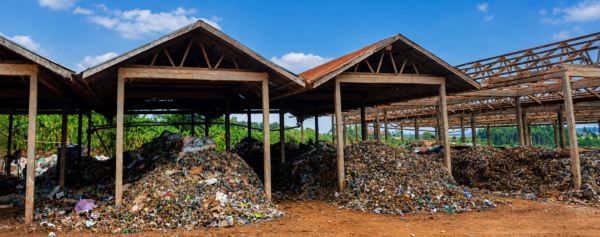
The project gained urgency following the Kiteezi landfill disaster, after which Mukono Municipality accepted waste from Kampala Capital City Authority (KCCA) at the Katikolo site.
As appreciation for hosting Kampala’s waste, KCCA provided financial support to the municipality, while the Government, through the Office of the Prime Minister, committed itself to securing additional land required for the sanitation facility.
However, more than a year later, the municipality is considering spending its own local revenue to compensate landowners whose properties were previously valued but never paid for.
Senior Environment Officer George Masengere said some residents whose land had already been valued were left uncompensated because funds that had earlier been allocated for the exercise were returned to the Treasury before payments could be completed.
As a result, he said, the municipality is now exploring the use of locally generated revenue to conclude the compensation process.
His explanation immediately raised concerns among political leaders, who questioned why taxpayers should finance a process that had already received government funding.
Mukono Municipality Mayor Robert Peter Kabanda said the technical team must first provide a comprehensive explanation before local revenue is committed to the exercise.
Kabanda revealed that several residents have already approached his office claiming they were unfairly excluded from the compensation process despite their land being affected.
He said before any new payments are approved, the municipality must explain what happened to the earlier allocation and establish whether all legal procedures were followed.
The controversy goes beyond compensation.
Records indicate that Mukono Municipal Council acquired 10 acres of land at Katikolo in 2006 for public purposes. Today, however, only about 7.9 acres remain.
The disappearance of more than two acres has become one of the biggest unanswered questions surrounding the project.
In February last year, the Municipal Technical Planning Committee resolved to allocate approximately Shs300 million from the Shs666 million received from KCCA to purchase two additional acres to expand the Katikolo Composite Centre.
Yet municipal officials now acknowledge that even with the proposed expansion, the available land remains insufficient.
According to Masengere, the planned fecal sludge treatment project requires at least 30 acres for full implementation.
Government valuation placed the cost of land in the area at approximately Shs150 million per acre, meaning acquiring the required acreage would demand billions of shillings beyond the municipality’s current allocation.
Former Mukono Municipality Mayor George Fred Kagimu has questioned whether municipal authorities are addressing the root cause of the problem.
During an inspection by the Municipal Development Forum, Kagimu challenged officials to explain how publicly owned land could shrink from 10 acres to 7.9 acres.
He argued that instead of compensating individuals claiming ownership of land that was once public property, authorities should first establish how the land was lost and legally be reclaimed.
His concerns echo growing allegations within the community that parts of the municipal land were allegedly occupied by influential individuals, who are now reportedly seeking compensation or planning to sell the same land back to government.
Although these allegations have not been independently verified, they have intensified public calls for investigations.
Community members are now urging the Public Procurement and Disposal of Public Assets (PPDA) authorities and other accountability institutions to scrutinise the proposed payments before any public funds are released.
They argue that approving compensation without first establishing ownership and investigating the loss of municipal land could expose taxpayers to unnecessary financial losses.
The accountability concerns come at a time when the sanitation project itself is considered strategically important.
A feasibility study conducted by Fichtner estimates that the proposed fecal sludge treatment facility would process up to 400 cubic metres of waste per day in two implementation phases at an estimated construction cost of Shs37.7 billion.
The study projects annual operating costs of approximately Shs477.6 million, while estimating annual revenues of around Shs588.9 million through the sale of biogas and irrigation water, making the facility capable of covering its operational expenses while supporting improved sanitation within the Greater Kampala Metropolitan Area.
However, the study concluded that electricity generation from the plant would not be economically viable because the investment costs would outweigh the expected returns.
ENDS.






 English