

















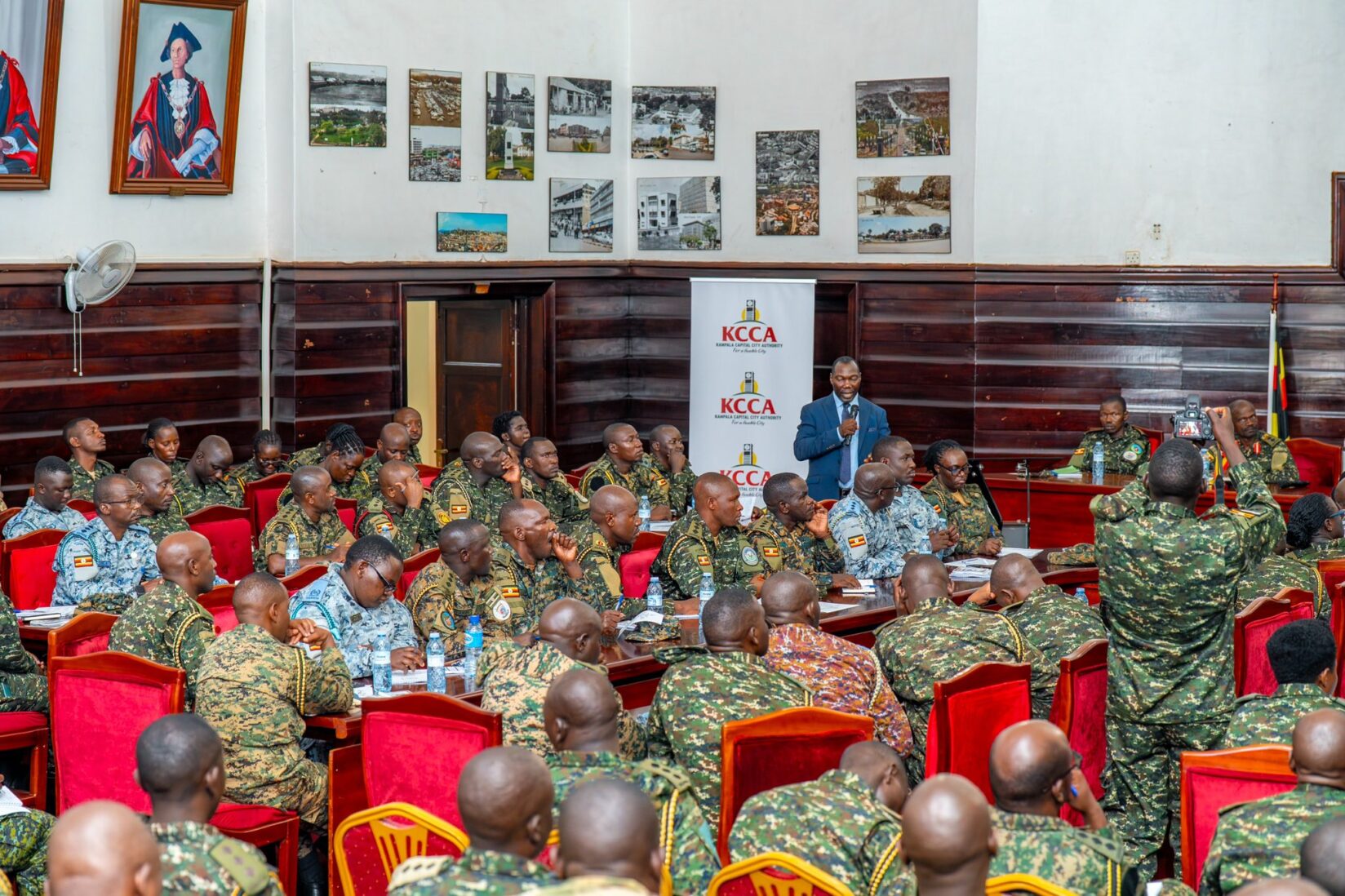
About 110 students and instructors from the Uganda People’s Defence Forces (UPDF) Junior Staff College in Kimaka, Jinja, have visited Kampala for a field study examining how security, political and technical institutions can work together to promote sustainable peace, security and development.
The study tour is part of a course titled “Leveraging Strategic Collaboration for Sustainable Security, Peace and Development,” which seeks to expose the participants to practical experiences beyond classroom discussions and documentary research.


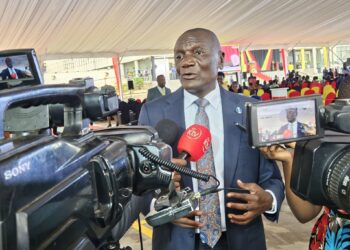
Colonel Mike Mbulakyalo, the Deputy Commandant and Chief Instructor at the college, said the field engagement is intended to help students obtain first-hand information from institutions involved in managing urban areas.
He explained that while classroom teaching and documentary reviews provide important knowledge, some questions can only be answered through direct interaction with people working in the field.
“Where we cannot find the solutions within the documentary review and other sources, we tend to go back to the field so that we interact with respondents,” Mbulakyalo said.
He said Kampala was chosen as a case study because of its large population, diverse economic activities and the complex security and development challenges associated with managing a major urban centre.
According to Mbulakyalo, the study also seeks to help participants appreciate the changing meaning of security, which now extends beyond traditional military threats.
He said modern security concerns include food security, public health, communication, disaster preparedness and environmental protection, among other issues that directly affect people’s lives.
“Today, security is defined in a broader perspective. That broader perspective includes looking at other issues which affect the human environment as security issues,” he said.
The participants are also examining the relationship between security agencies and urban authorities, particularly how the institutions can coordinate their responsibilities to address challenges facing cities and municipalities.
Mbulakyalo said one area of interest is the interaction between technical decisions and political interests in urban planning and administration.
He noted that disagreements may arise when technical officials make decisions that affect communities or political interests.
“When the technical people are saying, ‘We want this one here,’ then the political personnel will say that you are interfering with our people,” he said.
He said understanding how such differences can be managed is important for effective urban governance and could provide lessons applicable to other municipalities across the country.
The study will also examine issues including land management, disaster and emergency response, waste management and other areas where collaboration between different institutions is necessary.
The officers are expected to visit several other institutions during the study tour to gain a wider understanding of how different organisations contribute to national and human security.
Mbulakyalo said the practical exposure would enable the students to appreciate the importance of integrating the work of security agencies with that of political leaders, technical experts and other stakeholders in addressing urban challenges.
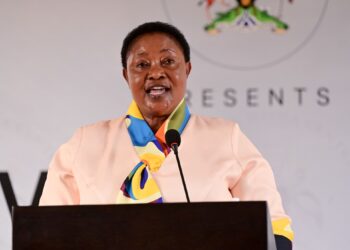
The Executive Director of Kampala Capital City Authority (KCCA), Hajjat Sharifah Buzeki, welcomed the delegation and commended the Defence Forces for their continued support to Kampala, particularly during periods of crisis and vulnerability.
Buzeki said the UPDF’s role in protecting people and property has helped create an environment in which residents can conduct their businesses while investors continue to participate in the city’s development.
She said cooperation between KCCA and the Defence Forces has also supported enforcement operations, capacity building and the implementation of various city management initiatives.
Buzeki pointed to the participation of the Defence Forces in National Cleaning Days as an example of civil-military cooperation aimed at improving sanitation and maintaining cleanliness in the capital.
She said KCCA’s technical teams were ready to share their experiences and information with the visiting officers to give them a better understanding of the authority’s operations and the systems used to manage Kampala.
KCCA Deputy Executive Director Simon Kigenyi also briefed the delegation on the history and evolution of Kampala, including its development before colonial rule and its subsequent transformation into Uganda’s capital and the city currently administered by KCCA.






 English