














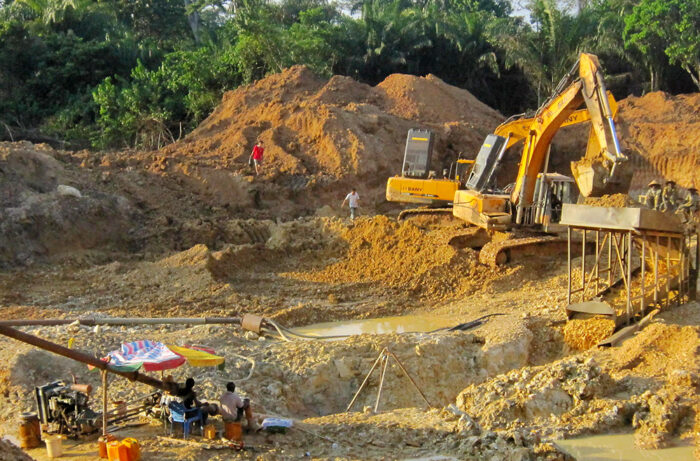
The United States has imposed sanctions on a Kigali-based gold refinery and several Rwandan mining firms accused of helping channel minerals from territories in eastern Democratic Republic of Congo (DRC) controlled by the M23/AFC rebellion.
In a statement issued on Thursday, the U.S. Department of the Treasury alleged that gold extracted from mines in South Kivu under the control of the March 23 Movement/Alliance Fleuve Congo (M23/AFC) was transported to Rwanda with the protection of members of the Rwanda Defence Force (RDF).

The precious metal was reportedly moved through Rusizi before reaching Gasabo Gold Refinery in Kigali for processing and export.
U.S. authorities claim that by the beginning of 2026, at least 60 kilograms of gold valued at several million dollars had been trafficked through the route.
The sanctions were imposed on Gasabo Gold Refinery Ltd, its chairman Jean Malic Kalima, managing director Bosco Kayobotsi, and three mining companies linked to Kalima—Bugambira Mines Limited, Wolfram Mining and Processing Limited, and Rwinkwavu Mining Corporation Limited.
According to the Treasury Department, all assets belonging to the designated individuals and companies that fall under U.S. jurisdiction have been blocked, and American citizens and businesses are barred from engaging in transactions with them.
U.S. Treasury Secretary Scott Bessent said Washington was determined to prevent armed groups from profiting from the illegal minerals trade and fuelling instability in the Great Lakes region.
“The Democratic Republic of the Congo’s mineral wealth rightfully belongs to the Congolese people,” Bessent said, adding that the administration of President Donald Trump would continue pursuing measures against individuals and organisations accused of enabling violence, exploitation and abuses against civilians in the DRC.
The Treasury Department described M23/AFC as a group designated by both the United States and the United Nations, accusing it of committing serious human rights violations and undermining regional peace efforts.
It said revenue generated from illicit mineral trafficking helps sustain the group’s military activities and worsens the humanitarian situation in eastern Congo.
By press time, neither the Rwandan government nor M23/AFC had publicly commented on the latest sanctions. The United States has previously targeted senior figures within the rebel movement with similar measures.
The sanctions come amid growing U.S. interest in Congolese critical minerals. In December 2025, Kinshasa and Washington signed a strategic minerals partnership aimed at strengthening supply chains for resources such as cobalt, copper, lithium and manganese. The cooperation was further expanded earlier this year.
Meanwhile, M23/AFC spokesperson Lawrence Kanyuka accused the Armed Forces of the Democratic Republic of Congo (FARDC) and allied militias of incorporating fighters from the P5 rebel group led by Kayumba Nyamwasa and carrying out new bombardments in Minembwe. He alleged that the attacks damaged Minembwe General Reference Hospital.
Kanyuka argued that repeated strikes on the medical facility could not be dismissed as accidental and instead reflected what he termed a deliberate campaign against civilian communities.
Fighting in eastern Congo has continued despite regional mediation efforts, with both sides trading accusations of breaching ceasefire arrangements.
Kinshasa has long accused Rwanda of backing the M23 insurgency, allegations consistently rejected by Kigali and leaders of the rebel alliance. M23/AFC maintains that its rebellion seeks to address corruption, discrimination and xenophobia within the DRC.
The rebel group launched a major offensive in early 2025, seizing a number of strategic locations in eastern Congo and heightening concerns over the risk of a broader regional conflict.






 English