
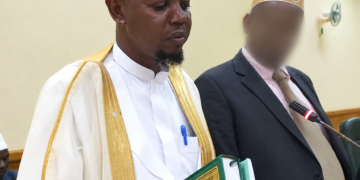

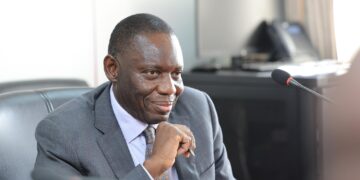












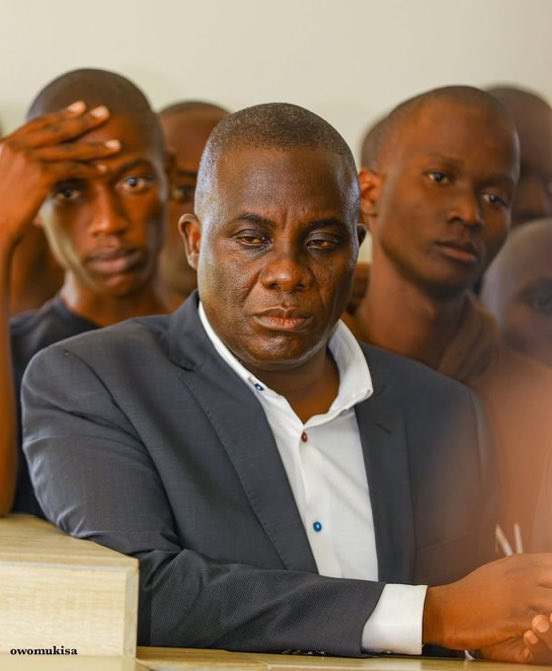
State prosecutors have subjected a group of sureties to detailed questioning as the High Court continues hearing a bail application filed by former Butambala County MP Muhammad Muwanga Kivumbi and several co-accused persons facing terrorism charges.
The proceedings before the International Crimes Division of the High Court, chaired by Deputy Head of Division Lady Justice Susan Okalany, entered a second day with prosecutors extensively examining individuals presented as sureties for the accused persons.

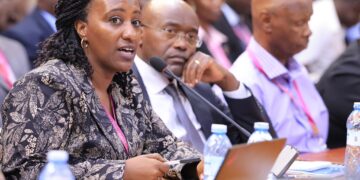
Court sessions focused largely on establishing the credibility, financial standing, and personal relationships of the sureties with the applicants seeking temporary release.
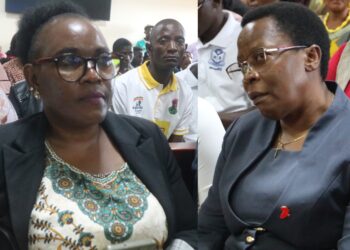
At least 16 sureties representing eight of the accused persons have so far testified in court. Those examined included Mustafa Kyambalango, Yudaya Namyalo, Hamidu Luyambi, Sumaya Nabukalu, Huzairu Matovu Lubega, Sharifa Nakalema, Noweli Nabisere, Yusuf Muganga, and Ali Lutaaya, among others.
The prosecution team, led by Assistant Director of Public Prosecutions Thomas Jatiko alongside Chief State Attorney Richard Birivumbuka, questioned the sureties on a wide range of issues including their occupations, sources of income, places of residence, and understanding of their obligations under bail law.
Prosecutors also sought to determine whether the sureties had the financial ability to guarantee the accused persons should they fail to return to court.
Several of the sureties told court they worked in informal sectors such as plumbing, electrical installation, and television repair. Under cross-examination, some admitted they lacked formal academic qualifications or vocational certificates, explaining that they acquired their skills through apprenticeships and hands-on experience with friends, relatives, and neighbours.
State lawyers also asked whether some of the businesses operated by the sureties were officially registered with government authorities. A number of them reportedly acknowledged that their businesses were not formally registered.
In an apparent effort to test the authenticity of documents presented to court, prosecutors further required some sureties to identify signatures belonging to local council chairpersons and state their names in open court.
Unlike ordinary bail hearings where sureties usually speak from the public gallery, the International Crimes Division required each surety to take the witness stand for full cross-examination, reflecting the stricter procedures commonly applied in cases involving serious offences.
The hearing is still ongoing and no indication has been given on when the bail application will conclude. Of the 23 applicants, only some were physically produced in court while others, including Kivumbi, remained detained at various facilities such as Luzira Prison, Kitalya Prison, Naguru Remand Home, and Kigo Prison.
Kivumbi, who serves as the National Unity Platform (NUP) Vice President for Central Uganda, jointly filed the bail application with 24 co-accused persons. The group is represented by lawyers including Medard Lubega Sseggona, Samuel Muyizzi Mulindwa, and Kawempe North MP Nalukoola Luyimbazi.
The applicants argue that they qualify for release under Article 23 of the Constitution and provisions of the Trial on Indictments Act. Their lawyers contend that the accused persons have fixed places of residence, substantial sureties, and are unlikely to abscond if granted bail.
Court records indicate that the accused were arrested between January 14 and January 21, 2026, during the heated election period preceding the recently concluded general elections.
Initially, several of Kivumbi’s co-accused were charged before the Chief Magistrates Court in Butambala with offences related to incitement to violence and malicious damage to property.
However, the State later withdrew the original charges and amended the indictment to include terrorism charges against all the accused persons. The applicants maintain that investigations have remained incomplete despite repeated court appearances and argue that their prolonged detention without committal to the High Court violates their constitutional rights and the presumption of innocence.
According to the amended charge sheet, the accused persons are alleged to have coordinated attacks on Kibibi Police Station and the Butambala Electoral Commission tally centre. Prosecutors claim the attacks were intended to intimidate the public and influence government actions for political and economic purposes.
The State further alleges that several vehicles and public infrastructure along the Butambala–Gomba road were destroyed during the violence. Among the damaged vehicles listed in court documents are a Toyota Land Cruiser registration number UBM 614Q, a Ford double cabin UBH 333U, a Subaru UBQ 496Z, a Toyota Raum UAV 378H, and a Toyota Spacio UAQ 033X.
Seven people are also reported to have lost their lives during the incidents. The deceased were identified as Sarah Naggayi, Aisha Nabukenya, Milly Nampereza, Ruth Nakanjako, Nsamu Abdulnoor, Shafik Miiro, and Davis Basaliza.
The prosecution maintains that the alleged acts posed a threat to national security and were carried out without regard for civilian life and property.








 English