












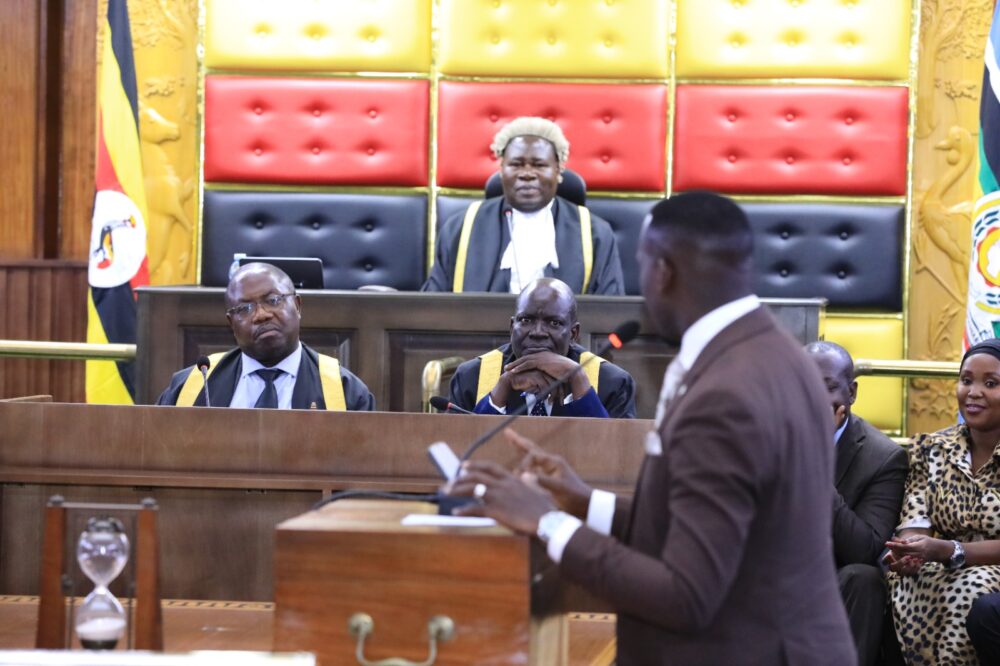
Parliament on Thursday descended into one of its most congested and politically charged sittings in recent history as lawmakers packed the chamber beyond capacity to approve the expansion of Uganda’s executive structure and confirm two of the country’s top leaders for second consecutive terms.
The overcrowded plenary session laid bare the mounting strain on Uganda’s ageing parliamentary infrastructure, with dozens of MPs left standing along walls, squeezed into aisles, and others forced into the public gallery during proceedings.

Built decades ago to accommodate about 80 legislators, the chamber is now expected to host more than 500 lawmakers following the steady expansion of parliamentary representation over the years.
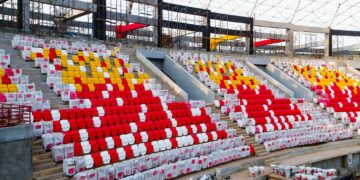
The situation has renewed pressure on the delayed construction of a new parliamentary complex estimated to cost more than Shs200 billion, whose completion timelines have repeatedly shifted.
Despite the severe congestion, Parliament proceeded with key constitutional business, including the approval of President Yoweri Museveni’s latest executive appointments and the confirmation of the country’s top political leadership.
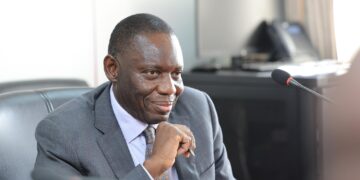
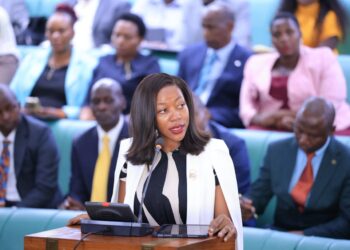
Vice President Jessica Alupo and Prime Minister Robinah Nabbanja were both confirmed to serve historic second consecutive terms, marking the first time the two offices have simultaneously retained incumbents into another parliamentary cycle under the current arrangement.
Following her approval under Article 108(2) of the Constitution, Alupo called for unity and national focus.
“Dear members, let us stick to what unites us rather than what divides us. The opportunity has been bestowed upon us by the people of Uganda to serve them, especially bearing the vision of wealth and job creation,” she told Parliament.
The atmosphere later shifted into a heated constitutional and political debate as MPs considered a government motion seeking to vary constitutional limits on the number of ministers.
Parliament eventually approved the expansion, formally aligning the Constitution with Museveni’s newly announced executive structure comprising 30 Cabinet ministers and 51 Ministers of State.
Nabbanja moved the motion seeking approval to increase the constitutional ceiling on Cabinet ministers from 21 to 30, and Ministers of State from 21 to 51.
Government argued that the move was not creating new offices but merely regularising the number of ministers that had operated under the previous Parliament.
“Members, the number of Ministers and Ministers of State that have been carrying out duties is the same number we have brought. We have not changed. Rationalisation was because we were having ambiguity and duplication of work. UNRA was doing the same work as the Ministry of Works. So we are here to present the same number we had in the last Parliament,” Nabbanja said.
Her defence, however, faced resistance from lawmakers who questioned whether government was quietly reversing earlier rationalisation reforms that had merged agencies and streamlined ministries.
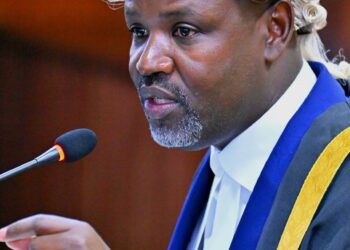
Speaker Jacob Marksons Oboth-Oboth directly challenged the Prime Minister on whether some ministries were being downgraded temporarily or could later be restored.
“Are you on record that you are coming back here to reactivate them?” the Speaker asked.
The debate widened into a broader argument about the size, cost and political purpose of Uganda’s executive.
Critics warned that expanding the ministerial structure risked increasing public expenditure at a time when government continues to preach fiscal discipline and efficient service delivery.
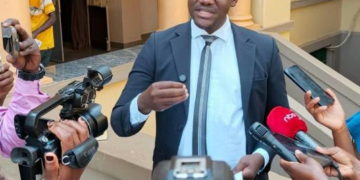
But Deputy Attorney General Jackson Kafuuzi defended the proposal as both constitutional and politically necessary for implementing the President’s mandate.
“We have gone through an election where a new mandate has been given to the Head of State and all of you. The Head of State traversed the country explaining a manifesto which Ugandans have approved, so he needs a team that will work to effect that manifesto. It is our mandate as MPs to approve the variation,” Kafuuzi said.
He anchored his argument in Article 111 of the Constitution, which allows the President to appoint “such other Ministers” as may be necessary for the efficient running of the State.
The approval now clears Museveni to maintain the expanded executive structure announced earlier this week.
Thursday’s dramatic sitting highlighted not only the political weight of the decisions being made, but also the growing logistical and institutional pressures facing Uganda’s legislature.
As Parliament approved one of the largest executive structures in Uganda’s modern political history, lawmakers did so while physically struggling to fit inside the very chamber tasked with checking that power.







 English