

















For years, parents whose children were suspected of having sickle cell disease at Goma Health Centre III had only one option: travel to Mukono General Hospital for specialised diagnosis and treatment.
The journey often meant extra transport costs, long waiting hours and delays in accessing care for a condition where early intervention can make a significant difference.
That is now changing.
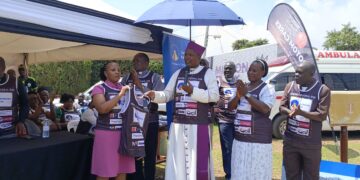
Goma Health Centre III, with support from Sarafinah Sickle Cell Society in partnership with Sickle Forward, has officially established a dedicated sickle cell clinic, bringing screening and initial management services closer to communities in Goma Division.
The clinic, launched in the presence of municipal leaders and government officials, is equipped with specialised diagnostic machines and screening supplies expected to transform sickle cell care, particularly for children under the age of five.
Municipal Principal Medical Officer Dr. Sylivia Nanono described the clinic as a long-awaited milestone for the health facility.
She explained that while the need for a specialised clinic had existed for years, the facility lacked the equipment required to provide comprehensive screening and diagnosis.
“We have always needed such a clinic, but without the necessary equipment it was difficult to offer these services. The support from Sarafinah Sickle Cell Society and Sickle Forward has filled that gap,” Dr. Nanono said.
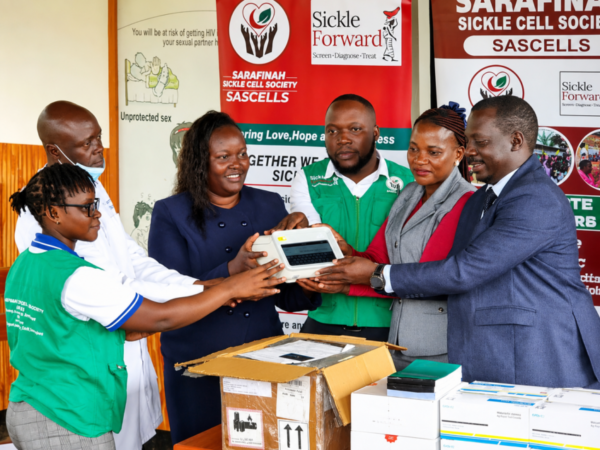
Among the donated equipment are a Gazelle sickle cell diagnostic machine and a chemistry analyser, both expected to improve the speed and accuracy of diagnosis.
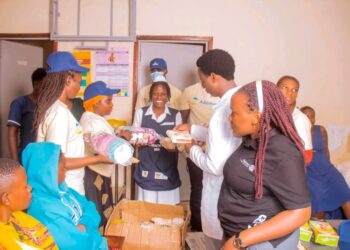
The partners also supplied screening test kits, patient record books and other essential medical materials to support routine screening and proper data management.
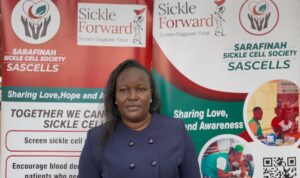
According to Dr. Nanono, the new clinic will reduce unnecessary referrals to Mukono General Hospital while easing congestion at higher-level health facilities.
“The services will now be available much closer to the people who need them. This will save families both time and money while enabling earlier diagnosis and treatment,” she said.
Health workers say the clinic responds to a growing need for early diagnosis.
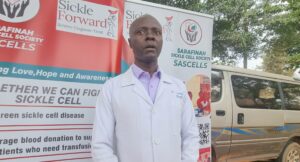
Dr. David Sserunjogi, the Officer-in-Charge of Goma Health Centre III, revealed that the facility screened 134 children over the past year, with 20 testing positive for sickle cell disease.
Previously, all diagnosed patients had to be referred to Mukono General Hospital for specialised management.
“With this clinic now operational, many of these services will be available here, making follow-up easier for our patients,” Dr. Sserunjogi said.
Medical experts emphasise that early screening, especially during infancy, allows children diagnosed with sickle cell disease to receive timely treatment that significantly reduces complications and improves survival.
Mukono Municipality Mayor Robert Peter Kabanda welcomed the establishment of the clinic, describing it as an investment that will improve community health and save lives.
He urged residents to embrace voluntary screening and know their sickle cell status.
“We want people to come for testing so that together we can build a community free from preventable suffering caused by sickle cell disease,” Kabanda said.
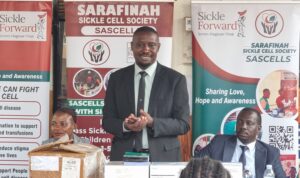
He also appealed to health workers to provide compassionate care.
“Take good care of the donated equipment, but equally important, treat every patient with dignity and love. People living with sickle cell disease or carrying the trait should never face stigma at our health facilities,” he said.
Equally, Pheobe Babirye, the Deputy Mayor of Mukono Municipality, said stigma and misinformation remain major barriers in the fight against sickle cell disease.
She noted that some parents still associate the condition with witchcraft, discouraging them from seeking testing and treatment, while some fathers abandon their families after learning that their children have sickle cell disease instead of supporting them.
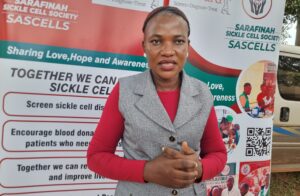
She urged parents to embrace screening and seek accurate information, emphasizing that sickle cell disease is an inherited condition that requires family support rather than blame.
Assistant Resident District Commissioner James Mutyabule praised Sarafinah Sickle Cell Society and Sickle Forward for complementing government efforts to strengthen healthcare services.
He warned health workers against negligence in handling the donated equipment and medical supplies.
“These machines are meant to serve the community for many years. They
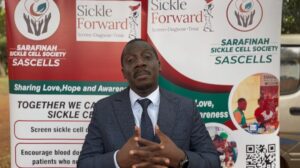
should be protected and properly maintained to ensure maximum benefit,” Mutyabule said.
Expanding Access Across Uganda
The Goma clinic forms part of a wider programme aimed at increasing access to free sickle cell screening in several districts.
Recently, Sarafinah Sickle Cell Society received 10,000 sickle cell screening test kits donated by Sickle Forward. The donation, valued at approximately US$20,000 (about UGX 72 million), is supporting expanded screening services across Mukono, Buikwe, Buvuma, Ntoroko, Hoima and the Rwenzori region.
Joel Mugwanya, Field Officer at Sarafinah Sickle Cell Society, said distribution of the supplies has already been completed in Mukono and Buikwe districts.
He noted that the organisation’s work goes beyond delivering equipment.
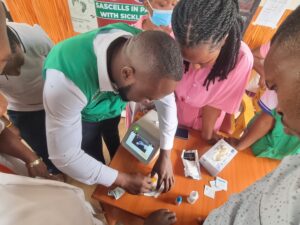
“We continue to train and mentor health workers on sickle cell management, provide technical support and monitor how the equipment is being used to ensure quality services are sustained,” Mugwanya said.
Uganda continues to record thousands of babies born with sickle cell disease each year, making early diagnosis and continuous care essential. Health experts believe decentralising screening services to lower-level health facilities such as Goma Health Centre III will improve access, encourage early treatment and reduce preventable deaths among children.
ENDS.











 English