
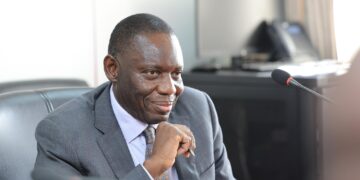
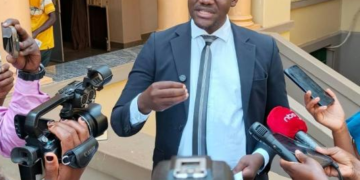






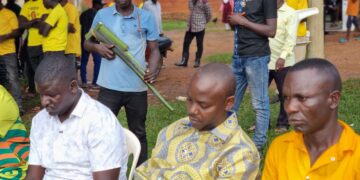









Salongo Habibu Nsikonene, who previously attracted public attention for marrying seven women, including two sisters from the same family, has been sworn in as the LC1 chairperson of Namasengere Village in Nakifuma-Naggalama Town Council, Mukono District.
Nsikonene, whose inauguration was delayed by an election dispute, has pledged to prioritise land security, education, women’s economic empowerment and improved access to basic services during his tenure.


He was sworn in three weeks ago after the Mukono District Electoral Commission dismissed a complaint filed by his rival, Stephen Kitooke, who had challenged his victory. His inauguration had been delayed despite receiving a letter from the town council electoral officials confirming his election.
Speaking in an interview, Nsikonene said his immediate priority was to unite residents and ensure that his leadership served the entire community, irrespective of their political preferences during the election.
“The game is over. I am ready to work with everyone, whether they voted for me or not,” he said.
One of the major issues he intends to address is land grabbing, which he said had affected residents, including himself. Nsikonene alleged that attempts had previously been made to take away his land under the former village leadership.
He pledged to help residents resolve land disputes and protect property owners from unlawful land acquisition, although the effectiveness of such interventions will depend on cooperation with relevant authorities.
On education, Nsikonene said he wanted to reduce illiteracy by promoting access to affordable schooling. He revealed that he had already established a school and hoped to expand educational opportunities for children in the village.
He also promised to support women and other residents through interest-free loans, which he said he would provide personally to help beneficiaries start or expand small businesses.
Nsikonene said he intended to encourage residents to form organised groups through which they could promote savings, develop businesses and improve their household incomes.
The proposed financial support has raised hopes among some women in the village, who believe access to affordable capital could help them strengthen their businesses and improve their livelihoods.
However, the success of the initiative will depend on the resources available, the number of beneficiaries and how the loan programme is organised and sustained.
Poor road access is another challenge Nsikonene said he intends to address. He pledged to engage higher authorities to improve the roads serving the village, saying better transport links would support economic activities and access to essential services.
Beyond infrastructure and livelihoods, the new chairperson plans to establish a village office where residents can meet their leaders, raise concerns and seek assistance in resolving community problems.
He also intends to establish a local clinic where residents can receive initial medical attention before being referred to larger health facilities when necessary.
Despite assuming the leadership role, Nsikonene said he would continue practising traditional healing alongside farming, which he described as his main source of livelihood.
He said his involvement in traditional healing began when he was still a young boy and described it as a spiritual calling rather than a business venture.
“I do it for the well-being of the people. This calling came to me when I was still young, and I consider it a spiritual gift,” he said.
Nsikonene said he helps people facing challenges relating to sickness, marriage and business. He added that he refers patients to health facilities when their conditions require hospital treatment.
His proposed clinic, he said, would provide an additional point of access to basic care, with patients requiring specialised treatment referred to larger facilities.
The extent to which he can balance these activities with his responsibilities as village chairperson remains to be seen. Nsikonene, however, expressed confidence that he would fulfil his duties with the support of his village committee.
Some residents say his election reflects his longstanding involvement in community activities, which they believe demonstrates his willingness to serve beyond the demands of political office.
Nsubuga Fulasiko Ssalongo, a voter, said Nsikonene had participated in bulungi bwansi, the traditional community self-help activities that include clearing roads and contributing to local development.
Nsubuga also recalled an incident in which Nsikonene helped transport a sick person to a better-equipped medical facility without demanding payment.
“Let us always vote for capability, not just for the person we know,” Nsubuga said.
Another resident, Babirye Nalubowa, welcomed the proposed interest-free loans, saying women hoped the initiative would enable them to expand their businesses and improve their livelihoods.
She also supported the plans to establish a local clinic and a village office, saying the facilities would provide residents with places to seek assistance and engage their leaders on community concerns.
Nsikonene’s public profile had previously been shaped by reports about his marriage to seven women, including two sisters from the same family. His new role, however, places him under a different kind of public scrutiny, with residents now looking to him to demonstrate leadership through tangible improvements in their daily lives.
His pledges cover some of the concerns that often shape village leadership, including land disputes, education, roads, access to healthcare and household incomes. Delivering on them will require more than personal commitment, particularly where implementation depends on funding and support from town council and district authorities.
For residents of Namasengere, the immediate test will be whether the promises translate into practical solutions, stronger community participation and improved access to services.
As he begins his tenure, Nsikonene faces the task of building trust across the village while turning his campaign commitments into measurable results.












 English
