













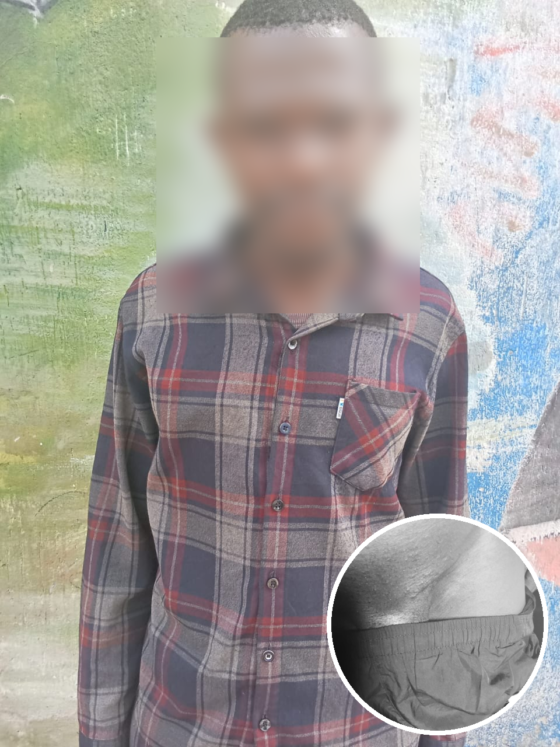
Isabirye Simon, a resident of Mukono District, has petitioned multiple authorities over what he describes as a disturbing case of alleged unauthorized surgery that resulted in the removal of one of his testicles, alongside what he claims are serious inconsistencies in medical and police records that have complicated his pursuit of justice.
The matter has since been escalated to the Regional Police and the Resident State Attorney’s office and is contained in two formal complaints dated April 11 and April 20, 2026, which were reportedly received under official registry procedures for further handling.


Isabirye alleges that he underwent a surgical procedure at Testimonies Medical Centre in Iganga, where a doctor identified as Johnson Bamudaziza is said to have carried out an operation that resulted in the removal of one of his testicles. He further claims that the procedure was done without his full and informed consent, leaving him with severe physical, emotional, and psychological distress.
He says the consequences of the surgery have extended beyond the physical loss of one testicle. According to him, since undergoing the procedure, he has experienced difficulties with his sexual function and fears he may never fully recover.
The complainant says the situation has caused him significant emotional distress, anxiety and uncertainty about his future, particularly regarding his ability to maintain intimate relationships and father children.
“Since that operation, I have never functioned again as a man,” he reportedly states in his account of the events, adding that he fears the effects may be permanent.
While these concerns form part of his complaint, no independent medical assessment reviewed by this publication has conclusively linked the alleged loss of sexual function to the surgery. Medical experts generally note that the removal of one testicle does not automatically result in impotence or infertility, as the remaining testicle can often continue producing testosterone and sperm. However, outcomes can vary depending on a patient’s overall health, the underlying medical condition, surgical complications and psychological factors.
Isabirye states that he was taken to the facility by Musa Kakaire prior to the operation. Following the procedure, he says he began noticing discrepancies in the documentation he was given, with records allegedly indicating that the surgery took place at Hope Medical Clinic instead of Testimonies Medical Centre, which he insists was the actual location.
Isabirye considers this inconsistency central to his complaint, arguing that it raises serious questions about the accuracy and integrity of medical records connected to the procedure. In his initial petition dated April 11, 2026, he formally reported what he termed unlawful removal of a body part and alleged medical misconduct.
He also expresses dissatisfaction with how his complaint was handled at Iganga Police Station, alleging that key aspects of the investigation were mishandled, including the treatment of witnesses and family members during the process.
He further claims that his parents were denied access to him during police proceedings on the grounds that they did not possess national identity cards, which he believes denied him essential emotional and procedural support at a critical stage.
The complainant further alleges that officers handling the matter suggested the possibility of an informal settlement involving compensation of UGX 5 million, an option he says he rejected, insisting instead that the matter should proceed through formal judicial processes.
In a follow-up petition dated April 20, 2026, addressed to the Resident State Attorney – Iganga, Isabirye raises concern over what he describes as persistent inconsistencies in both hospital and police records. He maintains that despite his assertion that the operation took place at Testimonies Medical Centre, official documentation continued to reflect Hope Medical Clinic as the facility involved.
He argues that these contradictions undermine the credibility of evidence being relied upon and has asked authorities to verify the correct facility where the operation was conducted, investigate the discrepancies in both medical and police records, ensure accurate documentation is used in all proceedings, and take action against any party found to have misrepresented facts.
Isabirye insists that the matter should not be resolved through informal arrangements but should instead follow full legal adjudication, given the seriousness of the alleged harm. He maintains that the removal of his testicle without consent has had lasting physical and psychological effects and argues that the case goes beyond medical negligence to broader issues of accountability, record integrity, and fairness in law enforcement processes.
He has urged authorities to handle the matter with urgency, warning that failure to properly address the complaint risks undermining public confidence in both medical institutions and investigative systems. According to official records cited in the petitions, the case file was received and forwarded for further management by the relevant authorities in Iganga.
In response to the allegations, Dr. Bamudaziza maintains that the operation was carried out according to medical necessity.
The doctor says Isabirye was diagnosed with a hernia and scheduled for surgery. During the procedure, he says discovered that one of the patient’s testicles had already been significantly affected.
According to Dr. Bamudaziza, the condition of the organ required immediate removal to prevent further health complications.
He argues that leaving the affected testicle in place would have exposed the patient to additional medical risks and potentially more severe complications in the future.
“It wouldn’t have helped to leave it there and then have the patient come back with more complications,” the doctor said.
ENDS.





 English